A. Banerjee

At one level this is a smartly produced coffee table book that features historic photographs of India’s birth to freedom from British rule. The pictures of India’s ‘first dynasty’ the Nehru-Gandhi family dominate the collection. As always, they are attractive to the eye and historic in the moments they capture. The reader ploughs along approvingly as they confirm to every stereotype that an average Indian has internalized about the makings of modern India.


Editorial
Raghav Sharma

One would have liked to use the term “Andhras” but it is not an accurate one to describe the Telugu speakers. The Andhras in the present-day social and cultural context are confined to Nellore, Prakasam, Krishna, Guntur districts. Even those who belong to East and West Godavari districts have a distinct identity of their own, while those of the northern districts of Visakha-patnam, Vizianagaram and Srikakulam belong to a charming cultural world of their own.


Editorial
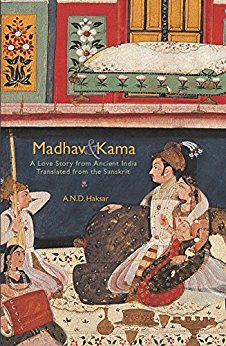
A.N.D. Haksar

Sanskrit narrative tradition synthesizes loka (loc-al) and shastra (scholastic or context free forms and expressions). It has been configurational, localized and ever acquiring new hues and semantic fields. Deshi (context bound forms) and margi (context free forms), in fact, have always been seen in continuity and have mutually enriched each other.


Editorial
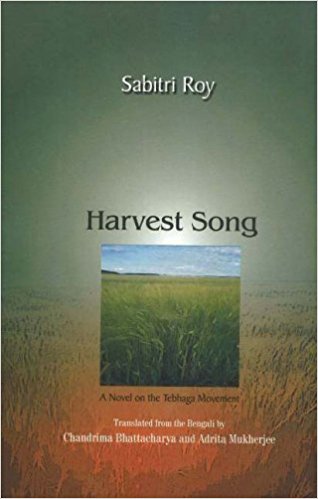
Adrian McNeil

Harvest Song, an abridged and translated version of Sabitri Roy’s trilogy, Paka Dhaner Gan (1956, 1957, 1958) has been subtitled in English as a “novel of the Tebhaga movement.” The Tebhaga (sharing by thirds) movement was a militant campaign by sharecroppers, spreading over at least nineteen districts of undivided Bengal, especially the districts of Dinajpur, Jalpaiguri, Jessore, Khulna, Mymensingh and 24 Paraganas during the year 1946-1947.


Editorial
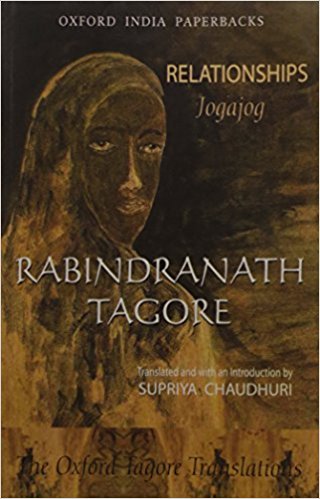
Rabindranath Tagore

Jogajog is perhaps Tagore’s least discussed novel, eclipsed by the political rhetoric of Gora and Ghare Baire, the romantic intensity of Chokher Bali and Shesher Kabita, and the philosophical density of Char Adhyay. Two recent translations, however, draw attention to this lacuna in Tagore scholarship: Hiten Bhaya’s translation Nexus, published by Rupa and Co., and the present translation by Supriya Chaudhuri.


Editorial
C. Sriram

One began with the premise, influenced purely by a perusal of the blurb, that this was one more novel about the coming-of-age of a slightly confused exemplar of urban youth today set amidst the ubiquitous urban landscape of contemporary Delhi. One presumed, therefore, that the novel would be about a slightly moony young man, being shunted around from job to job and love to love in search of existential bliss, and would be full of his ramblings in a booze or hash-induced state while walking the streets of the “unreal city”, in this case, Delhi.


Editorial