Reading the short stories of Khwaja Ahmad Abbas in the India of today-the emerging, global economy of enviable GDP growth, free market enterprise, bustling shopping malls-is a sobering exercise. They remind one of another India, the black and white India of the early Nehruvian years…
It has been our firm belief for long, now reinforced by the present example that the festschrift volumes should be a tribute to the dead, or, at the most, presented in honour of those who have retired or about to retire from public life. A festschrift volume is perhaps too early for Professor Kaula…
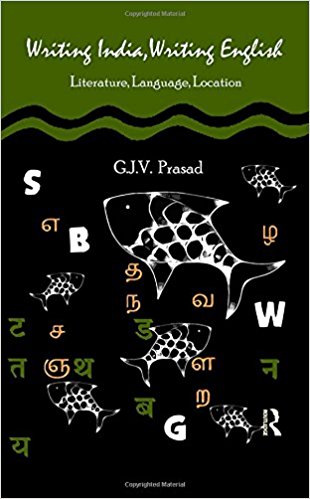
Before I begin the review of G.J.V. Prasad’s work a word on the dust jacket cover: it speaks of the multicultural, multilingual, multifarious ways in which English is read, written, and spoken in India. Hence, fish swim in a sea of words taken from Hindi…
1978
Iqbal A. Ansari’s book Uses of English, for the conservative, carries an explanatory sub-title ‘Varieties of English and Their Uses’. Conscious of some eyebrows being raised on the plural ‘Uses’ and afraid that the sub-title may not register, the author begins his preface with the following explication: ‘This book…
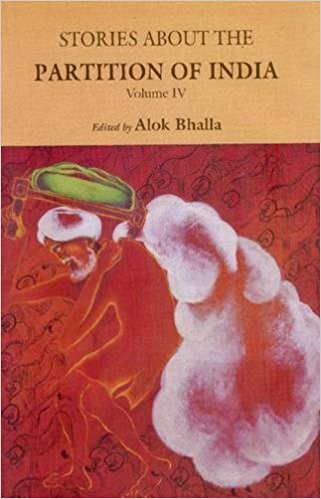
That there are multiple histories rather than a history of the Partition is borne out by studying the literature produced in India, Pakistan and Bangladesh. Contrary to popular perception, there is no generalized or undifferentiated response to the Partition among those who have chronicled it…
As the introduction to the Writers’ Workshop translation of Nagarjun’s novel Jamaniya ka Daba puts it, the author is one of the stalwarts of the Progressive movement in Indian literature, a movement committed to Marxism and to the depiction of social realism, Nagarjun usually handles social situations familiar in India…