
By Anjali Jaipuria and Sudeepti Tucker
Picture books hold a special place for children. They are a tool for learning, a visual journey, the basis for story time with family and a tactile resource for sensory exploration.
Reviewed by: Ilika Trivedi

Picture books hold a special place for children. They are a tool for learning, a visual journey, the basis for story time with family and a tactile resource for sensory exploration.

How do you review a book like Karuppu? I’ve asked myself this question ever since I finished reading it. Last page read, book shut…and there I am, left with a feeling that I have yet to emerge from a fog-shrouded mystical world, sprinkled with violence, poignancy, tragedy, micro-stories of relationships filled with sharp shards, and a sense of something ending. Alongside are clearly etched images,
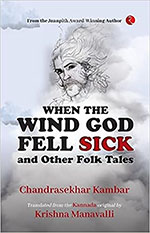
Chandrasekhar Kambar, though recognized as one of the foremost Navya (modernist) writers in Kannada, along with the likes of UR Ananathamurthy, P Lankesh, Girish Karnad, Ramachandra Sharma, Shantinath Desai and KV Tirumalesh, was always different from them.

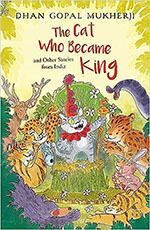
Since the emergence of Folklore Studies in the nineteenth century, the study of folklore grew exponentially in the twentieth century and continues to thrive through academic as well as popular literature in the twenty-first century. In the context of India, there is a sizeable market for books dealing with oral traditions as in recent years
Even our brains are not good enough unless our hearts are calm. You must try to sharpen your wits. But, above all, be calm. If you are calm, nothing can frighten you…Our fear kills us before we are killed by an enemy. He who is without fear has no enemy.
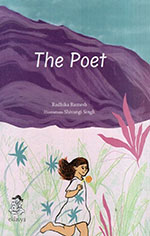
In her first-person account, Andrea mentions where she finds Carlos. She defines the dark, unreachable place that he holds her in. She calls him his ‘teacher’. While it is clear that more than being her teacher, Carlos is the dictator of her life. Quite early on in the narrative, the readers get to know that Andrea has recently lost her mother. Carlos seems to have taken birth as a response to that traumatic event in Andrea’s life.