K. Saradamoni

What is the relationship between the public histories of societies and movements, and the personal stories of individuals who participated in them, shaped their direction, and witnessed their transformation? Is there an aspect of history which we can access only through tracking the trajectories of an individual’s thinking and action? These questions are particularly pertinent in the case of political movements that possess a strong ethical orientation.


Reviewed by: Udaya Kumar
Arjun Singh with Ashok Chopra

This interesting if hugely controversial story of Arjun Singh’s life takes off with a rather colourful phrase: ‘It all started when the first grain of sand fell into the crucible of time on 5 November 1930, the date on which I came into this world.’


Reviewed by: K.S. Dhillon
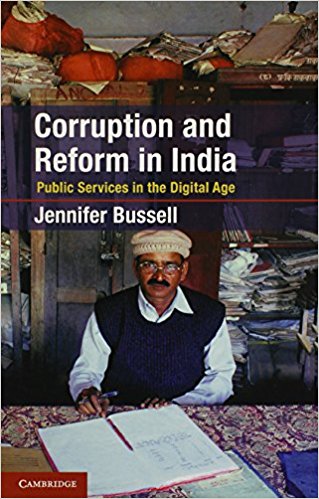
Jennifer Bussell

‘E- governance’ is now commonly referred to as the fourth wave of administrative reforms. In India as well, the verve of E-Governance based initiatives, which began in the late 1990s continue to be seen as the primary mechanism for improving service delivery.


Reviewed by: Gayatri Sahgal
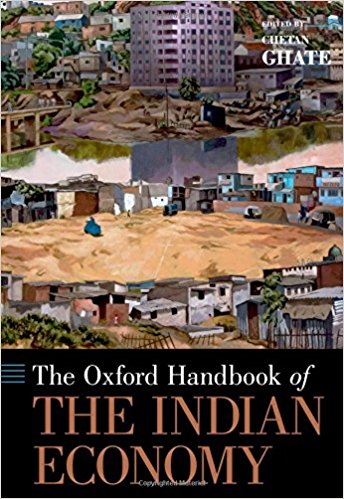
Chetan Ghate

This handbook deals with a wide range of India’s economic development experiences on poverty, industrialization, displacement, demography, institutional reforms, macroeconomic reforms, sectoral reforms and issues related to globalization, besides giving a sketch of India’s development experience at the macro-level both from colonial and post-Independence periods.


Reviewed by: Velayutham Saravanan
A.G. Noorani

The book under review brings together fifty-one book reviews and essays written by A. G. Noorani over the past four decades.


Reviewed by: Vikhar Ahmed Sayeed
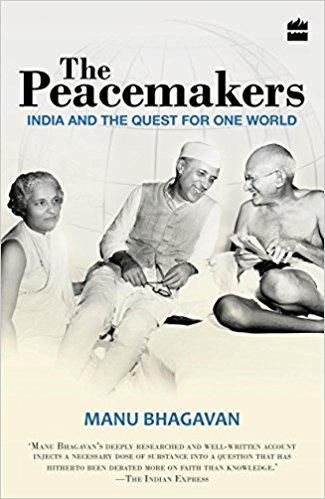
Manu Bhagavan and Anne Feldhaus

The foundations of Independent India’s Foreign Policy are contained in Article 51 of the Constitution which stipulates that the state shall endeavour to (a) promote international peace and security (b) maintain just and honourable relations between nations (c) foster respect for international law and treaty obligations in the dealings of organized peoples with one another; and (d) encourage settlement of international disputes by arbitration.


Reviewed by: Lakhan Mehrotra