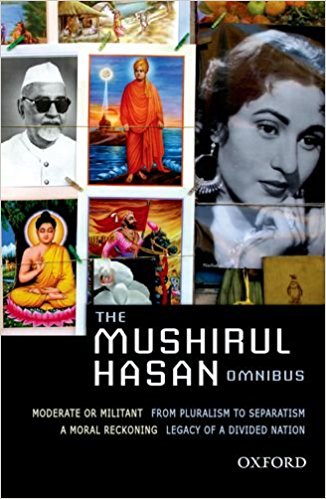
Mushirul Hasan
Mushirul Hasan is one of the most prolific historians specializing in the study of ‘modern Indian history’. His corpus of work is vast and consists of several monographs.
Reviewed by: Vikhar Ahmed Sayeed

Mushirul Hasan is one of the most prolific historians specializing in the study of ‘modern Indian history’. His corpus of work is vast and consists of several monographs.
The study of an ideologized and activist organiation like the Majlis-i-Ahrar-i-Islam(MAI) is actually a journey through several inter-related domains including political Islam, South Asian Muslim identity politics,
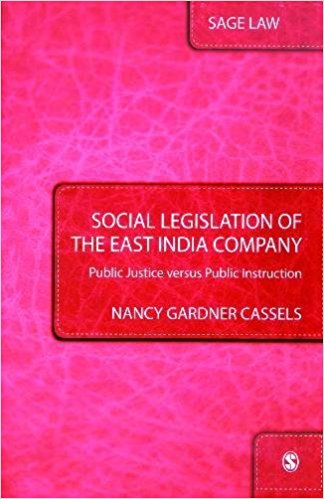
Nancy Gardner Cassels’s book as the title suggests is a scholarly account of a range of East India Company legislation across various fields, from Sati to Emigrant labour, and from Meriah Sacrifice to the Pilgrim tax.

Colonial land management forms as such did not usher in a new mode of production or fundamental changes in India’s Socio-economic structures. Nor was our differentiated peasant society solely a colonial phenomenon.

Shiv K. Kumar made his name in the Indian literary world as a poet. He is also a highly successful member of academe as can be seen from the impressive string of appointments listed in the biographical note on the back jacket of his collection of short stories.
This book won considerable acclaim when it was first published (by Virago) in 1978 for its exposure of the terrible condition of Asian Women workers in Britain. This book is more a political document than a sociological monograph—while it is based on a series of interviews with Asian Women it is not so much a survey of conditions as demonstration of their nascent political unity.