Mangesh Kulkarni
Though Political Science is a contested discipline there is near unanimity about its basic foundational structure.
Reviewed by: Sushila Ramaswamy

Though Political Science is a contested discipline there is near unanimity about its basic foundational structure.
This is yet another book that obsesses and agonizes over China’s rise, how the logic of strategy will dictate the choices China makes and the responses its actions are likely to evoke. China’s political leaders are said to have little agency to dictate this future course though, ‘trapped’ as they are ‘by the paradoxes of the logic of strategy’.
The Peace of Westphalia 1648 laid out the ideals of the state, the Westphalian ideal, which was only realized three centuries later with the end of the colonial era and national self-determination as the sole principle of the political organization of the world. The world became populated by bounded national, social, economic and cultural communities.
This is a hilarious coming of age story set in Madras of the 1970s. The author obviously belongs to an illustrious family—and is an illustrator, cartoonist, graphic designer and writer, all of which you can see the protagonist of the book Gopi has the potential for becoming later in life.
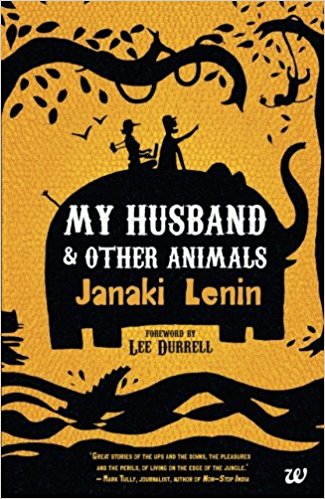
We are fast moving towards an era when we look to admire tigers in faroff forests, enjoy the antics of monkeys in zoos and fish in glass bowls.
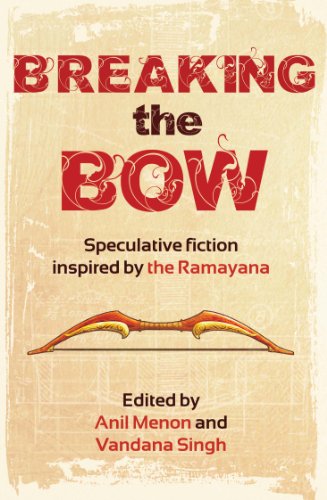
When asked to review the book Breaking the Bow: Speculative Fiction Inspired by The Ramayana, I was initially quite excited. The reasons were many, but primary was the fact that due to the interest of my four-year old daughter in Indian mythology, I had been reading the Ramayana almost every night with her, telling her the story of ‘Ram-Sita’.