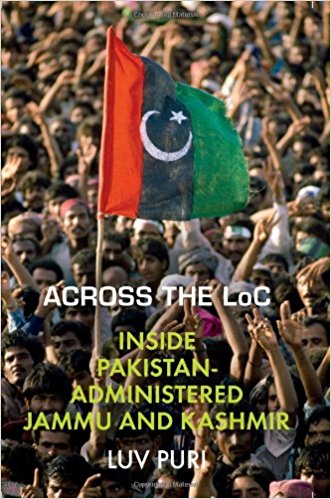
Luv Puri

In the early 1970s,’ wrote the political activist—and, in his youth, would-be insurgent—Nasir Gilani, ‘the crossing of (the) LoC was as mystical for a Kashmiri youth as the Eve St. Agnes to a virgin.’ His contemporaries, Gilani noted, ‘seemed mesmerized by a belief that a solution to all their ills on the Indian side of Kashmir lay on the Pakistani side of Kashmir.’..


Reviewed by: Praveen Swami
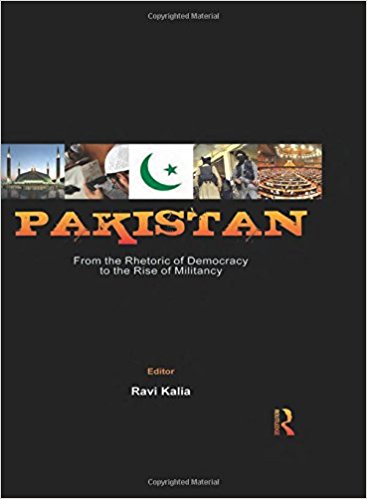
Ravi Kalia

At Independence in 1947, Pakistan was a nation, full of hope, aiming to become a progressive homeland for South Asia’s Muslims. That dream remains unfulfilled. Despite roughly comparable socio-economic and political conditions as in India, democracy has consistently failed to take root in Pakistan and the country remains…


Reviewed by: Jabin T. Jacob
Bruce Riedel

The nature of the US-Pakistan relationship has been very difficult for many analysts to fathom. Is it a relationship based on some broad principles and common objectives or is it an opportunistic alliance—from which neither is able to disengage? That there is little trust between the two countries has been obvious over the years…


Reviewed by: Ajay Darshan Behera
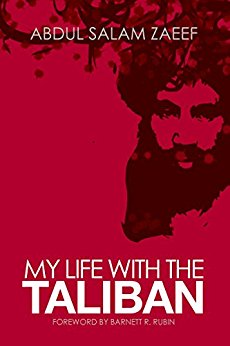
Abdul Salam Zaeef

Ten years after the invasion of Afghanistan, the countdown for the American withdrawal has formally begun. The United States President, Barack Obama, has announced that 10,000 American troops will leave Afghanistan by the end of this year and another 23,000 by the summer of 2012. Over the next two years,…


Reviewed by: Srinath Raghavan
Namichand Jain

Muktibodh Rachanvali is a six volume compilation of the total literary output of one of the most remarkable writ­ers of our time. Born in 1917 at Sheopur, Gwalior, in a middle-class family, Muktibodh died in New Delhi in 1964 after a prolonged illness, leaving behind a size­able body of work most of it unpublished.


Reviewed by: Mrinal Pande
Faizur Rasul

This unexpected and delightful autobio­graphy would have been extra-ordinary enough for its lively, concrete and witty prose (all qualities rarely found in English written by Indian authors) but becomes even more so when one discovers it is the work of a Bengali Muslim who left school.


Reviewed by: Anita Desai