Anupam Goyal

A rapidly rising population in any society can potentially exert severe pressures on the environment, on social and physical infrastructure, and on public services essential for decent living. Particularly in a context of resource constraints, very high rates of population growth can adversely affect even the carrying capacity of the planet. When India’s population crossed a billion, it caused unnecessary alarm and anxiety among many.

Two hundred years after Adam Smith wrote the Wealth of Nations, Gunnar Myrdal produced his seminal work on the Poverty of Nations. This is ironic for, in the intervening two centuries, the world shifted not from wealth to poverty but the other way round. The agriculture, industrial and scientific revolutions heralded unprecedented improvements in material well-being and social indicators. But the gains were so uneven that even as large parts of the world enjoyed remarkable prosperity, mass poverty continues to be a complex and compelling challenge in much of the Third World.
Ashis Nandy is no unfamiliar name. His contrarian positions on a range of issues – even sati, have continued to intrigue, if not irritate many of his readers. He is also, as he claims, consistently misunderstood. Take his writings following the infamous case of the Deorala sati. When most commentators were railing against the barbarous custom, arguing for the use of state force to root out a heinous practice, Ashis Nandy chose to defend the idea of sati, even while denouncing the specific instance at Deorala as murder.

Religion stands on tiptoe in our land Ready to pass to the American stand. – Herbert, the Church Militant L.235
The lines quoted above were written at the beginning of the seventeenth century, but when we read them here in India today, the meaning spreads beyond the haze of the Protestant struggle in England. With hands in pocket it walks off to the lanes of Ayodhya and Godhra, still pock-marked with militant religiosity.
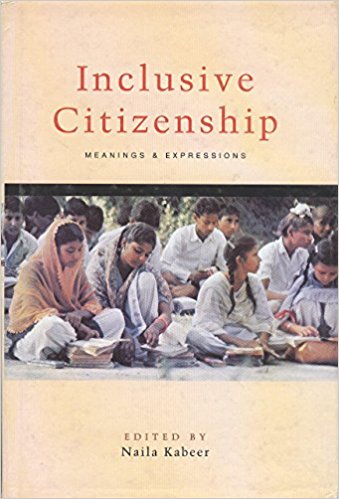
Realization of creative possiblities in citizenship is an imporant part of the emancipatory politics of modernity but citizenship in itself as it is tied to the bounded logic of the nation-state in modernity is as much exclusionary as it is emancipatory. The story of citizenship in the modern world is thus a story of struggle to expand its realm to include previously excluded groups—slaves, women, and varieties of racial, religous, ethnic and colonized others.