Bangladesh and Pakistan:Flirting with Failure in South Asia is essentially a political (and military) history of the two countries since 1971. Yet there is, notably in the case of Pakistan, sufficient recounting of the past to make the present more comprehensible.
Indians of Nepali Origin (INO) could be described as the unrecognized dimension in India-Nepal relations. They are also a little-understood and under-estimated component of India’s pluralistic mosaic.
Reading any book on Sri Lanka at this critical juncture in Sri Lankan history is like preparing oneself for an account of history that is fast getting dated and passé.
Recovering and reconstructing women figures from the past constituted the earliest moves of feminist writing which preceded and then accompanied larger critiques of history on the ground that conventional modes of writing and narration were precisely that which rendered women, indeed gender itself, invisible.
The historical experience of temple desecration in pre-modern India—and, at a more general level, contested history revolving round Indo-Muslim rulers and states—has become a sensitive mass political issue in contemporary India.
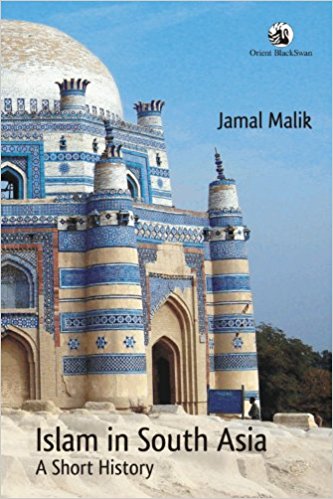
Jamal Malik’s book Islam in South Asia: A Short History is anything but a short history of the religion as it evolved in the region. Running a good 500 plus pages this is one of the most dense and comprehensive histories on the subject.