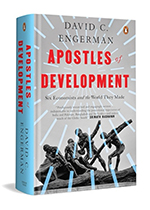
In contrast, Jagdish Bhagwati was one of the leading global defenders of trade liberalization. While Sen worried about social justice, Bhagwati argued that open markets and rapid growth would lift all boats. His influential Planning for Industrialisation co-authored in 1970 with Padma Desai, critiqued the inefficiencies of India’s import substitution strategy and the ‘Licence Permit Raj’ that was stifling rather than promoting industrial growth. He has regularly and publicly clashed with Sen over the proper sequencing of reforms.
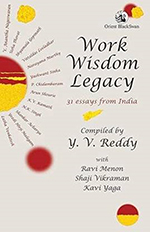
Part V of the book on ‘Media’ has five articles where the authors refer to themselves as ‘journalists’ rather than media persons; each piece contains fascinating details of their encounter with people and events in all walks of life, including challenges that had to be resolved internally within the organization and those encountered in the course of one’s work journey.
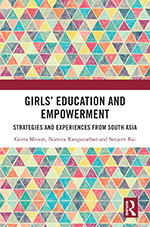
The book has been written taking this as the backdrop. The authors pose some questions in light of the need for understanding the initiatives taken and the strategies used in a nuanced and detailed manner. Some of these questions pertain to: what were the principles and assumptions that guided them? How was social change mediated? What contextual strategies were devised for the continuity and safety of girls’ education? And how was gender identity reconstructed?
2025
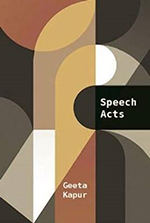
Kapur might carp at my introduction for, as she tells Saloni Mathur, ‘I describe myself quite simply as critic and curator. “Art historian” is not a correct academic description for me, and I am not comfortable with the self-attribution of a theorist. Although the term “critic” seems now reduced to the blogger or the newspaper columnist, in the early 1960s, when I was a graduate student in New York, it was starkly different.
Photography happened rather late in Rai’s life. He had started as a qualified engineer and had dabbled in a couple of government jobs, but his restless mind was in search of something else. He constantly recalls his mother’s saying in Punjabi which means, ‘If we do not work dedicatedly, we will not achieve the heights of heaven.’ Encouragement by his elder brother S Paul who was an established photojournalist and the urge to do something different brought about the change Raghu Rai was looking for.
Rama Kant Agnihotri challenges monolingual biases in his analysis, focusing on the phenomenon of redundant compound formations in Hindi. Through examples like dhan-daulat (wealth-wealth) and chai-paani (tea-water), he explores the layered social and historical meanings embedded in everyday expressions.