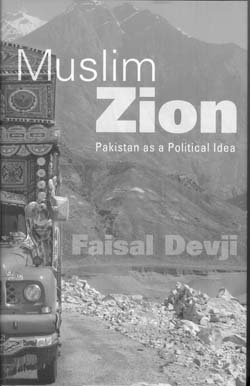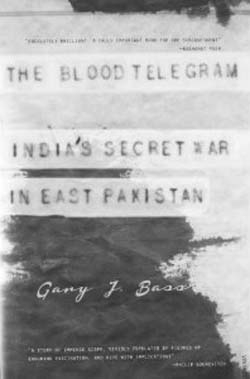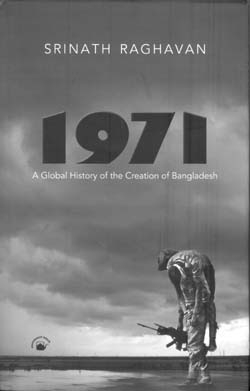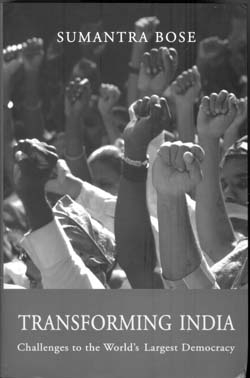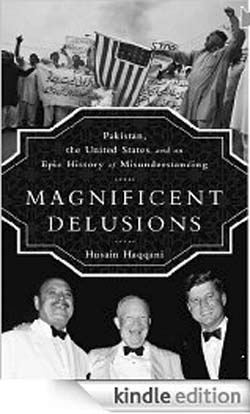
If and when foreign observers of Pakistan want to discover more about how the country behaves as it does, they can get some answers from two books published in 2013: Husain Haqqani’s Magnificent Delusions:Pakistan, the United States, and an Epic History of Misunderstanding and Francesca Marino’s Apocalypse Pakistan…
One of the first writers, if not the first, to compare the condition of Muslims in India and Jews in Europe was a British Professor at Aligarh, Theodore Morison, who happened to be the son-in-law of the first Jewish graduate of Oxford University. Writing in 1899, shortly after the founding of the World Zionist Organization, Morison portrayed the newly launched campaign…
The first is that the sanguineous-sounding Blood Telegram refers to a cable sent by Archer Blood, Consul General in Dacca (now Dhaka) on 6 April, 1971 to the US State Department drawing attention to the inhuman atrocities being perpetrated by Pakistani troops in East Pakistan (now Bangladesh) on the local Bengali population.
How does anything happen? The question seems simple enough, but its answer, once you have side-stepped the philosophical minefield of whether causes exist at all, can take you into diverse intellectual domains:
The Partition of British India in 1947 into the new nations of India and Pakistan, and the transformation of East Pakistan into the Republic of Bangladesh, in 1971, were events characterized by violence, displacement, and multiple alienations.
The books under review are two additions to the long and distinguished line of books that have puzzled over the improbable success of democracy in India. Sumantra Bose starts off by recalling Seymour Martin Lipset’s view that ‘the more well-to-do a nation, the greater the chances that it will sustain democracy’.