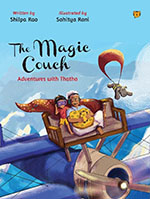
Shilpa Rao
The picture book by Shruti Rao and Sahitya Rani is wholly disappointing. The grandfather here, ‘Thatha’, is the young narrator’s best friend, and they go off on imaginary adventures every day.
Reviewed by: Bharati Jagannathan

The picture book by Shruti Rao and Sahitya Rani is wholly disappointing. The grandfather here, ‘Thatha’, is the young narrator’s best friend, and they go off on imaginary adventures every day.
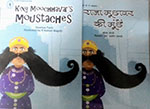
This is a story about a kingdom called ‘Moochhapur’. Bankim, a traveller on his way comes across this unique name for a place and wishes to go and see the same. The story is narrated by Bankim. When he enters the kingdom, he sees men with all types of moustaches—big, small, curled, and more. People appear busy with their work with large moustaches.
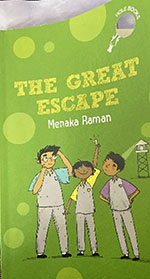
This is a story about Sachit, a boy studying in Class III who joins the Wunderkind Academy and has recently shifted to the city of Bangalore and his adjustment perils thereon.In Sachit’s mind, escaping this new school seems like the opportunity for adventure and a gateway to freedom.
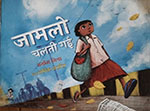
Jamlo is walking even today. She is walking for a world that needs justice and equality. Samina Mishra, Tariq Aziz, and Sushil Joshi who has woven the story in Hindi, haven’t just put down some words and lines and images. They have created a chronicle.

Question: You are a film-maker by training and profession. What brings you to children’s books?Samina Mishra: I came to children’s books via a film that I was hoping to make but didn’t. That turned into Hina in the Old City (that Eklavya has now republished as Hina in Purani Dilli), my first book for children.
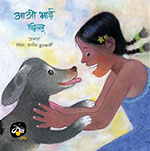
These six books provide a glimpse into what is being written for children in Hindi today. Three of the writers—Sushil Shukla, Prabhat and Manoj Jha have already made their place in contemporary Hindi literature (for adults).