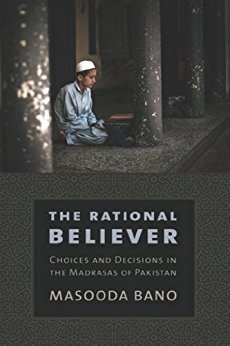
The practice of conceptualizing the political world in binaries is fairly common. While these binaries have been useful for conceptual clarity scholars who are committed to binary conceptualizations such as modernity/tradition, religious belief/secularism, state neutrality/intervention and individual/community sometimes risk ignoring specificities of actual texts or events; they assume that patterns are produced over time fitting into mutually opposed set of ideas.
The celebrated New Left historian and political essayist Perry Anderson’s latest book The Indian Ideology appears at a time when several mainstream publishers with their assorted wares are proclaiming India’s arrival on the stage of world history.
2013
The idea of ‘minority’ and ‘minority rights’ has been a matter of intense debates, ever since the modern nation-states came into existence.
The plethora of commentaries and critiques on Indian political thought in the early seventies that saw a dismal disconnection between theoretical endeavours and philosophical traditions, was based on the fact that the latter seemed to play no role in the way social sciences and politics were practised in India and elsewhere.
Anchoring on Banaras—a site where not only cultural plurality permeates and colours its social fabric but where medical plurality also thrived within the context of East-West encounter—Indigenous and Western Medicine in Colonial India delineates varied shades of the social history of medicine reflecting on ‘the multiplicity and complexity of social interaction and encounter between indigenous and western medicine’ (p. XI) that still endures in Banaras.
I had the privilege of reviewing Mridula Ramanna’s earlier volume, Western Medicine and Public Health in Colonial Bombay, 1845-1895 in The Book Review (Vol XXVII, No.8, August) in 2003.