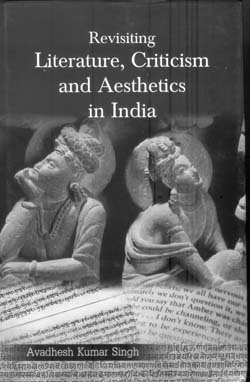
Avadhesh Kumar Singh

Revisiting Literature, Criticism and Aesthet- ics in India is an ambitious and valiant attempt at doing and being several different things. It brings together sixteen of the veteran author’s essays on themes like ‘Word and Beyond: Questions of Meaning and Interpretation’, ‘Theory of Creative Process in Narratives about the Ramayana and the Mahabharata’…


Reviewed by: Shonaleeka Kaul
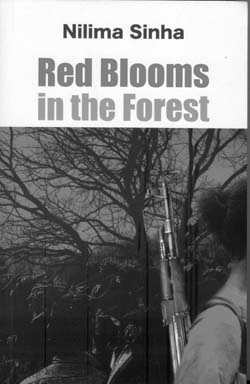
Nilima Sinha

This book belongs to the genre of Hajar Churashir Maa by Mahashweta Devi and Uttaradhikar-Kalabela-Kalapurush—trilogy by Samaresh Majumdar, treating the difficult theme of the Naxalite movement. But while those relate to the movement among educated and urban youth (sparked off in 1967 at the village of Naxalbari in West Bengal), Nilima Sinha’s novel refers to the more recent insurgence in Jharkhand as seen by a local girl.


Reviewed by: Dipavali Sen
Sabeena Gadihoke

When, almost fifty years after the first daguerreotype arrived in Europe, George Eastman invented the small ‘brownie’ camera, he brought photography into homes worldwide. Indian photographic aficionados were not far behind their western counterparts, though initially photography was an elite preoccupation. Soon, Kodak advertisements that used women as models were validating a slowly growing tradition of the woman with a camera.


Reviewed by: Malavika Karlekar
Shilpi Goswami and Deepak Bharathan

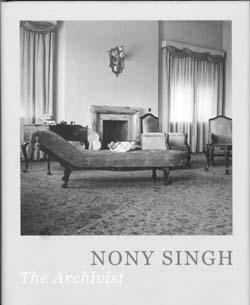
The three books reviewed largely deal with the representation of history—partly (as in the first book) or exclusively (as in the other two books) through the medium of historical architecture.
The first book is essentially a catalogue of an exhibition centred around an album of photographs of the Sri Aurobindo Ashram at Pondicherry, taken in 1950 by Henri Cartier-Bresson.


Reviewed by: Anisha Shekhar Mukherji
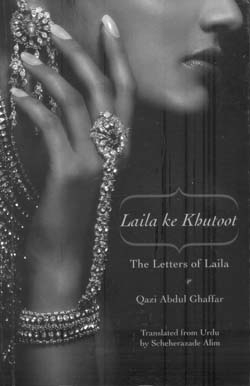
Qazi Abdul Ghaffar

Laila ke khutoot, literally meaning ‘Let- ters of Laila’, is the story of a prostitute, her perspectives on men and the idea of conjugal love revealed through the letters she wrote to one of her lovers. In the latter part of the book ‘Majnun ki diary’ Qazi Abdul Ghaffar, the author tries to portray the confusion, cynicism and alienation of so called educated young men who had gone astray in pursuit of their unbridled sensuality.


Reviewed by: Shah Nadeem
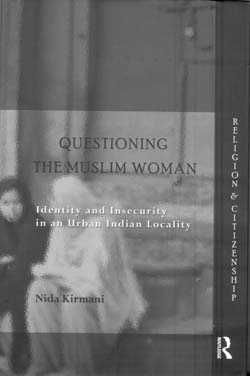
Nida Kirmani

Questioning the Muslim Woman by Nida Kirmani is a remarkable piece of work in which she tries to deconstruct the category ‘Muslim women’ through the narrative approach. The study was conducted in a Muslim majority urban locality (Zakir Nagar) of the capital city of India. Though the category of Muslim women or issue of Muslim women has always been a debated subject…


Reviewed by: Sabiha Hussain