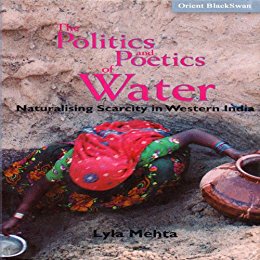
In recent decades, scarcity of water has been experienced due to an increasing trend in competing demands of the different stakeholders in different countries leading to a number of conflicts within the basin, between the basins of the state and between the states and countries. It has now been aggravated manifold due to the demand from different users like agriculture and industry besides domestic water supply.
Privatization of State Owned Enterprises (SOEs) increasingly dominated the policy canvas for the better part of a decade until the coming of the UPA coalition. The previous BJP-led government made sweeping privatization of non-core SOEs its mission, with fair number of sales, until its denouement with the HPCL/ BPCL controversy. Thereafter, Manmohan Singh’s government pulled back the privatization reins.
With the Indian economy rebounding strongly, there is no doubt whatsoever that this provides a favourable conjuncture to tackle its fiscal challenges decisively. GDP growth of 8.1 per cent last fiscal and a 7 percent plus trajectory in prospect in 2006-07 and beyond does provide a context for lowering the government’s fiscal and revenue deficits and reducing public debt levels relative to output.
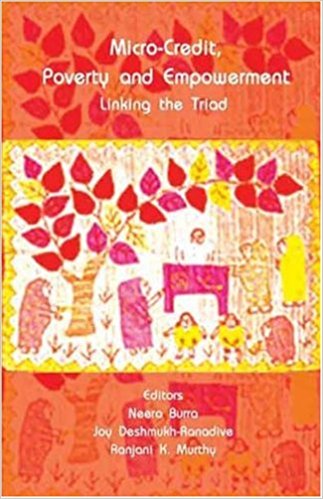
The central issue addressed by this book, using six Indian case studies, is the impact of micro-credit (financial services for the poor) on poverty and women’s empowerment. The six case studies cover a range of organization forms. Micro-credit in India predominantly uses two group-lending models-the Self-Help Group [SHG] and the Grameen-and is usually focussed on women clients.
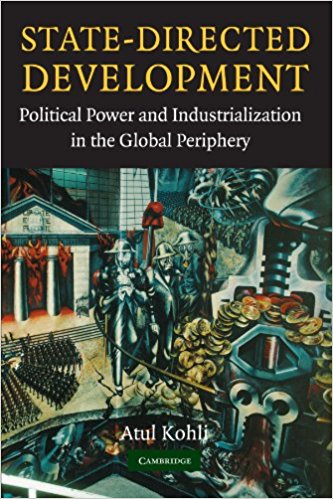
This book is to be welcomed for a number of reasons. Firstly, it brings politics back into the discussion of development issues; secondly it examines industrialization as a process that transforms society (rather than viewing it as merely a numerical growth in industrial output); thirdly, by analysing the experiences of Nigeria, India, Brazil and South Korea it addresses the problems of countries with undistinguished records, in addition to that of an East Asian Tiger.
Editorial