By Centre for Science and Environment

A notable absence in the text is any discussion of urban biodiversity or the relationship between urbanization and ecosystem health. Given that India’s urban population is rapidly expanding, and that many students using this book will be city dwellers, this seems a significant oversight. The focus on ‘indigenous communities and grassroots conservationists’ is valuable but risks reinforcing the false dichotomy between nature and civilization, as if biodiversity exists only in distant forests rather than in the cities where most students live.


Reviewed by: Mir Wafa Rasheeq
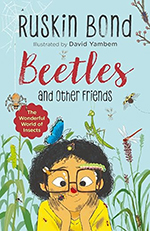
By Ruskin Bond. Illustrated by David Yambem

2026

We also learn that though we might find insects irritating and harmful, they form a very important part of the natural world. ‘Imagine if, one day, all the insects in the world suddenly disappeared. Many vegetable and flowering plants would die, for these plants cannot bear fruit or seeds unless an insect transfers their pollen. Fishes and birds that feed on insects would vanish, and many of the animals that depend on these fishes and birds for food would starve too. That would mean that not long after,


Reviewed by: Bulbul Sharma
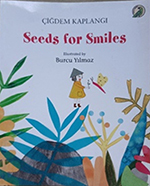
By Çiğdem Kaplangi. Illustrations by Burcu Yilmaz

A beautiful idea woven into an imaginative plot. The simple story conveys a wealth of meaning, fostering love for Nature and gardening as an essential need to enliven the monotony of concrete buildings. Adorably, flowers are compared to smiles and planted flowers blossom into smiles on the faces of everyone, hence the seeds for smiles.


Reviewed by: Ira Saxena
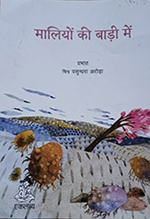
By Kavita Prabhat. Illustrations by Vasundhara Arora

Each page relates the story about the natural world of a horticulturist reaping the charm of his crops. Every block of land shown on each page is under the control of a gardener: Hiralal, Moolchand, Ramphool or Fiza Bano and Ikra Bano adding a personal touch to the narration, which begins with describing the rows of radish in the vegetable garden. Further on follows picturesque imagery of whatever occurs in open spaces of plantations,


Reviewed by: Ira Saxena
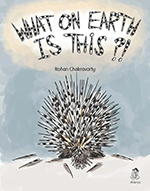
Written and illustrated by Rohan Chakravarty

The book succeeds admirably in both providing information about these vanishing species and sparking the reader’s curiosity to learn more. While there is a wealth of information available about wildlife, presenting it through a picture book requires thoughtful curation—balancing what the reader finds entertaining with the right amount of detail to sustain their interest.
The book skilfully maintains this sense of curiosity without overwhelming the reader with too much information at once. The author and illustrator is an aware citizen with a deep passion for wildlife


Reviewed by: Rohan
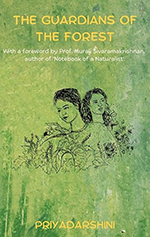
By Priyadarshini Panchapakesan. Illustrations by Ashlin Sara Paul

The Guardians of the Forest, a middle-grade adventure novel with a touch of magic realism, is set in a fictional Blue Mountain. The story is focused on a bunch of eighth graders, including the anonymous narrator, enjoying their last day as middle-schoolers before they transition to high school. One can tell that they are a tight-knit group of friends and their school holds a special place in their lives for each of them. Adventure and thrill pick up momentum in the story when one of their friends, Megham,


Reviewed by: Radhika Chhaparia
By Ruskin Bond

Each section that covers a season is introduced through a short extract from John Lang’s travel book of 1859, Wanderings in India. These lines give us a glimpse of the season and the primary activities that were highlights of that season during that period, adding a quaint, old-world charm. The book captures the transition of nature from one season to the next, as well as the corresponding and accompanying changes in the lives of the people.


Reviewed by: Asha Sharma
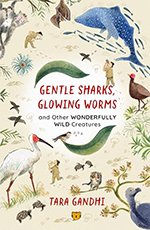
By Tara Gandhi

In 2026, it is entirely apposite that a book about creatures in the wild begins with the author receiving a text and video message. The message bears exciting news—there’s a whale shark swimming near Chennai port! Let’s unpack the creature. It’s a shark, not a whale, but as large as the latter; it is, indeed,…


Reviewed by: Bharati Jagannathan
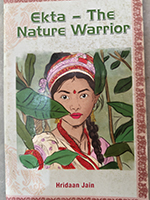
By Hridaan Jain. Illustrations by Pulkit Jain

The story dealing with the cutting of forests to build a five-star hotel is very touching. We see how a nature-loving child can also influence a hard-headed businessman. The next story is about the plastic waste strewn everywhere that can be removed by organizing colonies and communities to become active partners in clearing up the mess, instead of waiting for government or waste-clearing agencies to do the job.


Reviewed by: Jaya Krishnamachari
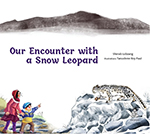
By Sherab Lobzang. Illustrations by Tansheree Roy Paul

It is fascinating to read about how children who belong to such geographies grow up, how they brave encounters with carnivores in the valley. The reader gets pulled into the everydayness of communities inhabiting mountainous regions. The story also presents a view that is rooted in the realities of these geographies and breaks away from romanticizing a place like Ladakh and instead, chooses to share the story of its people, their lives, their knowledge and prior experience. The book also delves into finer knowledge of the community about what to do when faced with big cats, various important practices to ensure safety of fellow herders,


Reviewed by: Nidhi Qazi
Jane Sahi

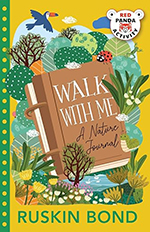
In many of his books Ruskin Bond expresses his own delight in the natural world so vividly—whether in describing the movement of a hungry snail or the ‘friendly presence’ of a firefly in his room—that I had expected to find some such gems in this book about nature journaling. His poetic voice and particular gift of close observation and humour would have enriched the book and would have been an inspiration to young readers.


Reviewed by: By Ruskin Bond
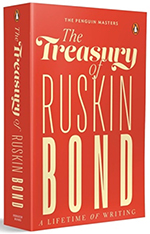
By Ruskin Bond

Human contact! That was what I missed the most. It was not to be found in the office where I worked, or in my landlady’s house, or in any of the learned societies which I had joined, or even in the pubs into which I sometimes wandered…The freedom to touch someone without being misunderstood. To take someone by the hand as a mark of affection rather than desire…To be among strangers without feeling like an outsider. For, in India there are no strangers…
And so, inevitably, it was the return of the native back to India!


Reviewed by: Nita Berry
By Shreya Ramchandran. Illustrations by Aindri C

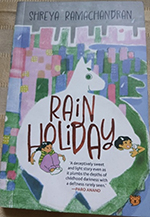
When she stops responding to her calls and texts, worry sets in. Rekha’s investigations bring in more school fellows, most nurturing deep complexes and living lonely. Meanwhile, her own home life is unsettled with her father’s sudden reappearance. The long stretch of rainy days, however, intrudes into Rekha’s efforts to handle small mysteries and apprehend tough moods. With the help of Mighty, a monster created by the two friends, she learns the benefits of listening to heal a friend, sometimes playing games and being there for a friend in moments of darkness all around.


Reviewed by: Ira Saxena
By Arathi Menon
DA
2026

Ved accidentally discovers that Da is gay. Menon captures the authentic voice of a thirteen-year-old about this very sensitive topic. Ved’s narration is a mix of adolescent naivety, sharp observations, and deep protective instincts. While he does not understand the gravity of Section 377, he does understand the fear of losing his father to an unkind, unforgiving world.
Da has humour and heartbreak. It has curse words and tragedy too.


Reviewed by: Andal Jagannathan

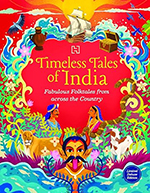
Since the intended readers of this book are children, the bright cover in primary colours with its illustrations redolent of the familiar tropes of mystery, adventure and romance, immediately invites one to delve into its pages and travel across all the thirty-six States and Union Territories, on a journey that is instructive and entertaining in equal measure. Each journey is steeped in local colours, costumes and cuisine, and the minute details of the topography with its botanical, avian and zoological richness. The imaginative teleporting makes the book an immersive experience from which one emerges with a feeling of having actually been there and lived among the characters.


Reviewed by: Anjana Neira Dev
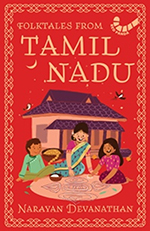
By Narayan Devanathan

Turning to the book of stories from Tamil Nadu, I could demonstrate this through a few themes and examples. The idea of talking animals and birds is so common that it builds certain stereotypes of the wicked crow, the diligent sparrow, the wily jackal, and such others. In the story ‘The Lazy Crow’ (p. 30), Kaka tricks the sparrow, Kurvi, and secretly gobbles up all the food that she had lovingly cooked for her children. In return, Kurvi decides to punish the crow in a smart but cruel way. She invites the crow to her home and offers her a nice warm bath before the meal. As the crow luxuriates in a tub, Kurvi pours buckets of scalding water on her.


Reviewed by: Malashri Lal
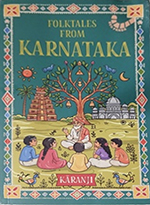
By Karanji. Illustrations by Nasadiya Technologies

Folktales from Karnataka has delightful tales, hand-picked by author-historian Karanji, that have survived generations of storytelling. There is a crow plotting revenge, a prince passing through travails of life to outshine his father the king, the sly monkey tricking the crocodile, a girl transforming into a tree and the legendary creature of Karnataka, Ganda Bherunda. Throughout the stories there is good and evil where, inadvertently, the good prevails, ingenuity wins over might, honesty pays off and magic is interlaced with natural happenings.


Reviewed by: Ira Saxena
Created by Falah Faisal. Illustrated by Artist

The shadows of violence, bloodshed and unforgettable tragedies pave the path to a desensitized majority looking the other way. Newsrooms shedding journalistic integrity and chasing the views of a frenzied population, injecting more and more propaganda and prejudice into their veins are represented very cleverly in the narrative. The domicide against the Muslim minority currently underway in the country falls in line with the classic trope of super-villains destroying structures in comics. The current form of violence the community is facing is woven seamlessly into the narrative. Amongst all the fun one has while flipping through the comic book,


Reviewed by: Shimaila Mushtaq
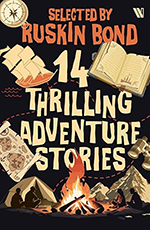
Selected by Ruskin Bond

The first story in the anthology, Nathaniel Hawthorne’s ‘The Ghost of Dr. Harris’ offers a soft, light launch into the world of the supernatural.
Rudyard Kipling’s ‘My Own True Ghost Story’ takes the readers to British India showing how the remnants of that time are still lurking around. Combining mystery with horror, Mary E Wilkins Freeman’s ‘The Shadows on the Wall’ is a spine-chilling tale about the unresolved. ‘Across the Moors’ by William Harvey is the kind of story that lulls you into comfort, only to plunge you into horror when you least expect it. In ‘A Ghost Child’ by Bernard Capes, ‘The Ebony Frame’


Reviewed by: Muthara Khan
By Ramendra Kumar. Illustrated by Vaishnavi Wahi. Edited by Sanya Verma

the tiger revered as divine (p. 97)—before the grievance: that symbiosis was ‘rudely shattered’ by the Wildlife Protection Act of 1972, and within two years the Soligas were recast as encroachers (p. 98). That dispossession is the grievance the book’s argument turns on. The Forest Rights Act becomes the turning point: ‘For the first time, we had a law that spoke for us’ (p. 99) and Madegowda’s conclusion reframes the debate: ‘Conservation doesn’t mean keeping people out; it means bringing people and forests together’


Reviewed by: Shagun Tomar
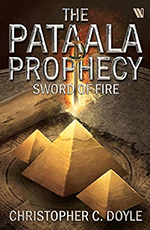
By Christopher C. Doyle

An easy-to-read work of fiction, this elaborate adventure plot is woven onto an Indian landscape over 103 short chapters drawing heavily from ancient pre-historic tales. It is about quests, combats and conquests where malefic forces from Indian epics return to modern times and the human protagonists fight them using machinery of ciphers and chants, mantras…


Reviewed by: Shubhangi Pandit
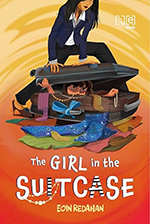
By Eoin Redahan. Illustrations by Mehnaaz Hussain

Poverty, want, and the adult exploitation of children are an important underlying theme. Magda, Orla and Declan are not affluent children playing at danger; want and ambition characterize their lives. Gemma, Orla and Declan’s mother, is an overworked, affection-deprived single mother whose only goal is freedom from the shackles of abject poverty, representing adults who are overwhelmed rather than negligent. Magda’s father Cormac, by contrast, is shady and untrustworthy, considering children and adults alike only as a means to gain.


Reviewed by: Heba Farooqui
By Richa Jha. Illustrations by Ruchi Shah. Translated into Hindi by Shashi Sablok

The scariest moment is always just before you start. — Stephen King This was the first thought that came to my mind when I was reading Akela. We rarely come across books for children or young adults that talk about the difficulties of writing. A few may exist, but they are usually written like guidebooks.…


Reviewed by: Upasana
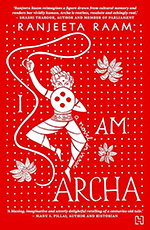
By Ranjeeta Raam

And for 12-year-old Unniarcha, Kalaripayattu is her lifeblood. She wants to be a brave, fearless and invincible warrior whose name and reputation, like her father’s, will evoke fear and admiration. While her strict but loving and encouraging father, Kannappa Chekavar, realizes her potential and supports her in her ambition, her polite but firm mother doesn’t fail to remind her of the reality about marriage, household chores and familial duties. The boys who train under her father taunt her saying girls aren’t sent to fight duels and belong in the kitchen. Almost everyone except her father, her elder brother Aaromal


Reviewed by: Divya Shankar
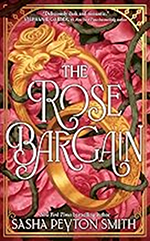
By Sasha Peyton Smith

The novel is set in 1848 England, but this is no ordinary historical backdrop, ruled not by a monarch of flesh and blood but by an immortal faerie queen. This queen bargains with mortals, granting wishes in exchange for something of great personal value—often life-altering and sometimes devastating. At the centre of this world is Ivy Benton, a young debutante stepping into society. Much of the narrative revolves around the competition among young women to win the hand of the Prince, a setup that blends courtly intrigue with faerie magic.


Reviewed by: Sarashi
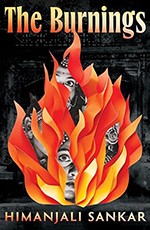
By Himanjali Sankar

The strongest aspect of the book is undoubtedly its suspense. The story unfolds meticulously, with each thread carefully connected to another. It is woven like a spider’s web with intricate, deliberate plots. What initially seem like disconnected events gradually acquire meaning, and the reader is drawn deeper into the narrative, constantly wondering where the story is headed. What draws us deeper into the story also makes us pause along the way.


Reviewed by: Priya Ravi
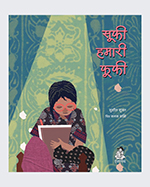
By Sushil Shukla. Illustrations and design by Kanak Shashi Eklavya,

At its heart, this is a story about a young girl looking up to her aunt—a woman who follows her passion, is unapologetically ambitious, and carries within her stories from around the world. What struck me most was its central theme: a woman from a minority community becoming a source of inspiration for a young girl to dream freely and follow her heart, in a world that doesn’t always make space for people from minority communities to do so.


Reviewed by: Nidhi Pal
By Bae Myung-Hoon. Translated from Korean by Sung Ryu
TOWER
2026

‘The Elevator Manoeuver Exercise’ presents an interesting tale of a civil servant in Beanstalk. His role is to monitor strategically and design movement within the tower, including in crisis situations. The story presents the ideological conflict between two groups: ‘horizontalists’ and ‘verticalists’, each defending their view of social life in the tower. In contemporary times, this seems to closely resemble the real world.


Reviewed by: Toolika Wadhwa
By Geeta Dharmarajan. Art by Rajiv Eipe

The story moves between reality and imagination. Characters like Emmeraja, the silk bridge, and other magical elements create an imaginary world, while the illustrations make it feel believable. The colourful and detailed pictures made me feel as if I were watching a film, with Nachiketki climbing trees, flying through the sky, and moving across rivers, mountains, and bridges.


Reviewed by: Neeti Sahu
Selected by Ruskin Bond

‘The Magic Shop’ tests an adult’s cynicism, with a child’s pure wonder about a delightful reality that he doesn’t need to understand. ‘The Psammead’ by E Nesbit gives a comical twist to the consequences of getting wishes fulfilled, literally. In these stories, uncertainty about the world is tinged with wonder and curiosity.
The supernatural stories in this collection become a setting for


Reviewed by: Sunat Tariq
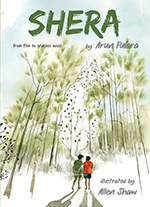
By Arun Fulara. Illustrations by Allen Shaw
SHERA
2026

Throughout the book, you encounter different shades of green. When I read this graphic novel for the first time, I first read the text and then tried to closely observe the illustrations two to three times. Wherever Shera appears, its expressions, movement, and stillness are visible in the illustrations, along with the rustling of bushes, the swaying of tree branches in the wind, and the roar of the Shera. While reading the story solely through the illustrations,


Reviewed by: Deepali Shukla
By Ruskin Bond. Art by Sharan Deep M

The reader is transported to Landour, with its blue skies, the curvy, narrow roads, pine trees, colourful wildflowers, greenery, good food, mesmerizing sunsets, shining stars at night, and a space with no chaos like that of big cities. While reading this book, I could connect it with the beautiful hill stations of Madhya Pradesh’s Pachmarhi and Tamia. When Bond writes about plum trees,


Reviewed by: Melody Xalxo
By Nilima Jha

‘Kunti’ is a tribute to the spirit of independence of a girl familiar in Delhi marketplaces, keen to earn her living by carrying heavy shopping baskets for the rich visitors in cars. In contrast, ‘Vidhi’ is a girl who becomes an IAS officer in Arunachal Pradesh, but as a teenager, she is subjected to parental and peer pressure and unfairly blamed for the accidental death of a schoolmate supposedly following her. As in ‘Anjali’, sensible parents give her correct advice and perspective. ‘The Plan’ creates the atmosphere of a convent school where a child


Reviewed by: Dipavali Sen Debroy
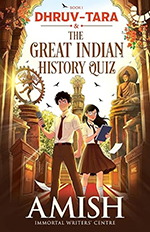
By Amish. Illustrations by Nayan Bose

Amish Tripathi brings forward a captivating story with numerous twists and turns which keep the readers hooked without fuelling anxiety in the young readers’ minds. Starting out as fierce rivals from their first interaction, the two protagonists ‘Dhruv and Tara’ navigate a journey as a team competing for ‘Hamara Itihaas’, the Great Indian History Quiz.…


Reviewed by: Shujat Ali Shahid
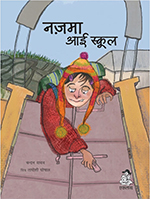
By Chandan Yadav. Illustrations by Taposhi Ghoshal

The children come to school with so much excitement, but the teacher’s attitude in the story is discouraging. As a facilitator, there are a few things that need to be kept in mind while taking this book to children or using it in a workshop. It is important to listen to children’s experiences. Before discussing the story, the pictures can be used to help children read and understand the story.


Reviewed by: Shraddha Kewat
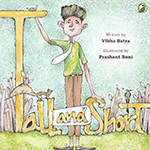
By Vibha Batra. Illustrations by Prashant Soni

Vibha Batra’s simple, repetitive text, with phrases such as ‘Sit, sit, sit’ and ‘Send, send, send’, creates a rhythm well suited to young readers and also reinforces Kabir’s frustration. Prashant Soni employs a whimsical, caricature-like style to convey the boy’s physical distinctiveness and emotional isolation. His exaggerated, elongated limbs are comically out of scale, visually depicting his sense of being out of place. The illustrations also give the teasing scenes a lively energy without losing sight of Kabir’s discomfort.


Reviewed by: Bhavna Jaisingh
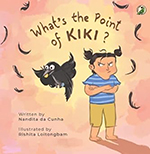
By Nandita da Cunha. Illustrated by Rishita Loitongbam

However, over time, initial feelings of dislike or resentment can gradually transform into a bond of affection. There comes a turning point in the story when the little girl begins to feel a growing bond with Kiki. This happens when Kiki gets into trouble; he becomes entangled in a kite string, and she cannot bear to see him suffer. With her mother’s help, she tries to free him.


Reviewed by: Shiv Narayan Gour
Edited by Navin Menon

There are some delightful tales of wit and wisdom, tricksters and fools, gentleness and cleverness but there are also two or three dark stories that anyone–child or adult–might find troubling. ‘Pi’s Little Girl’ ends with the sacrifice of a young girl to save her village and appease her father. ‘The Bayberries are Ripe’ ends with the accidental murder of a daughter falsely accused of disobedience and her mother’s remorse.


Reviewed by: Jane Sahi
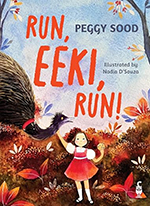
By Peggy Sood. Illustrations by Nadia D’Souza Red Panda,

The little girl in the book is fond of her pet, whom she names Eeki, despite everything the bird can’t seem to do. At one point, she wonders if her emu is lonely without a friend, and whether she should get a second one—until the impracticality of walking two emus at different paces dawns on her.


Reviewed by: Tuhina Sharma
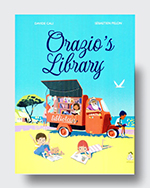
By Davide Cali. Illustrations by Sébastien Pelon. Translated from the French into English by Neha Bhagat and into Hindi by Swati Patel

His patrons eagerly await his arrival, especially because they live in remote areas and find it difficult to secure a steady supply of new books. Each village has a different audience and welcomes Orazio in its own way. The twist in the story arrives when, as Orazio steps away briefly to refresh himself at a water fountain, his precious library-on-wheels rolls down and crashes


Reviewed by: Radhika Chhaparia
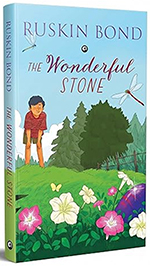
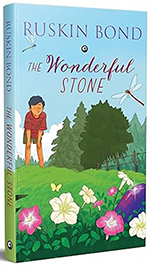
By Ruskin Bond. Illustrated by David Yambem

Well, there is a twist in the tale—which you must read the book to find out! In fact, the story ends in a most mysterious way and is yet another example of the fine, fluid style of Ruskin Bond, whose over fifty children’s books drift gently around the serene Indian landscape, with their profound connections to nature and a deep empathy for all living creatures. The Wonderful Stone can be read with pleasure by any age—although it would be enthralling for young children, especially given its many illustrations and visually appealing layout.


Reviewed by: Kusum Burman
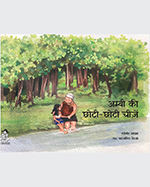
By Eleanor Sangma. Illustrations by Faoneeo Sheeo Translated from English by Neetu Yadav

How do we keep alive those who go away? Through memories, happy and sad, by remembering something they said or they might say in a certain situation, by humming their favourite song, by going through their treasured possessions, chhoti chhoti cheezein which were special for them. These stay with us forever and we feel connected long after they have gone. This feeling of wanting to connect also resounds


Reviewed by: Shivani Bajaj
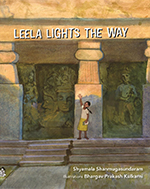
By Shyamala Shanmugasundaram. Illustrations by Bhargav Prakash Kulkarni

A well-told story that is motivating to a young reader and also revealing. To readers who have never known darkness, at least not night after night, it could be a window for them to watch something so new and unusual on Leela’s island. At the same time, it represents many other such places which are still in darkness; where after dusk, people stay indoors, fear noises because they cannot confirm who they belong to, avoid using the toilets at night as they are mostly outside their house and wait for dawn for life to be ‘normal’ again.


Reviewed by: Shivani Bajaj
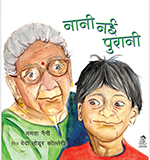
By Mamta Nainy. Illustrations by Veda Thozhoor Kolleri

At its core, the story explores a sensitive yet important theme—changes in people as they grow old. Children share a special bond with their grandmothers; they count down the days to summer holidays just to visit Nani’s home. Here, we see that same bond through a child’s eyes as she watches her Nani slowly change—noticing, day by day, the small shifts in her every gesture and movement. It’s a phase most of us have lived through in some way.


Reviewed by: Nidhi Pal
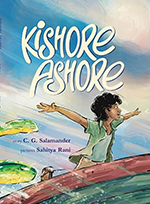
By C.G. Salamander. Illustrations by Sahitya Rani

The book also serves as a good introduction to the life of fishermen on a boat at sea. The expanse of dark, the unending water glittering under the stars and its periodic turbulence are well developed and presented throughout the book, as is the sheer collective effort of throwing and drawing the nets! The contrast of the morning is also well drawn and brings out the contrast. A young boy amidst a group of adult men is well handled. The men share their fears of their first trips in order to put Kishore at ease.


Reviewed by: Anjali Noronha
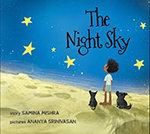
By Samina Mishra. Illustrated by Ananya Srinivasan

Fantasy and reality intermingle through the illustrations, beautifully capturing the essence of the narrative. They weave the words of the story wonderfully in our minds. The colours used for the illustrations are night colours but are still very striking.


Reviewed by: Malaika Berry
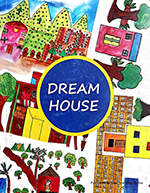
By Students-teachers collective

That these alternatives or ‘dreams’ are built on the very real divisions and contradictions of the present is best seen when Kamdev is sharing about his palace-like house in France, moved by what he had learnt of the French Revolution in class, and Tripti asks him, ‘Do they have caste in France?’ The book goes on to show the group of students and their teacher sensitively engage with the hurt and humiliation one of their classmates has faced on account of caste, and it becomes a small but powerful example


Reviewed by: Dhruva Desai and Ragini Lalit
By Sonima Trisal. Illustrated by Atul Vardhan. Edited by Kusumlata Singh
JANE
2023

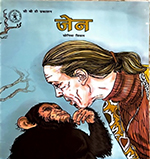
It won the second prize in the children’s non-fiction literature category in the Competition for Writers of Children’s Books in Hindi organized by the Children’s Book Trust. The book follows her childhood, then her determination despite limited resources and her ground-breaking discoveries showing that chimpanzees use tools, form families and have distinct personalities. The book brings in the themes of perseverance and self-belief, especially valuable for young girls who may not always see themselves reflected in stories of scientific achievement. The illustrations are soft, especially the forest and chimpanzee scenes,


Reviewed by: Eishita Tiwari
By Bijal Maroo. Illustrated by Atul Vardhan. Edited by Navin Menon. Translated into Hindi by Kusumlata Singh

It is told through a bedtime story between a father and son. It tells the story of Princess Vidyamati, who could see only one colour each day, whichever she saw first upon waking up. To cure her, a kind fairy asks all of nature, i.e., roses, sun, sunflowers, sea, grass and night sky, to paint a colourful arc for her to see. The king then keeps a painting of this rainbow for his daughter, and that is how the rainbow got its name after King Indrasen. The pictures in this book are bright and full of feeling, especially the fairy and the moment the colours appear. The text is spread across the book in small sections, making it easier for young readers to absorb gradually.


Reviewed by: Eishita Tiwari
By P. Latha

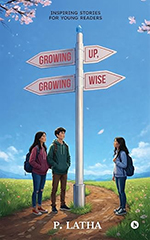
The strength of the collection is in its thematic diversity. Latha is first and foremost a believer in giving life lessons to the old and the young. She takes up different challenges that children and their parents may face, tries to weave those into her stories and ends each story on a positive note. Many of her stories like ‘Indecisive Adi’, ‘A Pat on the Back’, ‘Kitchen Queen’, ‘God has a Plan for you’ and ‘Abhi’s Tech House’ show much forward thinking and resonate with the times. ‘Balu’ is one story which needs to be discussed in


Reviewed by: Chandra Chari
Written and illustrated by Ananya Aparajita Singh

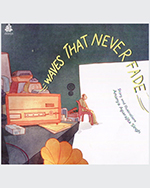
Waves That Never Fade is the story of the Moinuddin Radio Service shop in in the historic Chatta Bazaar near Charminar, Hyderabad. The author explores themes of history, memory, craft, curiosity and intergenerational legacy, as well as the everyday presence of radio and sound, the tactile world of radio repair, and the understated dignity of…


Reviewed by: Aniket Chouhan
By Sushil Shukla. Illustrations by Atanu Roy. Translated into English by Anushka Ravishankar

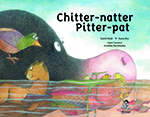
The Louse’s questions do not stop there. Driven by curiosity about its surroundings, it keeps asking one thing after another. It is amazed to see fish, frogs, and turtles underwater. It has a barrage of questions: How can one see what lies beneath the water? Why do you keep swishing your tail? Why do you sit in the water? Do fish pee, too? The buffalo, feigning ignorance, ignores all these questions. Its only response comes from within the water—accompanied by a ‘poo’ sound.


Reviewed by: Anil Singh
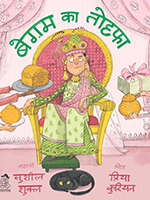
By Sushil Shukla. Illustrations by Priya Kurian Eklavya

Two spreads, in particular, deserve to be lingered over. They are crowded with people—men, women, children, shopkeepers, passers-by, animals, faces and gestures, all caught in the middle of their own small activities. At first, the eye sees a crowd. Then, slowly, individual stories begin to emerge. Someone is looking at someone else; someone seems to be talking; someone is busy with his own work; someone has stopped simply to watch.


Reviewed by: Navnit Nirav
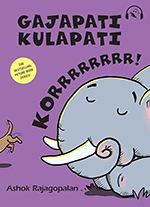
Written and illustrated by Ashok Rajagopalan

The villagers then try to sing him back to sleep, all with their own songs. Everyone from the banana seller to the postman fails and only manage to distract him further from sleep. The grandmother then steps in with a soft lullaby to help our gentle jumbo fall asleep. But now there’s a new problem—his snores! Luckily they are quite soothing, and the village is soon fully asleep again.


Reviewed by: Vishesh Unni Raghunathan
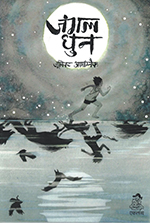
Written and Illustrated by Juliette Armagnac

In Jungle Dhun, French author and illustrator Juliette Armagnac presents a wordless story about a young protagonist awakened by a loud sound in the forest at night, immediately setting him off in search of its source. Created during her residency with the Eklavya Foundation through Villa Swagatam, an Indo-French cultural residency programme, the work features…


Reviewed by: Radhika Chhaparia
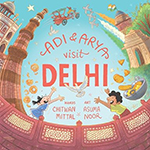
Both by Chitwan Mittal. Illustrated by Asuma Noor

Adi & Arya Visit Kolkata is just as lively. The city’s trams share the street with autos, yellow cabs, and jhalmuri vendors, all captured in a single, crowded, cheerful spread. The children admire St Paul’s Cathedral, take a horse-drawn carriage past Victoria Memorial, and visit Mullick Ghat, one of the largest flower markets, where garlands and gajras take shape before their eyes. A mangrove safari brings a glimpse of the Bengal tiger, while a sunset boat ride on the Hooghly passes under Howrah Bridge.


Reviewed by: Neena Jaisingh
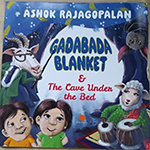
Written and illustrated by Ashok Rajagopalan

Growling bat, Batappa, disturbed in his sleep, scowls as both slide down a rock, slide through a windy tunnel confronting Gyanesh Goat, the quizmaster. Moving into another tunnel the twins face more creatures as they search for Sangeeta sheep to convey Batappa’s message—a song for his beauty sleep. It works and gets for them the magic to reach their bed. All inside the blanket.


Reviewed by: Ira Saxena
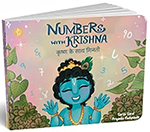
By Sarita Saraf. Illustrations by Priyanka Pachpande

This is yet another of the delightful books by AdiDev Press meant for very small children, those who need to grasp their books with their tiny fingers and perhaps even test their tiny teeth upon them. If reading has a primordial stage, it is to that stage this book caters. The concept by Chitwan Mittal…


Reviewed by: Dipavali Sen Debroy
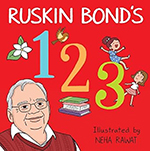
Illustrated by Neha Rawat

Three sparrows hop and chirrup on one page; six girls play together on another. Numbers emerge naturally from these familiar scenes rather than sitting apart as abstract symbols.
The book also incorporates subtle visual search elements that turn counting into a hunt for detail. The page for number 8, for instance, features eight different sports balls, including a cricket ball,


Reviewed by: Bhavna Jaisingh
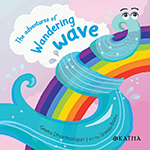
Both by Geeta Dharmarajan. Art by Sreeja Basu

At the end, the book provides an opportunity for children to engage in an activity, reflecting an effort to inspire them to write stories themselves. You read the story, and then you write one too. Thus, the wave’s voyage concludes with a journey of reading and writing combined. The narrative has a strong foundation, but it could have been made more engaging by tightening the storyline and streamlining some of the details. A more concise narrative would have helped maintain momentum and make the key moments and themes stand out more effectively. Nevertheless, this adventurous book is available in both Hindi and English.


Reviewed by: Shiv Narayan Gour
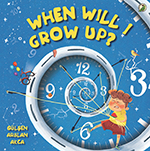
By Gulsen Arslan Akca

The author has written this story with great sensitivity, and the illustrations in the story bring out Bunty’s mood and emotions just as strongly. The illustrations have shades of blue, red, and gold, which show what Bunty is thinking and feeling. You can also see clocks here and there, indicating that time moves at its own pace.
How does a child experience the passing of time? This unfolds page by page in the story. The fun part is that Bunty also makes plans to spend this time. While reading this story,


Reviewed by: Deepali Shukla
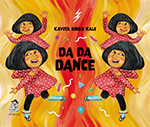
Story and Illustration by Kavita Singh Kale

she takes flight into the boundless sky of her imagination. With a ball on her nose, she transforms into a clown; wearing a cardboard box, she becomes a robot; and with unique antennae on her head, she turns into an alien. Amidst the music and its melody, she shifts fluidly from clown to robot to alien. All this unfolds through the rhythm and movement of the illustrations.


Reviewed by: Anil Singh
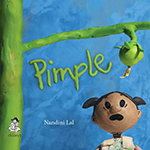
Written and illustrated by Nandini Lal

The story is a kissa, as we say in Hindi: a small incident, sweet enough to be worth telling. It reminded me of a friend’s little cousin who loved bhindi. Every time they went to the market, he would point at a vegetable and announce, ‘Bhindi!’ ‘No, beta, that’s mirchi.’ Another one: ‘Bhindi!’ ‘No, beta, that’s kundru.’ This went on until he finally held up a real bhindi. My friend was about to say no, thinking he was still showing the wrong vegetable, and that is what made it so funny. Children learn this way: they form a schema,


Reviewed by: Mihir Pathak
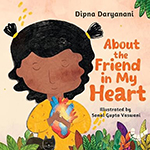
By Dipna Daryanani. Illustrated by Sonal Gupta Vaswani

This, then, is the special something this book has managed to achieve in the simplest of ways. We would all like to encourage kindness and compassion in children but the author has managed to do so in a charming manner without preaching or moralizing so as to get the message across. Of course, she has been greatly assisted by the bright and colourful illustrations by Sonal Gupta Vaswani–and together, they make this an absolutely ideal book to be read to young children—4 years and above—even before they can read it themselves.


Reviewed by: Kusum Burman
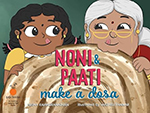
By Nisha Ravindranathan. Illustrations by Maithili Panikar

The story has Paati giving step-by-step instructions to Noni on how to make the perfect, buttery-crisp, yummy dosa. The whole process is beautifully described, using a lot of rhyme and onomatopoeia, making it very lyrical. One wonders if Noni, or any child listening to or reading this story, will be able to fall asleep without getting hungry and needing to eat a real dosa!
Incidentally, this story reminds me of my childhood days,


Reviewed by: Asha Sharma
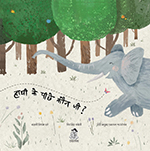
By Priyanka Dave. Illustrations by Brinda Pancholi

A novel piece of designing which has a centre page that opens up like an accordion, followed by another set of pages. Its soft illustrations and the dotted lines on each page act as a gentle nudge and compel the reader to turn to the next page. A butterfly is constant on each page and apparently poses the title question. It tracks all the animals till it completes a full circle and reaches the elephant again, only to realize that the same pattern of one following the other continues. How does that happen?


Reviewed by: Shivani Bajaj
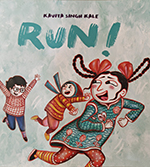
Written and illustrated by Kavita Singh Kale
RUN
2024

A big Himalayan sheepdog chases three children, who come face to face with it and, terrified by its loud bark, start running through the hills. When they reach the edge of the cliff they are met with a furry surprise. The illustrations are colourful and vibrant and little ones would want to see them repeatedly.


Reviewed by: Jaya Krishnamachari