
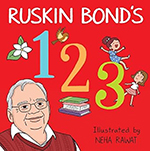
Introducing literacy and numeracy to toddlers requires a delicate balance of clarity and engagement. Ruskin Bond’s 123 and ABC accomplish this by combining simple text with playful visual content.
Rather than presenting numbers as isolated numerals alongside generic illustrations, 123 grounds them in active, everyday scenes. Children learn to associate numbers with actions and nature. 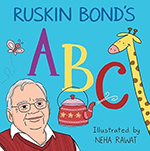 ping-pong ball, and bowling ball. Seven appear on the illustration page, while the small orange ping-pong ball sits on the text page. This layout encourages children to search across the entire spread to find all eight balls, turning a simple numbers page into a spot-and-count game.
The spread for number 10, ten flowers in my backyard, builds both numeracy and botanical vocabulary by labelling ten distinct blooms, including marigolds and petunias. In doing so, the book does more than teach numbers. It invites children to notice and name the natural world around them.
Ruskin Bond’s ABC follows the same approach and extends the basic A for Apple vocabulary. It introduces descriptive word pairings such as Blue Umbrella for B, X marks a spot (treasure map) for X, and Jasmine for J, expanding a child’s receptive vocabulary.
Neha Rawat’s illustrations give children plenty to notice and discover beyond the numbers and words on the page. The recurring presence of the jasmine flower creates a thread of visual continuity, while images of a village, a tea kettle, and a traditional thali create a warm, culturally resonant world.
One small point to flag is the vocabulary level in ABC. Most words are simple and toddler-friendly, but terms such as orchestra, quill, and vulture may be less familiar to very young children. The difficulty therefore varies somewhat from page to page.
The series makes early learning feel less like instruction and more like playful discovery; there are numbers to count, letters to find, and small wonders hiding in plain sight.