
Mary Holmes
This thin volume entitled What is Gender?, an introductory textbook on the sociological approaches’ to gender, provides a competent and comprehensive overview by organizing issues involved into a neat analytical frame.

S.V. Rajadurai and V. Geetha
Roughly 2500 years ago, there lived a man called Socrates, who maintained that a life not examined was a life not worth living. Tragically, for that very reason, he was put to death by being forced by the Athenian state to drink hemlock. Closer home, in the first seventy-odd years of the twentieth century, lived a Socratic figure, called Periyar E.V. Ramaswami, who suffered a fate worse than state-sponsored murder.
Martin Macwan
2004
Martin Macwan’s Mari Katha is the tale of not just one individual, the author, as the title, “My Story”, would lead one to believe, but that of an entire community—the dalits of rural Gujarat. The book is based on Macwan’s personal experiences with the dalit community. A number of dalit people contributed to this work by reading its drafts and offering suggestions, which were incorporated by Macwan, who gratefully acknowledges their efforts.

Saroop Dhruv
2004
Gujarat has become a byword used casually for the way the historical state has slowly been turning into History. The Kandala tornado, the droughts, the earthquake, the Godhra carnage and the subsequent riots, have made ‘Gujarat’ into a political headline that drowns other voices.
Asha Hans
The issue of disability as a field of academic study as well as a ground for activism is gaining prominence not only the world over but in India too. The recognition of disability as a rights issue in India emerged as significant when the Persons With Disabilities Act was passed in 1995. Another instance was when the disabled demanded that they be included in the Census 2001.
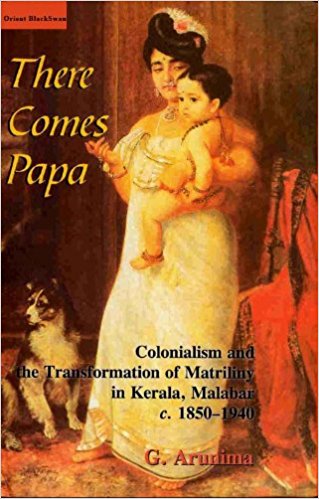
G. Arunima
This is a tensely argued book, which was submitted perhaps a decade ago in Cambridge, as a doctoral thesis. I have heard interesting snippets of it at seminars, at Teen Murti Library (NMML) and the Institute of Economic Growth since 1995 or so, and have been waiting for it to be in print for many years.
Anupama Rao
Gender & Caste is a significant contribution to the ongoing efforts at understanding the imbrications of caste related issues with other political concerns. It represents the first attempt at bringing together essays that are exploring the critical interconnections between caste and gender. And precisely for that reason it is striking that this anthology on caste is the first in the series “Issues in Contemporary Indian Feminism” edited by Rajeswari Sunder Rajan and published by Kali for Women in association with the Book Review Literary Trust, New Delhi.
Andre Beteille
Dedicated to Dharma Kumar, this book by Beteille is a collection of 12 papers published elsewhere between 1978 and 1999. These are reflective pieces on Indian society’s uneven experiences in the course of transition from a traditional to a modernizing one. Antinomies are not the same as binary opposites, though they are a sort of contradiction in norms and values (rather than the socioeconomic features of the roles and relationships) deployed by the society as it regulates itself.
Sebastian C.H. Kim
The vital importance of this timely and extremely well-written book cannot be stressed enough. In the surcharged atmosphere characterizing the contemporary discourse on conversion in India, where emotions run high, and where perceptions and prejudices clash with the deafening sound of incomprehensibility, where well-disposed and sensitive-minded people are often overwhelmed by the unfortunate directions which the debate on conversion often takes, Sebastian Kim offers us a sober, carefully researched and painstakingly documented book on the emergence of the conversion issue during the last one hundred and fifty years in pre- and post-independent India.

Vasudev Rao
The Madhva Matha of Udupi, founded by Madhvacharya, the proponent of the dvaita, is a fascinating institution. It is an octagonal arrangement where eight Mathas (or Matthas, as pronounced in Kannada) taking their names from villages near the temple town of Udupi have the right of conducting worship in the Krishna Temple by rotation.
Antony Copley
The present work, as per the editor’s own admission, is a companion volume to the one brought out in 2000 under the name Gurus and Their Followers. Apart from including some common authors, the two volumes also reveal strong thematic continuities. Thus in both cases, Gwilym Beckerlegge writes on the ideal of seva [selfless social service],

Caroline O.N. Moser
Despite the volumes written on wars and conflicts there has been a vacuum in research that examines the gender aspects of political violence. Most traditional analysis of conflicts had a subliminal masculinity inherent in the texts. This is now being rectified with a surge of new work that inquires into the gender aspects of political violence and armed conflict.
Lt. Gen. V.K. Sood
It was once said that “war was too serious a business to be left to Generals”. But after reading this book by Lt. Gen. V.K. Sood and Pravin Sawhney, I am convinced; it is even more dangerous, when matters of war and peace are left to India’s incompetent politicians! When India mobilized its armed forces for a possible war against Pakistan following the attack on the Indian Parliament in December 2001
M.V. Ramana
India’s May 1998 nuclear decision forms the backdrop to the contributions in this edited volume. In general, Prisoners of the Nuclear Dream is a critique of the nuclear tests, the motives underlying the decision, as well as the immorality, dangers and costs inherent in developing a nuclear arsenal.
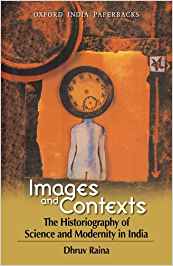
Dhruv Raina
What is the history of science a history of? The answer to this question is not as self evident as might appear. The answer that it is a history of “science” simply invites the further question: what is science? How are its boundaries to be demarcated? By whose authority are certain practices to be designated as “scientific?”
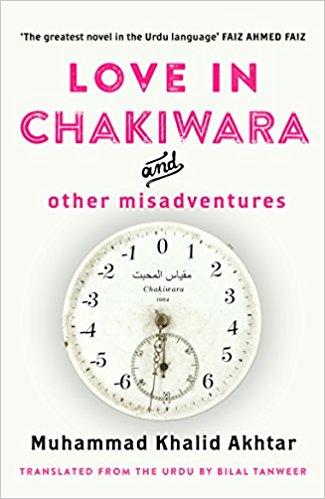
Muhammad Khalid Akhtar
As I googled Muhammad Khalid Akhtar to research his life and times, ¬¬the search engine showed up results for Che Guevara instead. Akhtar would probably have chuckled and found enough fodder there for yet another goofy story.

Ali Akbar Natiq
In his translated collection of short stories What Will You Give for This Beauty?, the Urdu poet, novelist and short story writer, Ali Akbar Natiq presents us with twelve stunning tales of lives shot through with heartrending cruelty, deprivation and injustice, but not without moments of genuine resistance and hope.
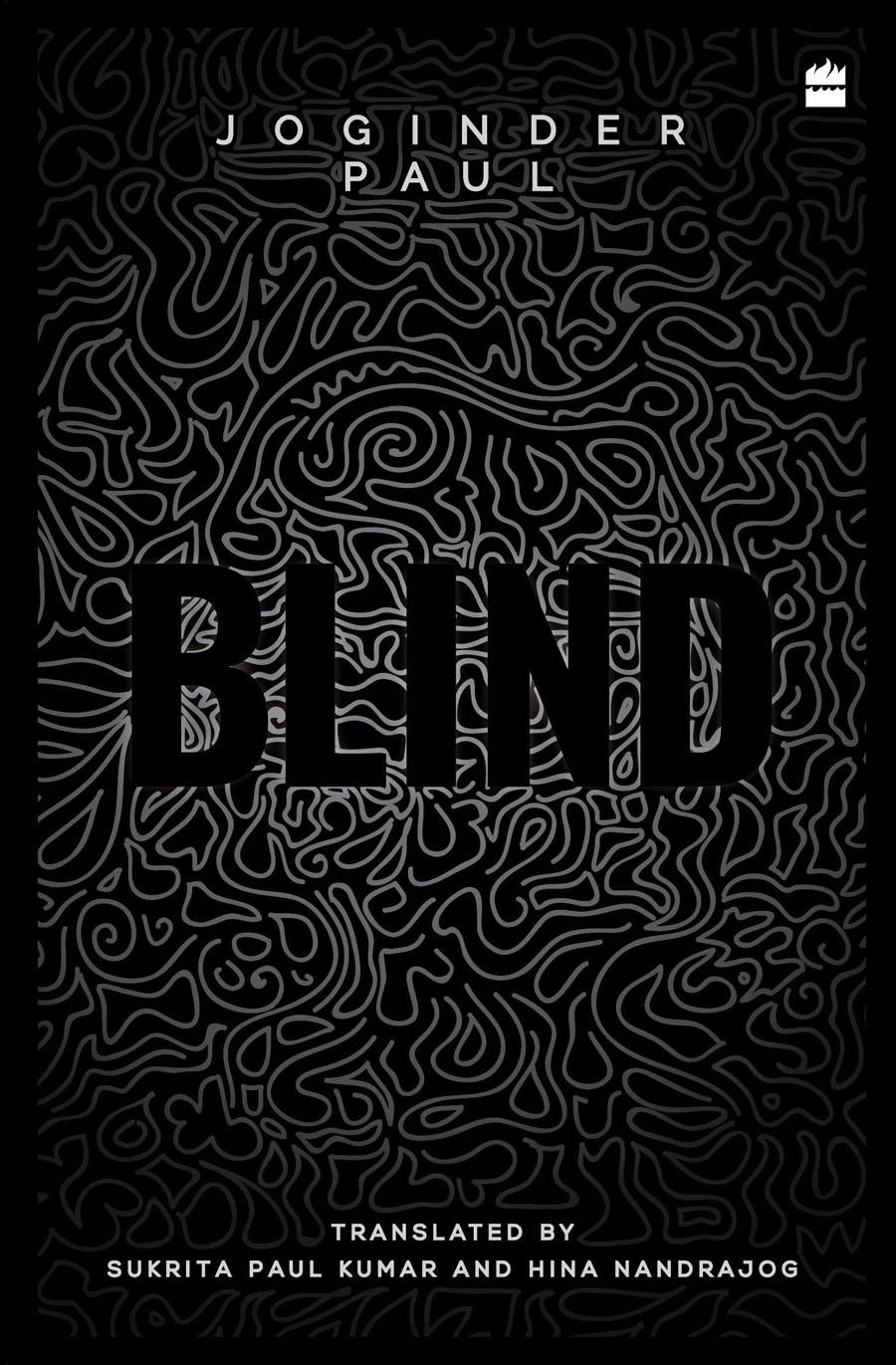
Joginder Paul
2017
Nadeed (1989) by Joginder Paul is an unusual novel in Urdu in the sense that it has no defined plot or storyline but is held together by a metaphor and abstract, metaphysical reflections on this metaphor. The tradition of the novel in Urdu has not been known to be very robust (though short story is) to admit of radical innovation and experimentation.

Ismat Chughtai
A handsome, new translation of Ismat Chughtai’s memoir, Kaghazi Hai Pairahan (KHP from henceforth), by OUP is cause for celebration in itself. To readers of Indian literature, Chughtai needs no introduction, given how lionized she is in multiple canons.

Inder Malhotra
Although the Nehru-Gandhi family alone has dominated accounts on political dynasties so far, it is not the only powerful family/dynasty within India, leave alone South Asia. Indeed, the number of influential families striding the political stage in the region is rather large. In addition, dynasties abound in the world of industry, film, music and many other fields.