
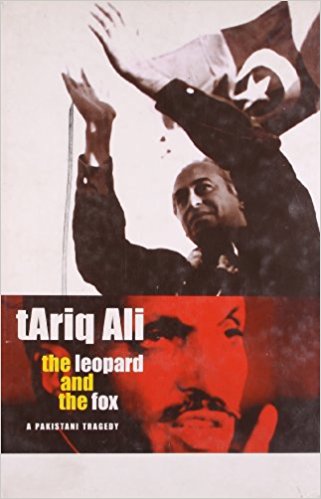
Tariq Ali
Zulfikar Ali Bhutto founded the Pakistan Peoples Party (PPP) and became the country’s first elected Prime Minister. Despite his socialist credo of ‘food, clothing and shelter’ which he used in his 1970 political campaign, the left regarded him with mixed feelings.

Mushirul Hasan
2007
The Autobiography of Lutfullah, A Mohamedan Gentleman and His Transactions with His Fellow Creatures (the original title of the book when it was first published in 1857) belongs to the popular genre of travel writing in the 19th century.
Anita Rau Badami
With the publication of Midnight’s Children in 1981 Indian Writing in English was finally said to have come of age. Such proclamations notwithstanding, even a quarter of a century after Rushdie’s magnum opus Indian writers in English continue to be assailed with questions such as whether they are being authentic to their culture or commodifying it for the benefit of foreign publishers, markets, and readership.
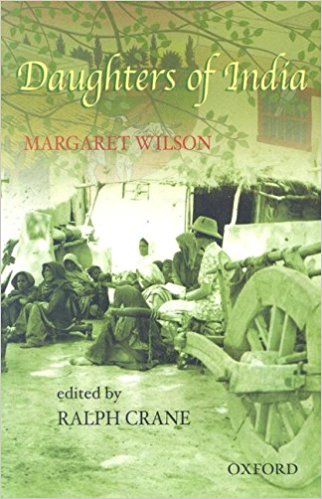
Margaret Wilson
Fiction written in the past affords us authentic glimpses of that era and also an insight into the social psyche of different groups of persons of that period through imagined characters. The poor plight of Indian women and lower classes was a strong theme in British colonial propaganda to legitimize its presence in India.

Shanta Acharya
2007
The word shringara, the title of Shanta Acharya’s fourth full-length poetry collection, has a special reverberation for me. In my childhood, reading Bengali poetry from the olden days, I would come across this mysterious word,
Rita Kothari
There are occasions when you feel a kind of bliss when you read a book that is able to deal with things that are dear to your heart. Here is such a publication: an anthology that collects writing by Gujarati women over a century.
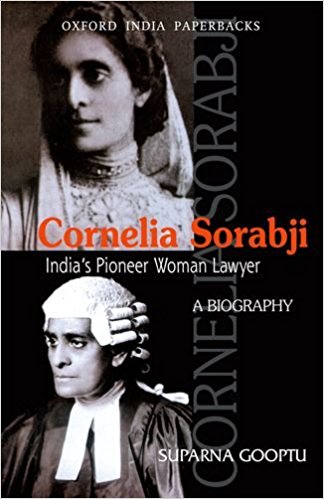
Suparna Gooptu
Anglophilia has long afflicted the average educated Indian Parsi. It was so in the Victorian era. It is so now. Cornelia Sorabji was no exception. Though only half a Parsi, she did not do things by halves.

R.S. Khare
About five decades ago, Louis Dumont (1911-1998) a French scholar of international repute, set the tone and tenor of the academic discourse in anthropology and sociology about the nature of Indian society. Dumont was a ‘pupil’ of Marcel Mauss; and he learnt Sanskrit when he was imprisoned in Hamburg during the Second World War.
The politics of Tamil Nadu has been pioneering in many ways. The non-brahmin movement which is now more than eighty years old is often considered as the forerunner of social justice in India. The Dravidian movement’s empowerment however has left the dalits who constitute 19 percent of the population untouched.
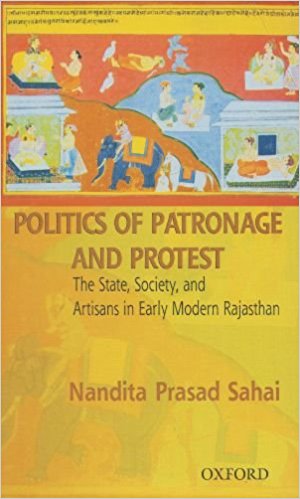
Nandita Prasad Sahai
The book under review is a comprehensive exploration of the lives of artisans in early modern Rajasthan and associated complexities. An intricate web of relationships among a highly heterogeneous community/class called ‘artisans’ in the ever-changing dynamics of early modern Period in Rajasthan has been successfully nuanced.
Shahrbanou Tadjbakhsh and Anuradha Chenoy
2007
The authors should be commended for producing what will now be a compulsory text for all those interested in a serious academic discussion on human security, especially as it connects to debates and theories in International Relations (IR). That this book has been brought out as part of Routledge’s prestigious series on ‘Advances in International Relations and Global Politics’ is already confirmation of this status.
Tulsi Patel
This is a timely book on an important issue that is centre-stage since the 2001 census, namely the disappearance of baby girls. The female male ratio (FMR) in the world —that is the number of females per thousand males—is 9901 . Western Europe has a figure of 1,064 females per thousand males and Africa, 1,015.
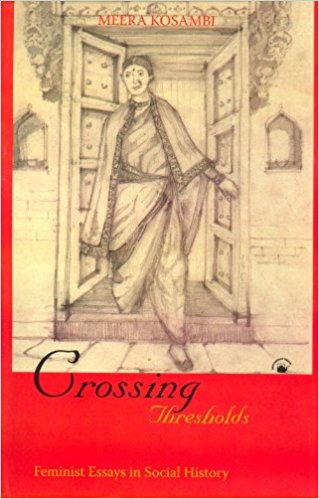
Meera Kosambi
Once in a rare while, an academic reviewer gets to write about a book that is exciting, analytically sound, densely researched, thoroughly useful, wideranging, and yet focused. Meera Kosambi’s Crossing Thresholds: Feminist Essays in Social History is just such a book.

T.N. Madan
Images of the World is a useful and engaging collection of public addresses and writings produced over a period of roughly twenty years. The earliest of these goes back to 1987 and the most recent, produced in 2005. Altogether there are thirteen pieces put together for this volume which represent a continuing exploration of the significance of culture, religion, ethnicity and secularism by one of India’s foremost sociologists.
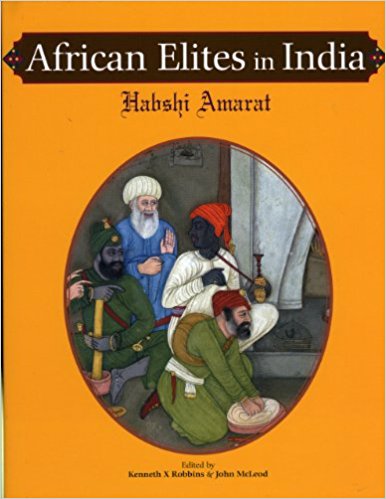
Habshi Amarat
The book under review deals with a rare subject in Indian history—that of African slaves in India. These African slaves were a part of the slave trade of the Indian Ocean rim and have been regularly coming into India ever since the 12th century, when Qutab-ud-din Aibak founded the slave dynasty around Delhi.

Lionel Carter
2007
The history of Punjab over the last century and a half has attracted the attention of both scholars and political activists. The heavy military recruitment from the Punjab, the role of state investment in irrigation, the rural-urban divide in politics during the first half of the twentieth century, the Punjab tradition of administration have been the subject of several scholarly studies.
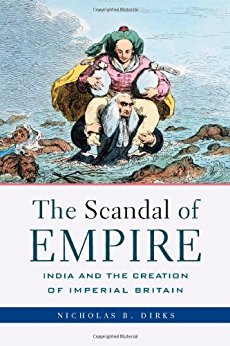
Nicholas B. Dirks
Capitalism was born with the mark of Cain on its brow. From the voyages of Prince Henry the Navigator in Portugal to the piratical enterprises of Francis Drake and Jack Hawkins (in which the Virgin Queen of England held a share) to the burning of whole islands of the Indonesian archipelago by Jan Coen,
Patrick Olivelle
Recent decades have seen a vigorous re-investigation of the nature of the Maurya and Gupta empires, but the historical processes of the period in between remain less understood. This is in spite of a wealth of detail about specific aspects, such as the histories of dynasties, religious cults and trade.
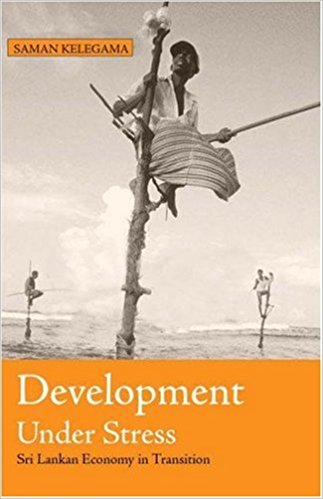
Saman Kelegama
Saman Kelegama is a prodigious researcher who has published his work extensively both in Sri Lankan and foreign journals. In the fourteen chapters of Development under Stress he brings together 12 papers that have appeared in such journals as World Development, Developing Economies,
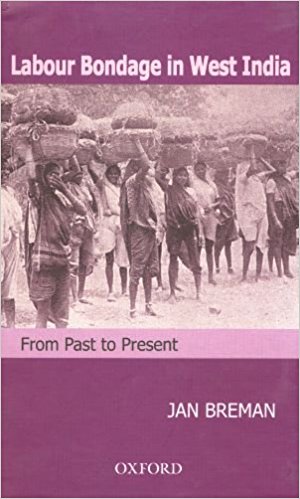
Jan Breman
Professor Jan Breman’s academic engagements with labour relations in India are well-known. It started with his field work in two villages, in the early 1960s, in Surat district of South Gujarat.