
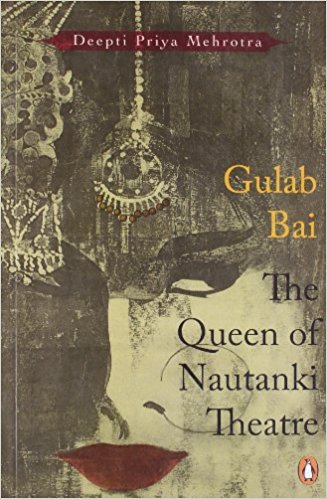
Deepti Priya Mehrotra
One of my earliest aural memories is of listening to the mesmerizing sounds of traditional north Indian music, from an old phonograph in the vast Baithaki in my grandmother’s house. Next to this magical instrument sat a black leather box containing a prized collection of His Master’s Voice records.
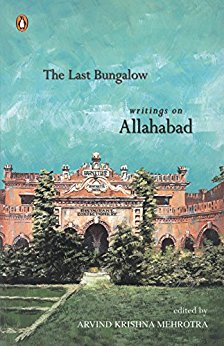
Arvind Krishna Mehrotra
We Allahabadis grew up carrying our own mythology in which fact, innocence and provincial arrogance mingled in equal proportions. But let me get to the facts. The city of Allahabad, a dot on the map like a mustard seed placed exactly where the spidery, hairline-blue veins of two big rivers meet, was not just another nondescript settlement in the great Indian outback. It was a prominent administrative hub during the Raj, with a high-profile cultural identity all its own.
Suniti Namjoshi
For a hedonistic reader who reads purely for pleasure, it is galling to constantly be told what to look for in a book—that its worldview is coloured by certain political views or a childhood trauma or an agenda.

M.G. Vassanji
The book under review is one of twelve short stories in this fine and elegant collection by M.G. Vassanji, the well-regarded writer of Indian origin, African upbringing and Canadian domicile. Before actually reviewing the book,
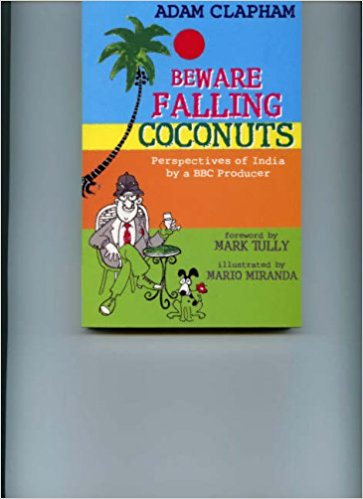
Adam Clapham
Robert Clive is said to have ‘gone native’ in India, sitting on a charpoy, puffing a hookah, dusky ‘bibi’ by his side, watch-ing the fascinating, multifarious world of the subcontinent go by, so much more vivid and intense than the cold, drear monochromatic little island that he came from. Clive was, of course,

Amitava Kumar
‘How does the writer of Indian origin living abroad negotiate longing and belonging ?’ asks the editor in his highly readable and insightful Introduction to the anthology, and for a while I was persuaded that the thirty-three pieces that comprise the volume are meant to provide a range of answers to that question.
Sambudha Sen
No one who was taught by Professor A.N. Kaul in the 1970s is likely to have forgotten the experience. He would stride into the seedy English Literature classroom in the Arts Faculty Building at the University of Delhi
Yoginder Sikand
In the face of state instituted religious violence, the language of hate spewing across the country and the casual acceptance of this in ordinary lives, it is difficult not to stress the significance of this book, its sanity and its timeliness.
Rowena Robinson
Conversion is a contentious issue in contemporary India. This book examines the various facets of conversion in India through fourteen contributions made by fifteen authors including the editors.

Satish Deshpande
In this era of cross-cutting issues and research, claiming a particular expertise as one’s own may sound incongruous, but I cannot resist the temptation of confessing what I had always felt while reading Satish Deshpande and that is: reminding geographers that someone else is doing what they ought to have done.
Paul Coelho
I would recommend Paul Coelho’s Like a Flowing River: Thoughts and Reflections if you are looking for (a) a book to carry on a journey, (b) a gift for a student achiever or (c) a mood-elevator.

Jagannath Prasad Das
2007
Jagannath Prasad Das who was recently awarded the prestigious Saraswati Samman is a versatile and outstanding Oriya writer who has been consistently writing poetry, fiction, drama and essays on art for almost four decades now.
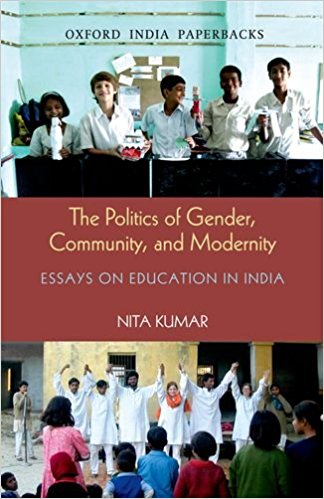
Nita Kumar
Issues of education, community, modernity and Indian women are highly contentious these days, evoking aggressive and often violent passions. Kumar brings ethnographical studies that compel our gaze to be tempered by her readings of history and raises questions on the need to revisit our notions of the nation and most importantly of education.
In his memoirs, In the Afternoon of Time, the veteran Hindi writer, Harivansh Rai Bacchan expressed a strong preference for the way the Hindi language ought to evolve in the public sphere. Hindi words, he wrote, should constitute the main body of a text, but they should be laced with Urdu and Persian. This would add to the beauty of the prose but not detract from its own distinctive attractions.
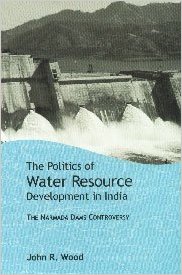
John R. Wood
Profusely footnoted, elaborately indexed and extensively researched, this volume is a valuable contribution to the on-going debate on the merits and demerits of high dams to meet India’s growing needs for irrigation, hydropower and drinking water.

Andrea Major
Is sati a burning issue or a burnt out issue? The theme of sati has been thrashed out threadbare in the last decade with both western and Indian scholarship converging on this crucial area of social history and societal practice.
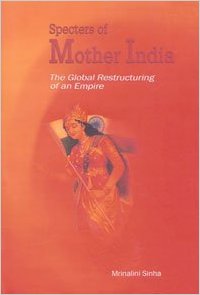
Mrinalini Sinha
The task of a historian is not only to go through already identified paths and throw new light on well known events but also constantly look into sources and archival material, and identify moments which have played an important role in social dynamics.
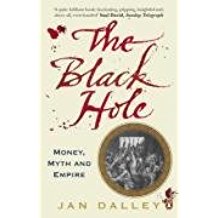
Jan Dalley
Dalley begins with the best of intentions. Debunking myths, demonstrating how the practices of history writing and representation implicitly and explicitly make and unmake myths and understanding within this how and why the story of the Black Hole of Calcutta (1756) became so central to the formation of the British Empire are his overall concerns. Unfortunately,

Bimal Jalan
Democracy is the most ambitious political project of the last century and Indian democracy with a vigorous free press, apolitical military, regular and competitive elections, and a functional overburdened judiciary is one of the good examples of a formal democracy.
The volume under review is an excellent addition in a world of scarce serious literature on India which, as Rajni Kothari describes, is ‘a mammoth virgin laboratory of original research’. As most of the literature on Indian thought has essentially come from non-theory specialists,