
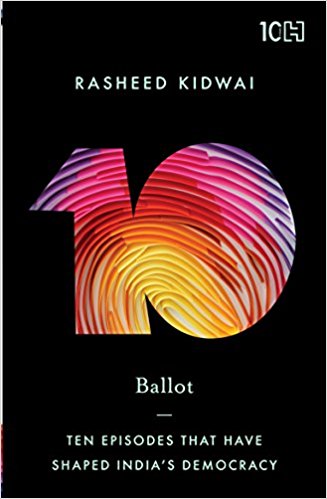
Rasheed Kidwai
There are broadly two kinds of books: one, the ones which have a central argument, question or hypothesis, theoretical frameworks and methodology, and engage in debate; and another, those which provide narrative of some developments. Reviewing the first kind is easier. One can engage comfortably with any aspect dealt with in such books. Rasheed Kidwai’s book falls in the second category.
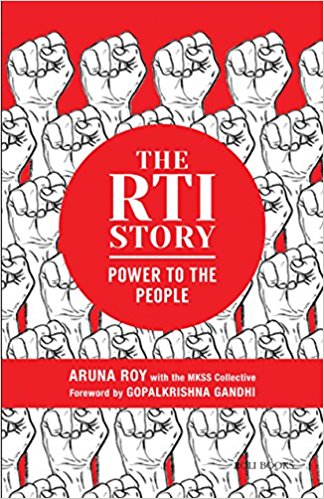
Aruna Roy
Much more than an authoritative account of how the ‘right to information’ (RTI) came to be enshrined in Indian law, The RTI Story describes the building of theory through grassroots practice. Choosing to share the lived experience of poor people, Aruna Roy and her associates encouraged them to reflect on their situation, analyse and articulate the bases of their deprivation and exploitation, and to orchestrate collective corrective action.
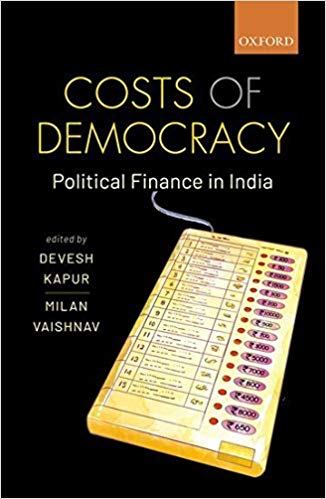
Devesh Kapur and Milan Vaishnav
One of the biggest challenges facing India’s democracy is the growing role of money in elections. During the 2014 parliamentary elections politicians jointly spent an estimated 5 billion dollars. As the spending increases every election, this amount will likely be even surpassed in the upcoming 2019 elections. These extravagant campaign costs are worrisome, for a range of reasons.
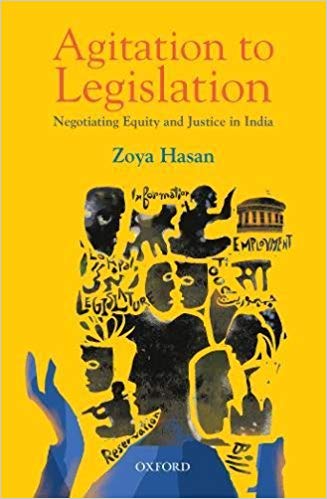
Zoya Hasan
In their July 2017 publication under the eloquent title Indian Income Inequality 1922-2014: From British Raj to Billionaire Raj? the world’s foremost economic analysts Lucas Chancel and Thomas Piketty remind us that while the process of divergence of income (and hence wealth accumulation) of the ultra rich commenced in India with Prime Minister Rajiv Gandhi in 1984, this really took off after the ‘liberalization’ of 1991 by Narasimha Rao bringing to an end India’s experiment with ‘Socialism’.
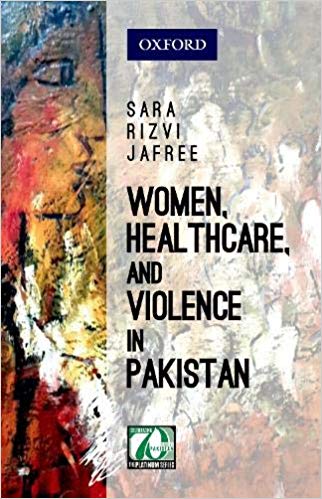
Sara Rizvi Jafree
Researching and comprehending…
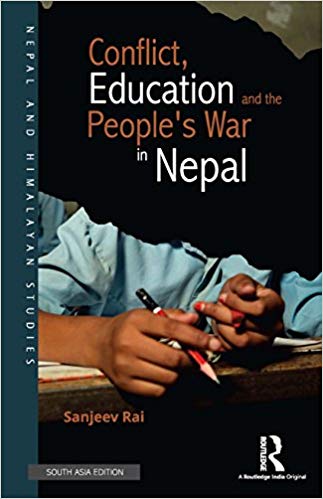
Sanjeev Rai
Conflict affects every aspect of human life. In South Asia, the most common lenses through which we understand conflict are ethnicity, religion, caste, gender and so on. It is rather surprising that in a region where conflict remains a dominant part of the socio-political discourse, there has been little attention paid to other dimensions in understanding conflicts.
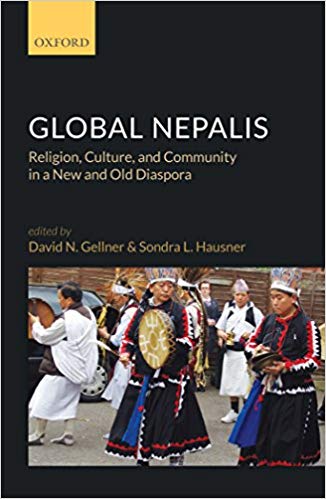
David N. Gellner and Sondra L. Hausner
The term ‘diaspora’ is generally understood as a people belonging to one ethnic group originating from a place, but dispersed geographically. Though scattered, the diaspora groups usually tend to maintain relations with their place of origin and also with the other dispersed groups. Estimatedly, about 10 percent of human population live in diasporic situations (about 700 to 800 million).
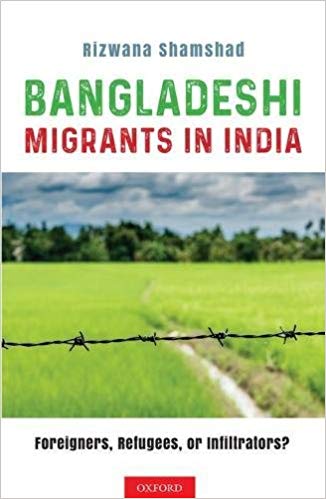
Rizwana Shamshad
Rizwana Shamshad’s Bangladeshi Migrants In India: Foreigners, Refugees, or Infiltrators? is a highly relevant and context-sensitive study of the ‘Indian discourse’, a collection of many discourses on one of the most politicized migrant communities in the subcontinent.
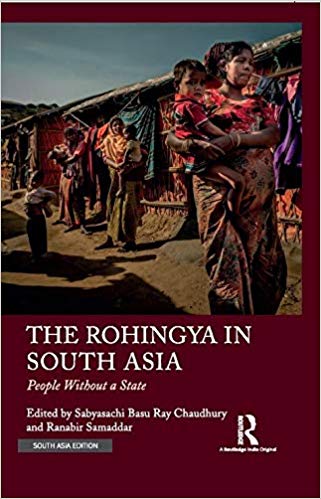
Sabyasachi Basu Ray Chaudhury & Ranabir Samaddar
Statelessness is a situation when one has no country to call once’s own. It is dehumanizing to be denied the rights of citizens granted by the state. A stateless person faces difficulty in accessing education, health, livelihood necessary for holistic development of a human being. Every country has laws for granting citizenship. Lack of clarity in written laws and anomalies in its application might lead to statelessness.
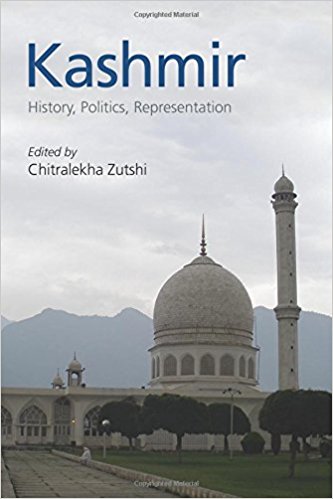
Chitralekha Zutshi
The Valley of Kashmir arouses a peculiar interest as a land of almost mythic and mysterious beauty and, since the end of colonialism in South Asia, as a space of violence. This imagination has taken further root since 1989 following the emergence of an insurgency and a movement for independence in Kashmir and from India and the drastic militarization of life by the Indian state.
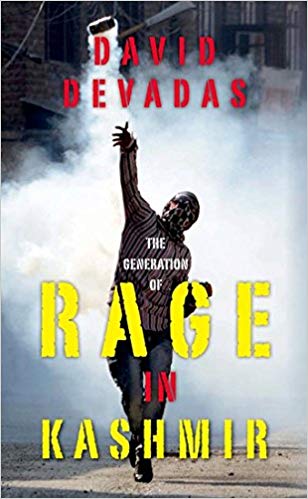
David Devadas
Since 2008 two developments are unfolding side by side in Kashmir. While on the one had we have witnessed recurring popular uprising, and on the other, militancy is on an upward trajectory. Periodic popular uprisings are bringing more and more youth on the streets with some ending up joining the militant ranks and bulk as their sympathizers.
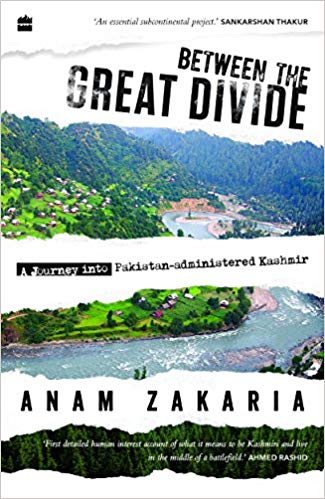
Anam Zakaria
Anam Zakaria’s book brings together ten essays in three parts: Conflict, State Policies and Beyond the Cease-fire. The work is an ethnography of a significant part of Jammu and Kashmir now administered by Pakistan and mostly known as ‘Azad Kashmir’ by the masses and called PoK (Pakistan occupied Kashmir) by the Indian side. Today Jammu and Kashmir’s 65 per cent of the territory is with India and the remainder with Pakistan.
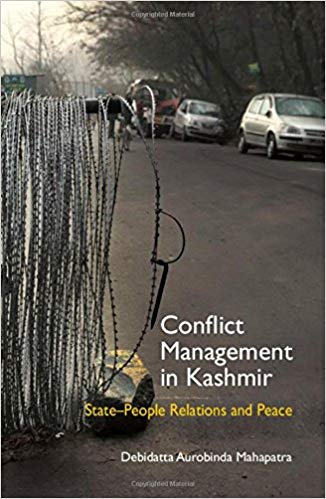
Debidatta Aurobinda Mahapatra
Debidatta Aurobinda Mahapatra makes an enquiry into how vertical aspects of the Kashmir conflict could be contained to nurture a constituency of peace in Kashmir. He utilizes the protracted social conflict framework in understanding the Kashmir conflict and makes a point that New Delhi needs to nurture a constituency of gainers for transcending the stalemate.
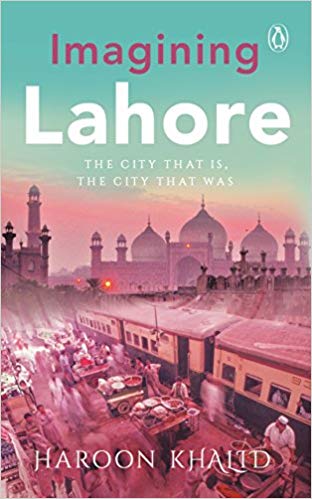
Haroon Khalid
From a distance discontinuities rule North Indian history: Hindu Kingdoms and rulers are replaced by Islamic Turko Afghan Sultans, who in turn give way to the Mughals from Central Asia to be replaced by the Marathas, Sikhs and finally the British. A colonial Raj finally made way for India and Pakistan. These periods appear as distinct and self-contained substratum of the history of the past millennium.
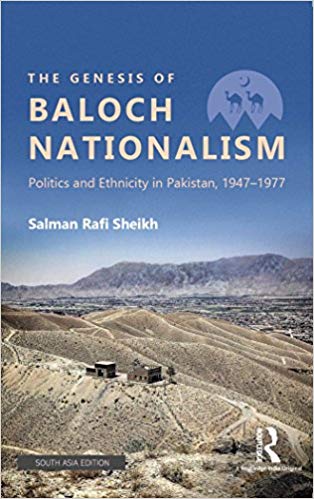
Salman Rafi Sheikh
Salman Rafi’s book is an essential piece of work for those who are interested in understanding the history of Baloch nationalism in Pakistan. Although Rafi analyses the future contours of the movement in the last chapter, major portions of the book document the evolution of the politico-ethnic struggle in Balochistan in post-Partition Pakistan. This work forces the readers to think critically about multifarious complexities attached to the Baloch issue, the most important of which is understanding the genesis of the conflict.
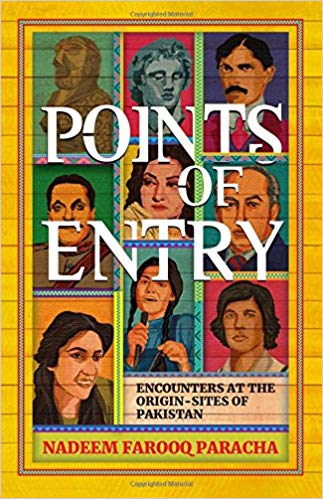
Nadeem Farooq Paracha
I began reading Nadeem Farooq Paracha’s Points of Entry once I was sensibly strapped into the seat of my plane, expecting to take no longer than the length of my short flight to finish the slim book. I remember being rather pleased with myself that morning at having eked out this reading schedule. And I could not, of course, have been more wrong, or my timing more off the mark.
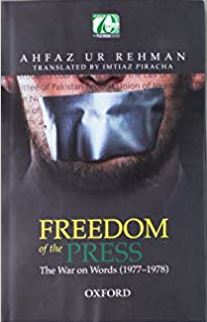
Ahfaz Ur Rehman
Media freedom has come under threat in both India and Pakistan, most explicitly during the Emergency period in this country and during the Zia ul-Haq years in Pakistan. While these interregnums may now appear to be forgotten, in both India and Pakistan old threats—like state censorship and repression—continue to remain even as new ones have surfaced and they include online intimidation and even assassination.
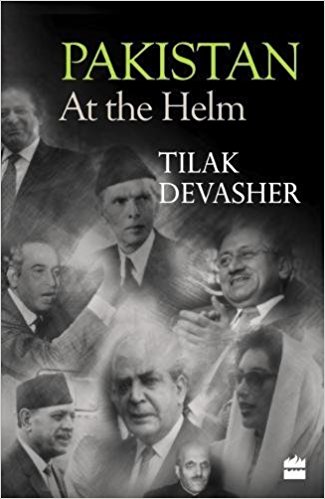
Tilak Devasher
In 2017, Tilak Devasher had published a well-analysed book on Pakistan titled Pakistan: Courting the Abyss. It not only analysed the contemporary problems of Pakistan but also attempted a forecast on crucial issues facing the country—Water, Education and Population. It was a refreshing account by an Indian with less of an ideological baggage in looking at Pakistan.
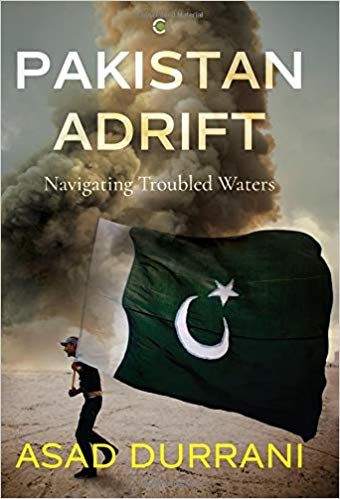
Asad Durrani
In his foreword, Anatole Lieven, author of Pakistan: A Hard Country (Penguin, London, 2011), aptly describes General Durrani’s book as a ‘combination of memoirs and reflections’ by ‘Pakistan’s foremost military intellectual’, which he finds ‘enlightening, necessary but in many ways depressing.’
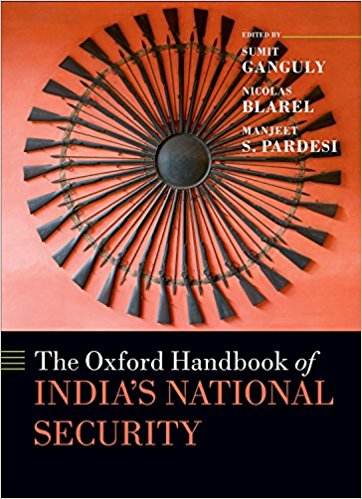
Sumit Ganguly, Nicolas Blarel and Manjeet S. Pardesi
This hefty volume provides a useful primer for non-specialists on Indian security and, to only a slightly lesser extent, for specialists as well. It ranges widely across the spectrum of security issues—covering theoretical approaches to security, traditional threats, internal security challenges and even the new non-traditional threats arising from the economy, migration and cyber-warfare.