
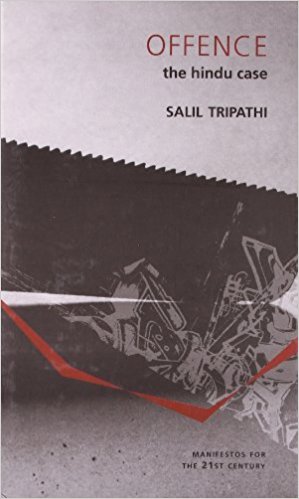
Salil Tripathi
This has been a tumultuous decade for the academic study of India. In his Offence: The Hindu Case, Salil Tripathi provides a timely overview of the growing censorship and harassment that scholars working on India have faced. Not a pretty sight to behold: people have felt the need to ban books and terrorize authors…
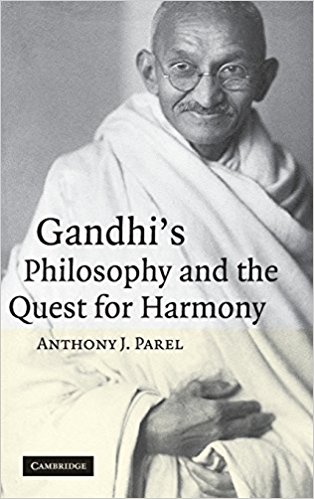
Anthony Parel
This earnest and thoughtful volume is invaluable, not least because it brought back to the present reviewer the presence of Professor K.J. Shah, the first philosopher who connected emerging approaches to purushartha, including his own, to Gandhijis thought and praxis. Parel himself discusses in the introduction K.J. Shahs work on Gandhi.
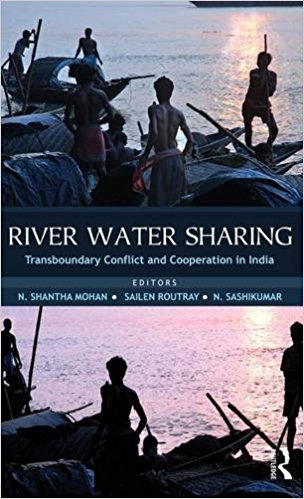
N. Shanthamohan
Apart from the fact that the major river systems in our countryIndus, Ganges and Brahmaputratraverse our neighbouring countries, almost all perennial rivers of India flow through more than one state. The disputes on account of the international rivers are understandable; however, conflicts around sharing…
John R. McNeill
The slight sarcasm added in the subtitle to Environmental History,as if nature existed, triggers questions for the reader of this volume. Why as if? Are we to be taken en route through a landscape of perceptions and constructions, or are we brought to see the raw realities behind benign conservation regimes?…
Gautam Sengupta
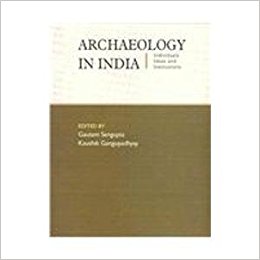
Since the inception of the discipline, there has been a close link between archaeology and the state. This was the case since the early decades of the nineteenth century when archaeology was both an imperial project and a military endeavour, often an offshoot of colonial policies and which included their relationships…
Douglas E. Haynes
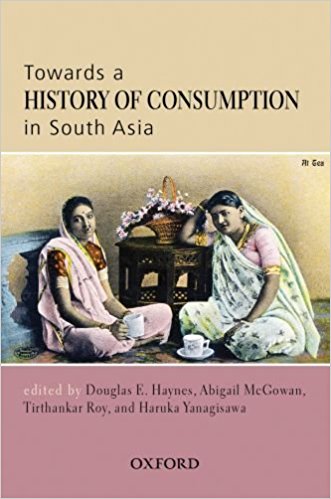
This book ventures into previously nexplored areas of South Asian history, indicating the exciting possibilities of research in social and economic history. Consumption in South Asia begins with the observation that The history of consumption is not an identifiable sub-field among South Asianists, nor are there any individual historians…
Donna J Young
2010
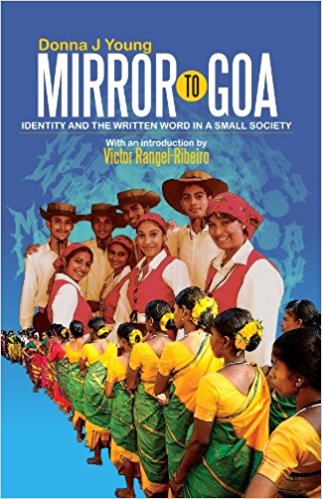
From the desert state of Arizona in the U.S., a researcher was drawn to the printed word emerging from this small region called Goa. Donna J. Young tells Frederick Noronha what made her look at the literature of this distant land, and why she found Goan writing (primarily in English, which she studied) to be interesting…
Mahmud Rahman
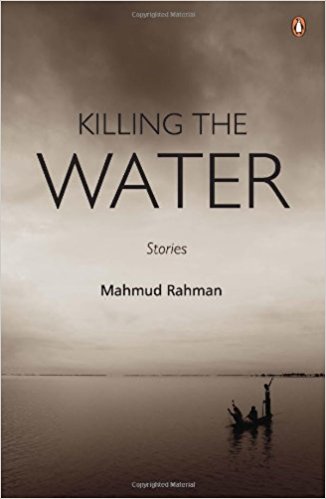
Zadie Smith in her collection, Changing My Mind: Occasional Essays has a piece where she talks of the craft of writing.In ‘The Crafty Feeling’, Smith says that it is when the writer reaches a point called the ‘middle’ that the novel and the experience of writing it begin to totally consume her. She has to finish writing it…
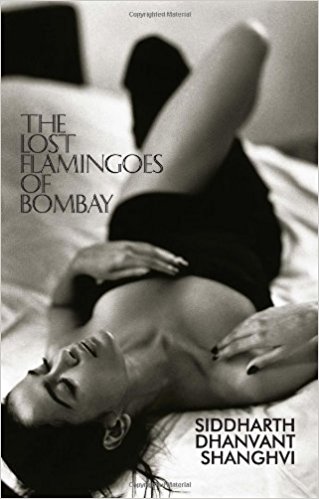
Siddharth Dhanvant Shanghvi
2010
Siddharth Dhanavant Shanghvi’s novel has all the ingredients of a classic potboiler: love, lust, power, violence, murder, suspense, scandals and courtroom drama.Yet it does not quite succeed, either as a gripping narrative or as an intense scrutiny of modern social trends.Inspired by the Jessica Lall murder case and liberally strewn with episodes that recall recent sensational news stories, the book nevertheless affirms its status as fiction…
E.V. Ramakrishnan
Anthologies serve as signposts in the general trajectories of literary discourse, assimilating changing aesthetic tastes and exerting a vital influence on the future course of literary genres. This anthology of Indian woman poets commissioned as part of the Sahitya Akademi’s effort to showcase Indian English women writers…
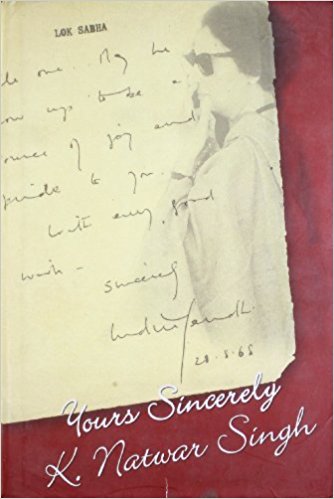
K. Natwar Singh
2010
We have here a bunch of old letters (with apologies to Jawaharlal Nehru, who gave this title to his collection) that reveal the author’s select correspondence with the famous, like Governor-Generals Mountbatten and Rajagopalachari; Prime Ministers Indira Gandhi, Morarji Desai and Rajiv Gandhi; savants E.M. and Morgan Forster, M.F. Husain, R.K. Narayan, Nadine Gordimer, Han Suyin, K.K…
R.V. Vaidyanatha Ayyar
Vaidyanatha Ayyar has written a text book on the mechanics of policymaking in the country obviously for the graduate students of management in the institution where he teaches. He has adopted the format and style of the text-books commonly used in the American universities.
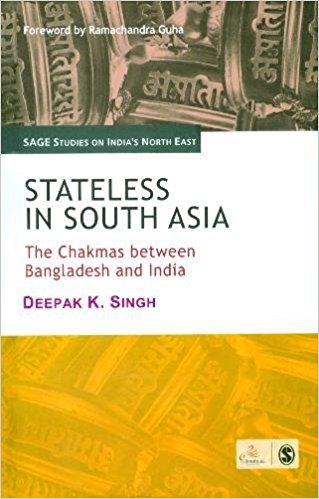
Deepak K. Singh
India has been the home for a large number and different types of refugees throughout the past.1 India has dealt with the issues of refugees on a bilateral basis. India’s refugee problem management generally conforms to the international instruments on the subject without, however, giving a formal shape to all practices adopted…

Zimako O. Zimako
This book attempts an investigation into a major issue confronting contemporary Nigeria, namely, the question of managing its image at both domestic and international levRe-Orderels. In trying to unravel the underlying issue relating to the image of Nigeria the author has undertaken analysis of some of the most sensitive political events…
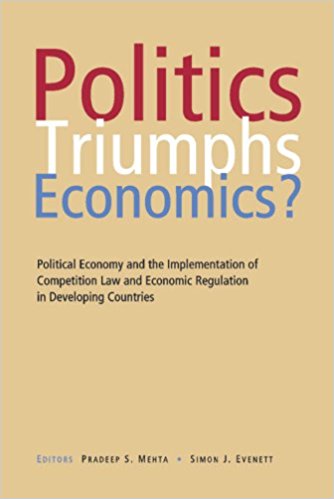
Pradeep S. Mehta
2010
A quick look at the Global Competitiveness Report published by the World Economic Forum every year throws up no major surprises—the countries classified as developed economies float up to the top of the rankings and the developing economies settle down at the bottom. What is surprising then is the fact that although…

Ajitha Tennakoon
2010
Dr. Jayantha Kelegama was the first Professor of Economics at the University of Kelaniya which was known at the time as Vidyalankara University. As a distinguished economist, he served his country in numerous ways as an academic, a Central Banker, a policy advisor, a researcher and a writer for over four decades encompassing two conflicting policy regimes, i.e., the pre-1977 closed economy and the post-1977 open economy…
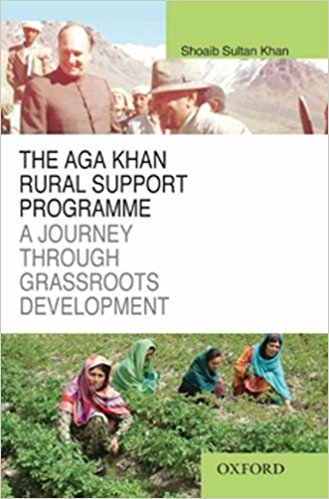
Shoaib Sultan Khan
TheAga Khan Rural Support Programme: A Journey Through the Grassroots Development by Shoaib Sultan Khan is a narration of the author’s fifty-four years of experience working in the rural development sector in South Asia. The book is presented in an interesting narrative distinct from academic writings…
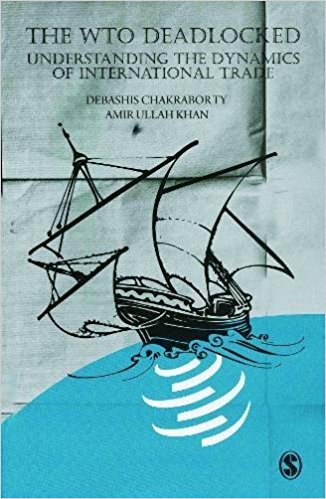
Debashis Chakraborthy
WTO could undoubtedly be considered as the most influential among the different multilateral organizations established after the post-World-War period. It was founded with a view to augment the process of globalization through multilateral trade liberalization by removing all the man-made restrictions on trade…
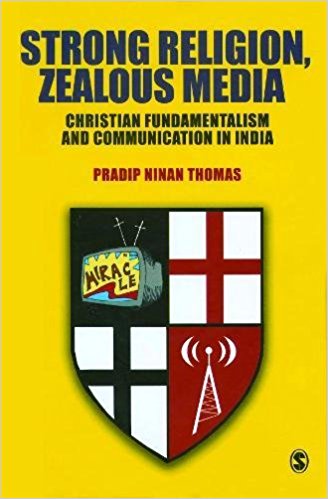
Pradip Ninan Thomas
Christianity in India has had a long and rich history of encounter with other faiths. The multicultural and pluralistic tapestry of India made it necessary for the Christian faith to negotiate and cohabit with local idioms, customs and traditions, giving it a special character and rootedness. In this climate of co-living,..
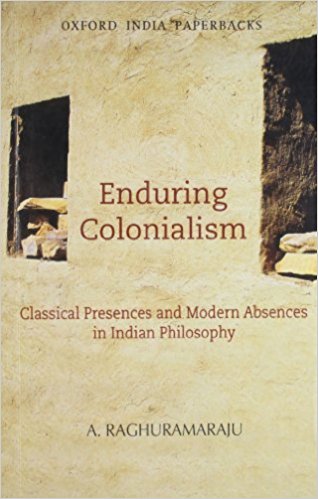
A. Raghurama Raju
Giambattista Vico claimed that knowledge was always constructed by humans and never discovered in nature. He further argued that the ‘human sciences’ such as history, philosophy and law achieved knowledge and understanding from ‘within’ while ‘natural sciences’ described the external phenomena…