
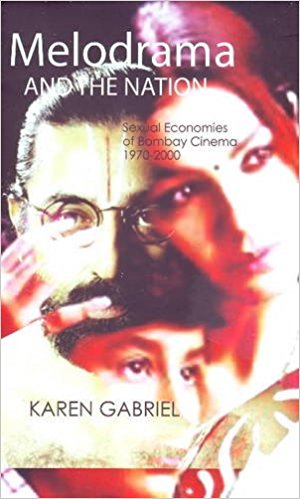
Karen Gabriel
The book begins by attempting to address’a key weakness in film theory: the text governs the production of, and is also represented in, cinema. In this the author seeks to move beyond general film studies which deals only with ‘narrative and its thematic, stylistic and formal characteristics’, and also beyond traditional feminist…
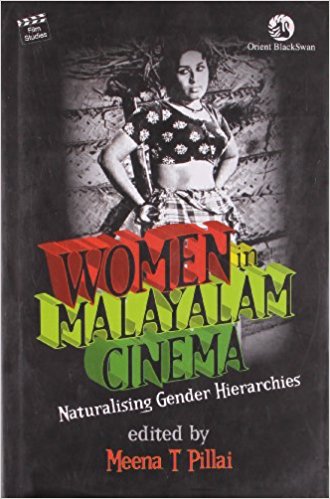
Meena T. Pillai
Academic publishing on cinema in India has seen a boom in the past decade or so but, by and large, it is Bollywood that gets most of the attention. The ‘minority cinemas’ in India—especially films in the regional languages—receive less thought and this is unfortunate—considering that understanding Bollywood gives us little purchase on the cultural significance…
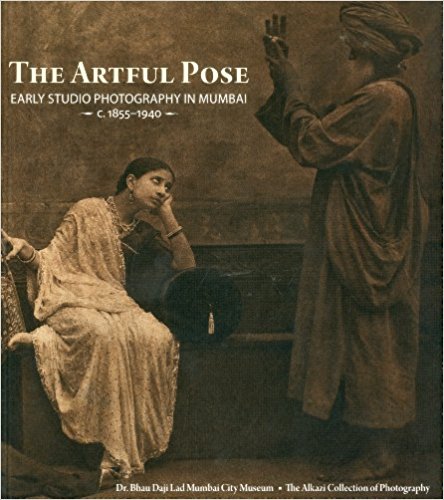
Alkazi Collection of Photography
An elegantly produced exhibition catalogue satisfies the voyeuristic desire in those who were not able to see a particular display—but would have loved to have been there! In the ‘Foreword’, Tasneem Zakaria Mehta tells us that the February-March 2010 exhibition of which this book is the catalogue held in the Dr Bhau Daji Lad Mumbai…
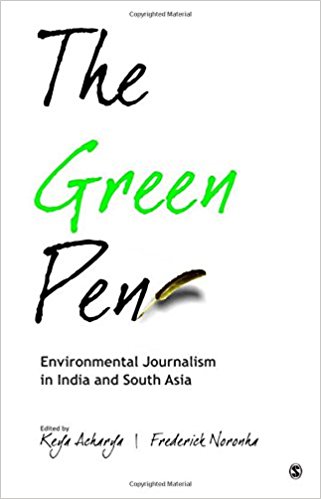
Keya Acharya
Environmental journalism in South Asia, especially in India, despite having a plethora of very eminent fathers—and mothers—continues to be somewhat orphaned. Held hostage to a variety of forces, from the inhospitable terrain provided by an increasingly corporatized media to a fickle readership/viewership…
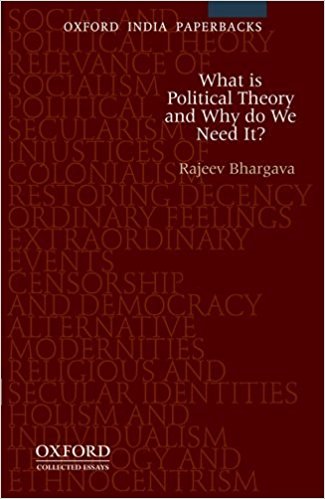
Rajeev Bhargava
This volume brings together two decades of Rajeev Bhargava’s scholarship, reflection and writing on varied themes that are at once familiar to those who have known Bhargava’s work and also certain other themes that are novel in the sense that Bhargava brings his theoretical insights to bear on hard-headed political questions of the day…
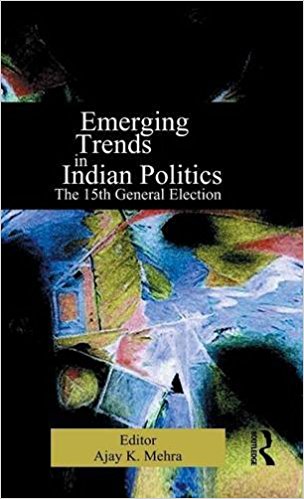
Ajay K. Mehra
A ccepting a negative verdict from the voters with humility is a sign of a deep-rooted democratic political culture. The 2009 General Election in India once again confirmed its status as an established democracy. Multiple factors are always involved in producing a clear outcome in Indian elections, but these elections…
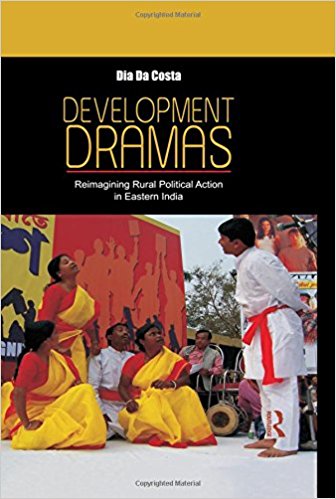
Dia Da Costa
This fascinating ethnographic analysis of political action through the lens of political theatre breathes and brings new meaning into our conceptualizations of ‘development’. Situated in two districts of West Bengal in Eastern India, the study critically looks at the ways in which one organization, the Jana Sanskriti…
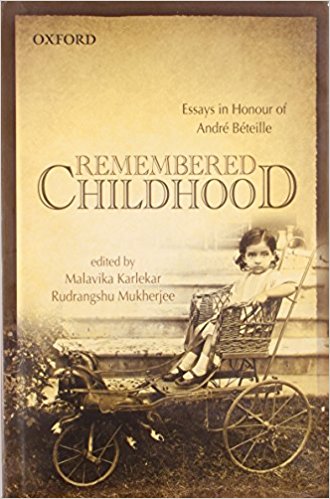
Malavika Karlekar
Andre Beteille is one of India’s foremost sociologists, well known for his work on social inequality and institutions, and for his qualities as a teacher, always meticulous and eloquent, enthusiastic, supportive and generous with students, and ever ready for a good discussion and argument. In his engaging style…
Pavan K. Varma
About 10 years ago Pavan K. Varma wrote The Great Indian Middle Class, in which he lamented the fact that this class had forgotten the virtues of nationalism and social concern which inspired it during the freedom struggle and in the years after Independence, and how it so easily abandoned itself to the easy…
Pranay Gupte
Pranay Gupte provides us a highly gripping multidimensional account of Indira Gandhi’s life, times and politics. As a credible journalist of with varied media outlets like the prestigious New York Times, Forbes and BBC he has taken great pains in reaching out to his potential news sources to capture the complex personality of India’s…
Jagat S. Mehta
The political memoir is a much underdeveloped literary genre in India. Our politicians and policy-makers are seldom tempted to pen detailed and analytical accounts of their role in crafting and executing policies. This has had a deleterious impact both on the historical memory of our institutions and on the writing of contemporary history…
Amiya P. Sen
The multifaceted encounter between tradition and modernity in colonial Indian society continues to intrigue today’s historians, who discover new dimensions in the recorded experiences of that period. A little over a decade ago, Tapan Raychaudhuri, in a brilliant study called Europe Reconsidered (1988), explored the changing perceptions…

Jeanne Openshaw
As with earlier works by the author, Writing The Self is a book that I read with avid interest. And having read the work it would be quite uncharitable of me not to admit that there is much on offer here. First, there is the sheer excitement of encountering the unusual: in this case, an autobiographical fragment written by a Baul…
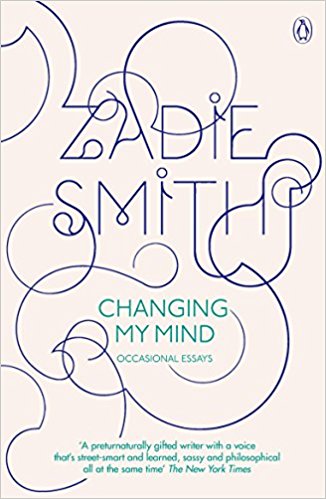
Zadie Smith
In her essay on ‘The Crafty Feeling’, Zadie Smith describes the craft of writing. It is a love-hate relationship that an author has with her work. A work desultorily begun can become something altogether different once the ‘middle’ stage is reached.
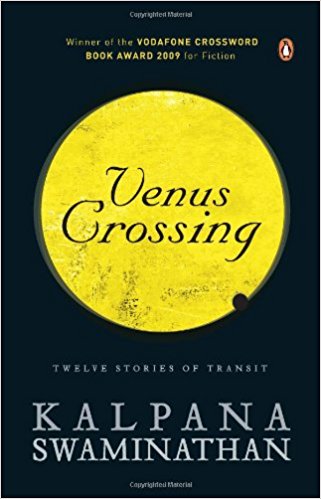
Kalpana Swaminathan
Kalpana Swaminathan is a surgeon writer, and the influence of her profession is evident in the choice of her themes in Venus Crossing: Twelve Stories in Transit.
A.N.D. Haksar
What a delightful collection of stories—all about women who take lovers, cuckold their husbands, have a great time and mostly, live to tell the tale. Or rather, in this case, have their tale told.
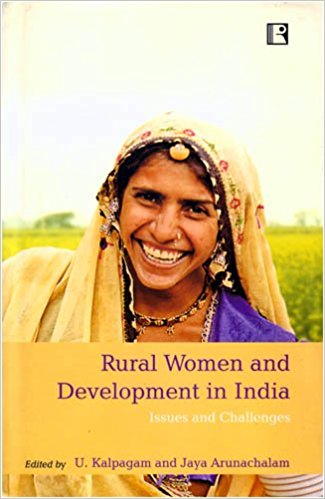
U Kalpagam
Examination of the rural women of India implicates lot of things the foremost among which is that we are covering an overwhelming majority of women in the country.
R.K. Suresh Kumar and P. Suresh Kumar
The two authors undertook the study with a research grant awarded by the Achuta Menon Foundation and claim that theirs is a ‘disinterested’ (un-biased) perspective.

Rashmi Sharma
2010
The book under review seeks to address an issue which has ever remained an area of great concern, how to improve the governance structure of the elementary education system in India.
Santosh Dash
The issue of language has always drawn attention in social science debates on such diverse themes as culture, nationalism, nationality, education, and social mobility.