
Michael H. Fisher
Dislocation and rootlessness are modern phenomena which stem from the emergence of the nation state and has opened up an entire arm in academics that focuses ‘on those moments or processes that are produced in the articulation of cultural differences.’ As Homi Bhabha puts it, ‘The move away from the singularities…
A.R. Disney
2010
The book, was first published by Harvard University Press in 1978. At that time, it was one of the few studies on the Portuguese em-pire in Asia focusing on the 17th century and specifically on south-western India and was hailed as a major contribution. The book has been republished by Manohar in 2010 (without any revisions) making it…
Elizabeth Kolsky
this cant about England’s ‘mission’ in India is an afterthought only. Clive and Hastings would have laughed at It is no exaggeration to say that the English school-boy is a young savage At an age when liberal studies should begin to expand his mind and social restraints should curb his egotism and form the heart,…
Michael S. Dodson
The West’s gaze of the East is being looked upon with some suspicion in recent years, especially where there have also been relations of power between the observer and the observed. Michael Dodson’s book lays bare the complexity of the ‘persistent truths’ of Orientalism, its ideological underpinnings and its modus operandi…

Karuna Mantena
Of the ideologues of empire in the late nineteenth century, Henry Maine had perhaps the most profound intellectual impact oncontemporaries, ranging from arch-imperialists of the Lugard variety at one extreme to Marx and Engels at the other end of the ideological spectrum. More than anything he influenced…
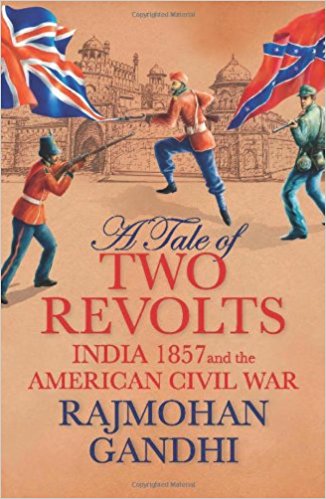
Rajmohan Gandhi
This book begins with an engaging dedication to the memory of Ramu Gandhi (1937–2007). Ramu was seen at the India Interna-tional Centre day in and day out, a part of the scene, a friend to most members of the club and to the author of this review. I am happy to be able to record my tribute to him…
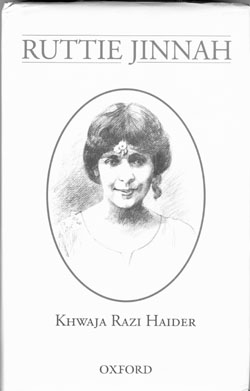
Khwaja Razi Haidar
The purpose of Khwaja Razi Haider’s book is to shed light on the life and personality of Ruttie Jinnah, the wife of Mohammed AliJinnah. It is a well known fact that Jinnah was an extremely private person and this book tries to satiate the curiosity of researchers and lay readers about the inner aspects of Jinnah’s life….
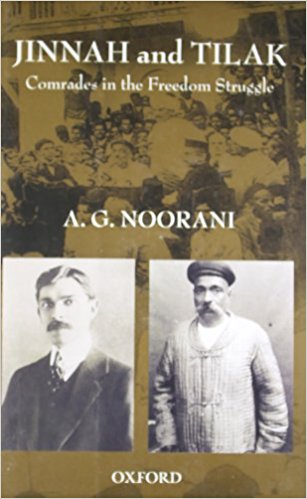
A.G. Noorani
The book under review by the eminent scholar-cum-advocate A.G. Noorani was published in Pakistan and it will attract much attention and debate in India. Noorani’s thesis, argued with formidable skill and compelling documentary support, is that Jinnah started as a secular nationalist…

Melvyn B. Krauss
What are the long-term implications of protectionism, as practised today in the developed market economies? Many economists argue that tariff and nontariff barriers to trade are harmful not only for the countries which face these barriers but also for the countries which impose them.

Emmanuel Le Roy Ladurie
It is always interesting to meet a traveller returned from a remote and exotic land; it is especially so when he is a well-informed historian. But when that historian happens to be one of the most brilliant of his profession
Ian Bruce Watson
The increasing interest of historians in re-defining the nature and aspects of early British commercial interaction with the Indian sub-continent has found expression in a number of important publications. Among these the works of Holden Furber

Srinath Raghavan
A part of the Indian century series, edited by Ramachandra Guha and Sunil Khilnani, this book by Raghavan throws fresh light on
the travails the Indian state went through immediately after partition. A number of myths and legends have sprung up about the Nehru era, as a result of deductions made from what first hand literature was readily available at the time…
C.A. Cranston
With its weird red earth and its alien flora and fauna—the eucalyptus trees and kangaroos—Australia was the eighteenth-century equivalent of Mars. (Ferguson 2004).Australia—the world’s largest island and smallest continent is often distin-guished from the rest of the world by its history—‘a colony populated by people whom Britain had thrown out (but which] proved…
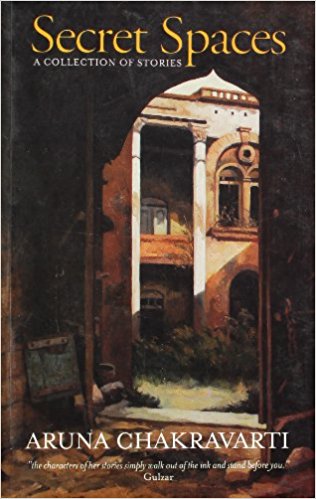
Aruna Chakravarti
In an age where big novels dazzle with their grand historical sweep and verbal gymnastics, Aruna Chakravarti’s Secret Spaces, a remarkable collection of short stories, delights with its delicacy and understatement. Having established her skill as an acclaimed translator and a writer of long fiction, Charkravarti surprises…
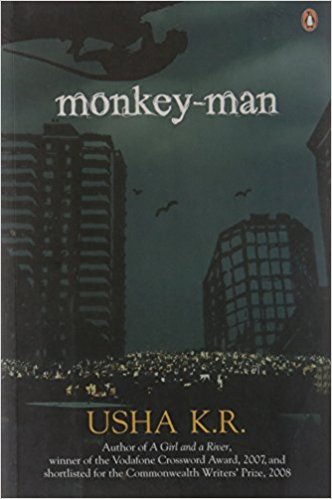
K.R. Usha
2010
Monkey-man is K.R. Usha’s third novel and the first to explicitly place itself in a named city. It is hard to imagine a novel without a city; at least a geographical location, however nebulous. But there are two ways in which cities enter a novel. The writer can fix upon the city first then etch the lives of its inhabitants…
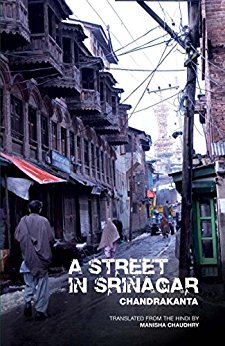
Chandrakanta
In today’s troubled times, one associates the city of Srinagar with images of discon tent—protesting crowds, stone pelting youth, and armed patrols. In this context, the title of this book (A Street In Srinagar) draws expectations of a narrative on the troubled political situation in Kashmir. Instead, what Chandrakanta offers…
Olivinho Gomes
Take a dazzling Asian commercial entrepot, add to it a brief spell of Muslim rule, Portuguese conquest, and the early arrival of the Gutenberg printing press here. What emerges is Romi Konkani writing, built by early missionaries to Goa who used diacritical marks to make this ‘exotic’ language easier to pronounce, a language which incidentally also got damaged by subsequent colonial rulers…
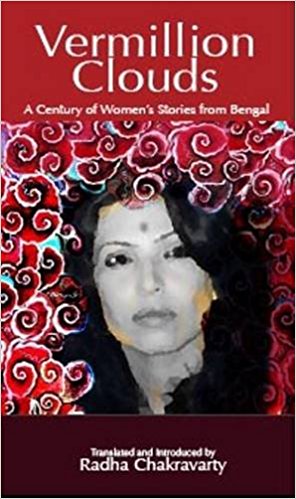
Radha Chakravarty
This collection of 18 Bengali short stories spans a hundred years of Bengali women’s writing. Radha Chakravarty has already established herself as a skilled translator and this collection further validates the impression that she can transfer and translate with commendable ease, successfully eliminating the disconnect between the source text and the target text…
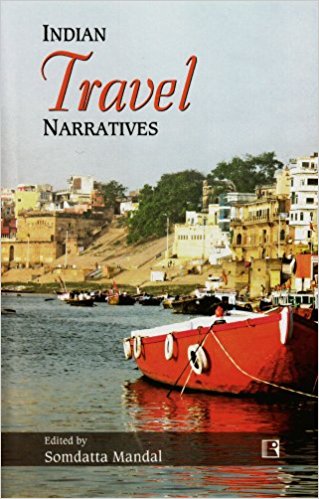
Somdatta Mandal
Once relegated to Sunday supplements of newspapers, and pushed to the margins of the academia, travel writing today straddles disciplines such as literature, ethnography, translation, film studies, anthropology, politics and history. While a number of cultural and theoretical factors are responsible for this development…
Avijit Ghosh
2010
That a time when regional political parties continue to assert their identity, the rise of Bhojpuri films is only part of the remodeling of Indian cinema. The availability of cheap technology has allowed dozens of ‘little cinemas’ to flourish in dialects such as Chattisgarhi, Kumaoni, Gharhwali and Khariboli…