
Nina Sabnani
2010
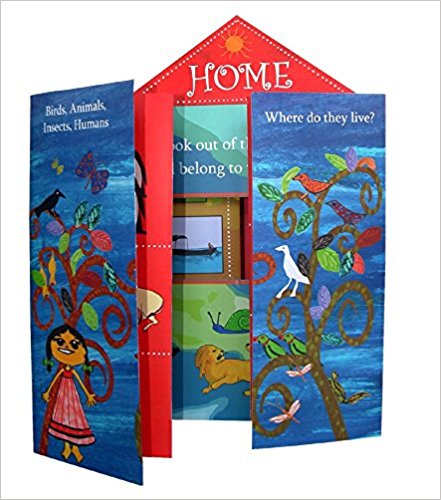
At a time when the children’s ‘edutainment’ industry strives towards luring the urban child into the finger-clicking world of instructional video, computer games and mono-directional communication that leaves little space for the child’s imagination to take roots, Nina Sabnani’s ‘stand-up’ book published by Tulika emerges as a trend-setter.

Gita Wolf
Monkey is tired of the tourists clicking away, each time they visit the jungle. So he decides to monkey around with a camera himself, and manages to find a Polaroid, too!Monkey Photo follows Monkey, as he jumps from tree to tree, swinging here, there and everywhere trying to catch the leopard’s spots, the snakes on the tree, cheery tigers, enthusiastic birds and a host of other creatures that fill the forest with their colourful presence.
Taruja Parande
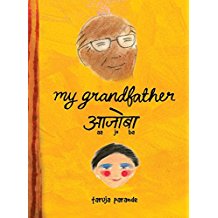
As the mother of young readers, I love to introduce them to different genres all the time.After the loss of a dear family member, grief has been something we have been grappling to come to terms with, for the last few years.While it was tough initially, my children and I learnt that the person is still with us in many of the memories that we continue to share and the book My Grandfather Aajoba helped fill that void, beautifully.
Rick Riordan
2010
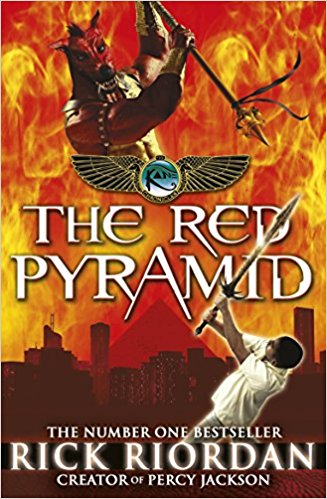
The Red Pyramid is the first of the Kane Chronicles by Rick Riordan who updated Greek mythology in his Percy Jackson stories: Olympus is parked above Manhattan, and Percy (Perseus) is Poseidon’s son in a twenty-first century order of demigods.
Arvind Sharma
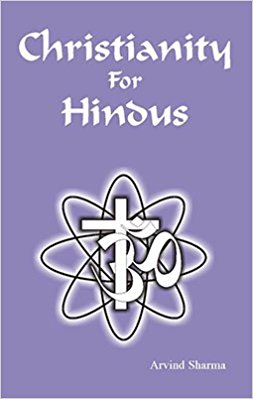
The premise of the book is a pleasant surprise as you realize that a person from one religion is making an effort to understand another’s as well as bridge the gap between two communities.
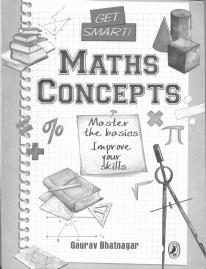
Gaurav Bhatnagar
This book is aimed at teaching Mathematical concepts to middle school children in an interactive and fun way. Or as the author puts it, this book would help you ‘think about mathematics’ and ‘learn to think about mathematics’.
Kamala Mukunda
The education system and schools are currently under the scanner and it has become fashionable to blame all our woes on our ‘faulty education system’. Teachers, particularly, are soft targets: poor pedagogy,
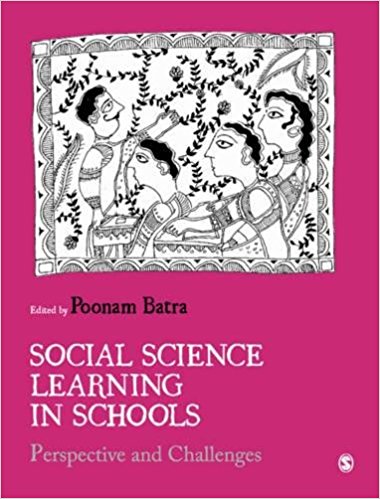
Poonam Batra
Social Science Learning in Schools explores the central role of the teacher, importance of textbooks, and methods of social science enquiry in teaching-learning processes of school education in India.
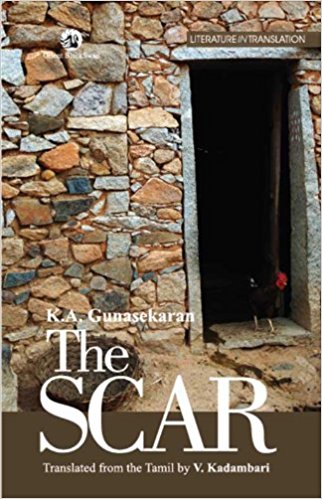
K.A. Gunasekaran
2010
Leonard Cohen wrote, ‘Children show scars like medals. Lovers use them as secrets to reveal. A scar is what happens when the word is made flesh.’ Gunasekaran’s multiple scars portrayed cleverly in his autobiography are not just proud medals and revealed secrets, they are the history of an individual and a community…
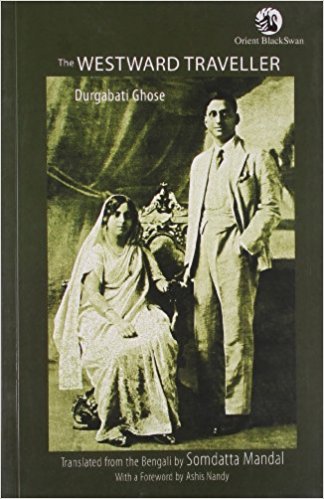
Durgabati Ghose
Travel literature is usually cross-cultural or transnational in its focus. Literary travelogues generally exhibit a coherent narrative or aesthetic beyond the logging of dates and events as found in travel journals or a ship’s log. The systematic study of travel literature emerged as a legitimate field of scholarly inquiry in the mid-1990s…
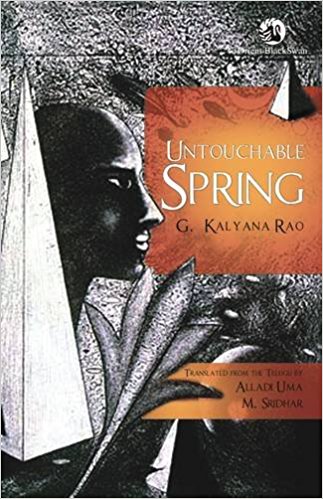
G.Kalyana Rao
Protest literature poses a problem because quite often it is more protest and not much literature. When a text succeeds as literature then the protest becomes all the more eloquent. Many protest writers walk into the trap and let protest take wing instead of the imagination. G. Kalyana Rao is quite clear in his intentions.
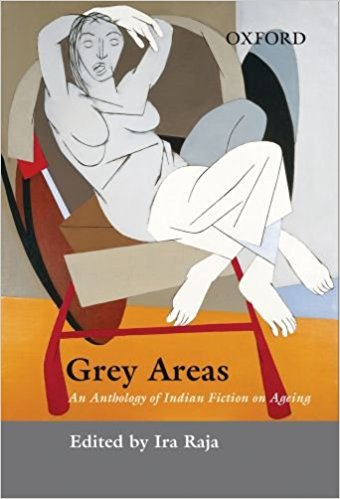
Ira Raja
In the Indian ethos, the old occupy a significant place as objects of reverence and respect and as repositories of acquired wisdom. Indian literature too is replete with characters in this age category, representing the preoccupation of the Indian mind with mortality, and the tussle of tradition and modernity…

Manoj Kumar Panda
Manoj Kumar Panda’sThe Bone Garden and Other Stories is an unusual collection. Barring a couple out of a total of thirteen stories, almost all of them delineate human suffering; but each piece has a unique storyline and an unconventional narrative structure.
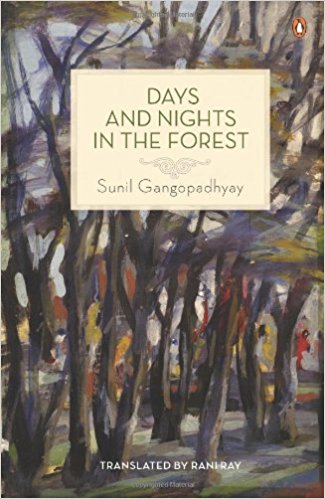
Sunil Gangopadhyay
Not the least remarkable feature of this book is the ‘Translator’s Introduction’ by Rani Ray. Outlining the genesis of Sunil Gangopadhyay’s Aranyer Dinratri, first published in Jalsa, a popular film journal based in Calcutta, Ray locates the novel both in its immediate context within the Bengali literary…
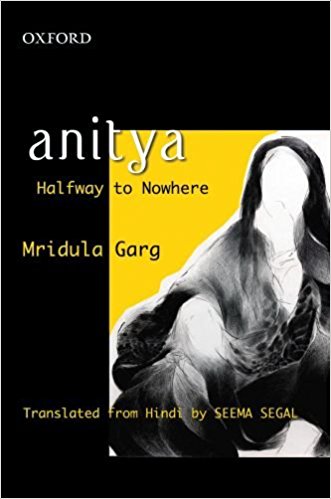
Mridula Garg
The novel Anitya by Mridula Garg is a fascinating story that beautifully weaves the personal and political into one thread. It effectively uses the backdrop of the independence struggle to recount the failings of a nation and also the individuals caught in a web of conflicting ideologies…
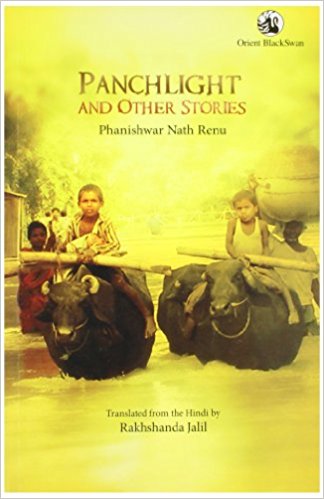
Phanishwar Nath Renu
The time has come, it seems, for India to read what Bharat has written. The spate of translations over the last few years is welcome for two main reasons: one for introducing the real India to the world and two, for raising the level of translations in this country to a degree that now one actually looks forward to reading them…
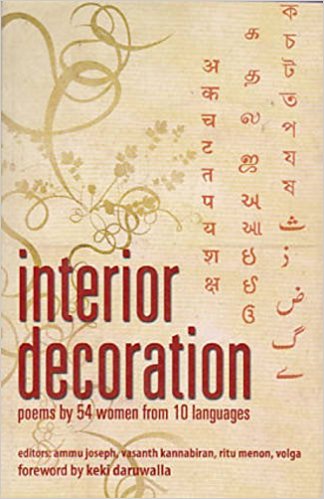
Ammu Joseph
A woman is a thing apart.She is bracketed off, aComma, semicolon, at mostA lower case letter, lostthe literary circus.………… but when she speaksHer poems bite, ferocious. (p. 102)
If you disagree with this view of Rukmini Bhaya Nair, this anthology can perhaps convince you to change your views about women’s …
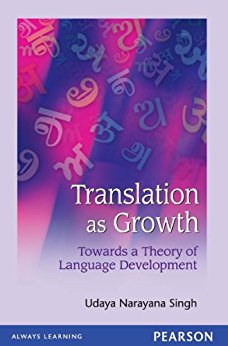
Udaya Narayana Singh
Explaining his location clearly as writer, translator, and linguist, the author Professor U.N. Singh paints a wide canvas on translation as an instrument of language growth. A growth that is essential to make languages ‘modern’, ‘a step which makes a given speech capable of being used in a much larger number of domains and in many manifestations’ (p. 183)…
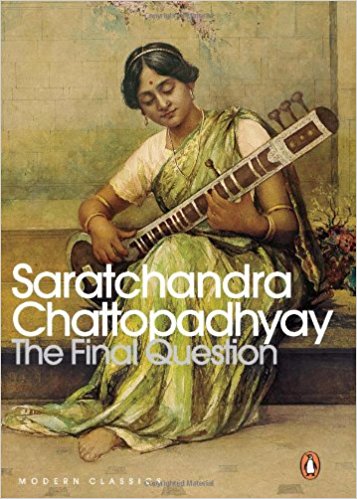
Saratchandra Chattopadhyay
Translating Saratchandra Chattopadhyay is no easy task: his novels are so deeply embedded in the social and cultural atmosphere of his time, and the events and emotions he describes are so inextricably bound up with the energies, ideas and interrogations that shaped contemporary experiences that it…
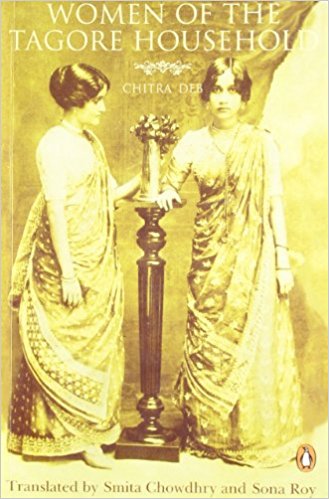
Chitra Deb
A remarkable compendium of fascinat-ing tales, Chitra Deb’s book is an unselfconsciously written account of generations of women in Bengal’s most significant family. The name ‘Tagore’ is synonymous with creativity in art, literature and music, but also stands for bold innovations in social thought…