
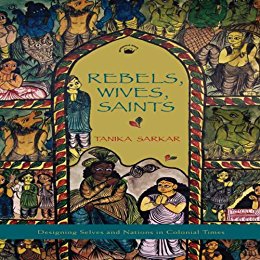
Tanika Sarkar
Colonialism as an experience, as a site of conflict, triumph or loss, of nostalgia or repudiation, and as a destination of frequent, involved revisit does not seem to go away. Even if we move out of the Manichaean category and debate as to whether colonialism was the maker or the breaker of the world it…
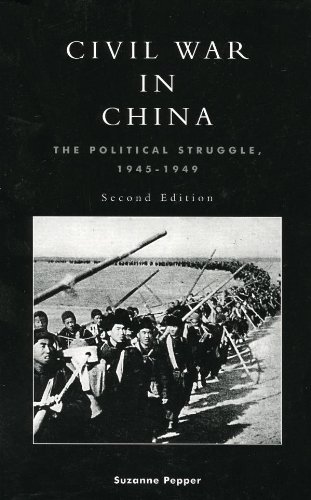
Suzanne Pepper
The relevance of Pepper’s work for a scholar seeking to understand the dynamic that informed the politics of China’s civil war period cannot be over emphasized. Not only does Pepper treat us to a most perceptive and brilliant analysis of what went into making a communist victory possible in 1949
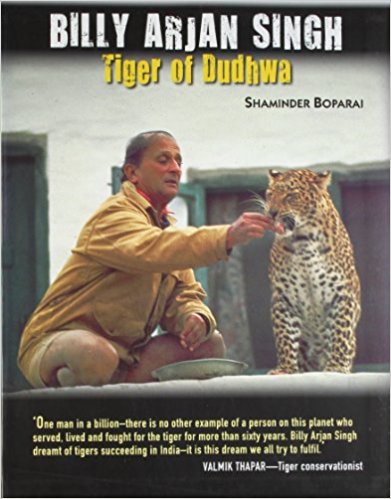
Shaminder Boparai
A number of books have been published on the life and adventures of ‘Billy’ Arjan Singh, both by Billy and his numerous admirers. This is as it should be, for Billy was one of the most remarkable conservationists the world ever knew, for his commitment, dedication and passion for the cause. The author mentions…
Morton Klass
Morton Klass’s book is perhaps the most important analysis of the Indian caste system to come out of western scholarship in the last thirty years. It comes at an opportune time – when the economic and social crisis of Indian society has reached the point where caste divisions among the labouring masses have become a major weapon of the ruling classes and ‘atrocities against Harijans’ have leaped into the front pages of all daily papers.
K.P. Misra
Confronted with a host of· books on Afghanistan the overwhelmed reader needs to have good reason not to consign to unread oblivion yet another work on the subject. What distinguishes this selection of essays is their analytical presentation of an Indian perspective on the Afghan crisis and its implications for the region and the international system.

Chandrahas Choudhury
Writer Anita Desai in her foreword to India: A Traveller’s Literary Companion declares the short-story collection to be ‘curious’, ‘original’ and, ‘audacious’. In the initial impression the book does seem curious. And, in a cynical moment, the collection even appears contrived. Something that may compel the reader…
Sukrita
2011
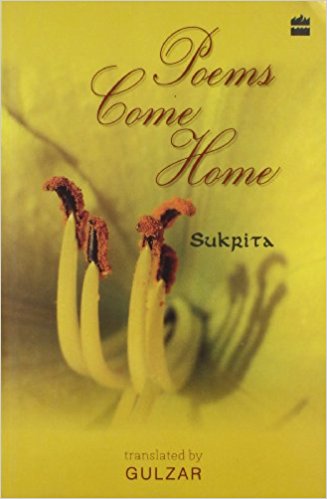
Poems Come Home is an uncommon piece of collaborative labour. Subtle in its nuances, sensitive in its portrayal, rhythmic in its power and stark in its simplicity, this bilingual book has poems originally written in English by the poet-critic Sukrita Paul Kumar, who uses the pen name ‘Sukrita’. These have been translated into Hindustani by the famous lyricist Gulzar…

Asok Mitra
The industrial structure of cities, immigration and capital investments are most likely to be highly correlated. But, establishing a cause and effect relationship between variables like in-migration and employment would be as difficult as proving whether the egg comes first or the hen.

K.R. Malkani
1981
The RSS was a natural child of the twenties. Like any organization, it reflected the ambitions and aspirations of a section of Hindu society of that time and was set up to meet a specific historical need. Since then it has grown and the growth has brought many alterations in its original character.
Priya Vasudevan
2011
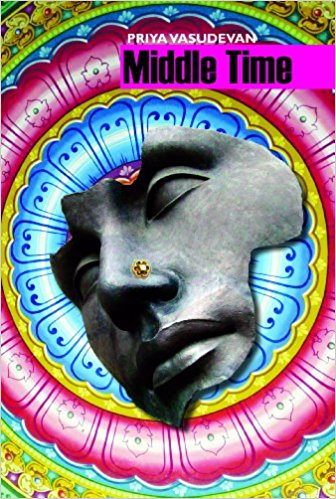
The novel Middle Time by Priya Vasudevan is a fascinating work of fiction with a dreamlike quality. The plot has two distinct stories set apart by time, place, history, prevalent customs and traditions. The parallel narration of two tales, one set in Hampi and the other in modern-day Chennai and the chronological timeframe-one of 1535…

Rakhshanda Jalil
Rakhshanda Jalil’s debut collection of ten short stories strings together gentle, at times wistful, ruminations -on what it is to be human, to be (wo)man, to be ill, to survive, to be from certain times and (un)certain locations. Sometimes in the first person, sometimes in the third person, these skillfully wrought stories…
Subimal Misra
The Golden Gandhi Statue from America is a compilation of the early stories of Subimal Misra, an anti-establishment writer who has successfully managed to steer clear of mainstream publishers since he started writing in the 1960s. A self-professed follower of Jean-Luc Godard, Misra is heavily influenced by the montage-style of filmmaking…
Bettina Baumer
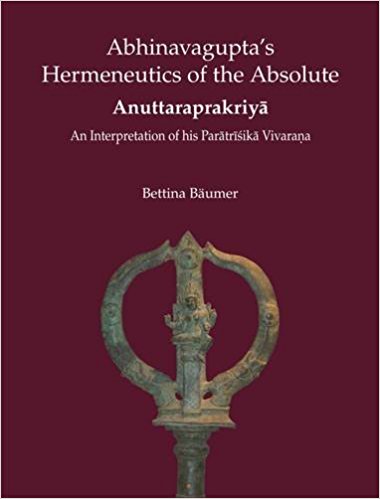
Abhinavagupta is an important name in Sanskrit literature and Indian philosophy. Most of the serious writings on these subjects mention at least three of his works. One is the encyclopedic treatise on Kashmir Shaivism, the Tantraloka or Light on Tantra. The other two are path-breaking commentaries on fine arts: the Abhinava Bharati…
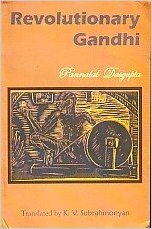
Pannalal Dasgupta
The book by Pannalal Dasgupta is calm, clear and has depths of experience, and as sometimes happens, we share in the translator’s wisdom as much as the author’s.
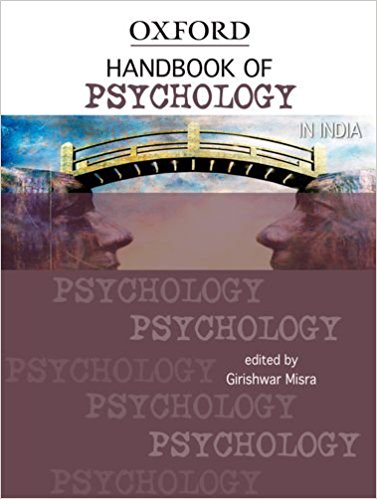
Girishwar Misra
The study of psychology is growing roots and gaining its own threshold in India. The book is both a culmination and proof of the vibrant field of the subject in the country. As Misra points out in the preface,’The publication of this volume indicates that there is substantial work being done by Indian scholars that needs to be shared.’…
Ratna Naidu
In her well-written book, The Communal Edge to Plural Societies, Ratna Naidu explores the social morphology of the communal question in India and Malaysia. She probes into the normative structure of communalism, the contextual differences between communalism and nationalism, and, most significantly, on the vastly different assumptions in the approaches of the political elites in the two countries.
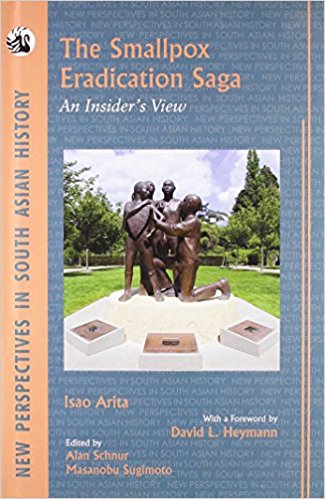
Isao Arita
Smallpox eradication remains one of the most outstanding achievements in the area of international public health. Any account of this extraordinary achievement of the collective human race ought to evoke interest, especially if it comes from a person of Isao Arita’s erudition. Arita was one of the primary architects of WHO’s ‘Intensified…
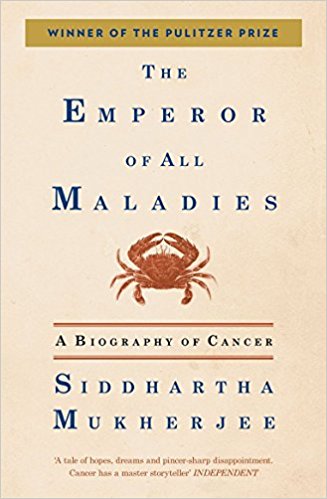
Siddhartha Mukherjee
This book, a brilliant book, received extraordinary attention in India. You might disagree with me, but I believe we do not have a rich literary culture. This is of course fundamentally related to India’s caste structure, and that we haven’t changed that much since Independence. There is little public space for books…
John Lawrence
This is not a plain tale from the Raj even though it is the journal of the wife of a British officer serving in India. The touch of the mem-sahib is inevitable since Honoria Lawrence was one; however, it remains a mere streak in an otherwise rich and complex personality and it is the individual who comes through strongly in the pages of the journal. She is a woman of many strands and if her husband was regarded as someone rather special then she has claims to the same regard in her own right.
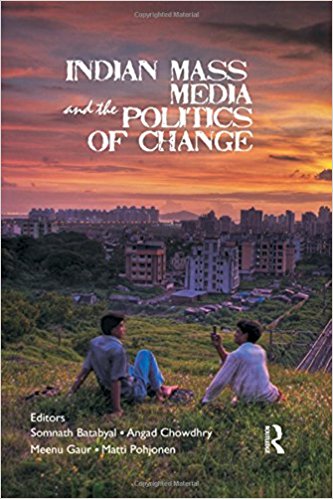
Somnath Batabyal
In 2008, as America cheered and roared for change, Barack Hussein Obama, the son of an African father and a Caucasian mother, became the 44th President of the United States of America. Considering the blood splattered, radically disturbing history of the country, this indeed was a huge change…