
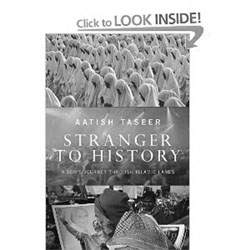
Aatish Taseer
Stranger to History is the story of a dual quest. It is the account of a son’s journey to find his father and of his efforts to discover theroots of his faith. The reader accompanies the young man in his discoveries of mind, faith and philosophy in the heartland of Islam from Istanbul to Damascus and from Mecca to Tehran…
Barbara D. Metcalf
The volume under review includes the work of more than thirty scholars of Islam and Muslim societies in South Asia. The representation is very balanced in the sense that along with many eminent scholars in the field some budding scholars have also contributed to this book. So some of the research findings…
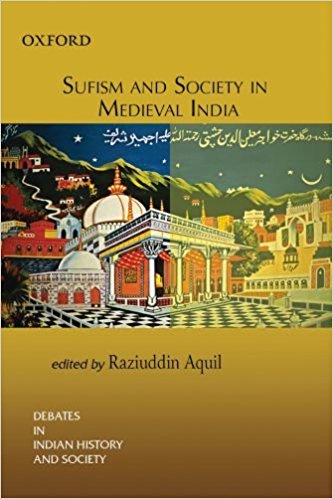
Raziuddin Aquil
Raziuddin Aquil’s book is well put together. It offers an excellent entry point into the subject of Sufism in the medieval Indian con-text to the uninitiated. Its attractive cover and easy-to-read Introduction, delightfully devoid of jargon, make it a delectable offering. The table of contents holds much promise in the impressive…
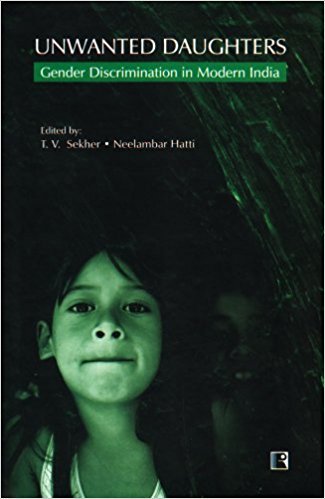
T.V. Sekher
India and China are two countries in the world where there are more boys than girls in all age groups. In India, there are just 933 females for every 1,000 males (2001 Census). This is because females are just more likely to die than males. Infant girls may be killed soon after birth; they may be starved, poisoned or suffocated to death….
Naila Kabeer
The study of the informal economy has in recent years become a matter of compelling importance. The many changes at the globallevel in terms of the liberalization processes, deregularization of labour markets and the use of new technologies that impact labour conditions have necessitated closer attention…
Rajendra Vora
Western India was expe-riencing unforeseen changes in its economic and political scene during the years subsequent to the First World War. The textile mills in Bombay and Ahmedabad were trying to increase their production following a decline of imports from England and the decline in production from local handlooms…
Ghazala Shahabuddin
The author begins by saying, ‘this book is an attempt to try and understand the shortcomings of the varied strategies that have beenadopted for biodiversity conservation by India since Independence, both in terms of policy as well as implementation’. Keeping the Sariska National Park in view, a background…
Elanine Enarson
Women grieving publicly is the common image of disaster. But this is just the tip of the iceberg. Women suffer disaster un-equally. More women are victims than men of disasters—both natural and manmade. Women get less rehabilitation. Women have less voice in expressing their distress…
Saad Ashraf
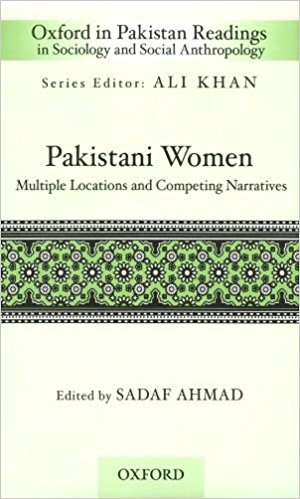
This anthology on myriad engagements of social science literature with Pakistani women’s lived experiences comes with two important caveats. In the first chapter, Sadaf Ahmad, its editor, bemoans the lack of a corpus of knowledge on Pakistani women which is nuanced and contextualized,…
Paula Banerjee
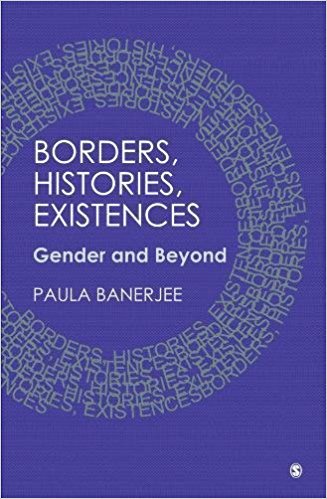
The recent violence marking Kashmir’s long summer of discontent is just one more reason why borders need to be studied and under-stood. In Borders, Histories, Existences: Gender and Beyond, Paula Banerjee, head of the Department of South and South East Asian Studies, University of Calcutta, not only trains the light on territory less travelled, she does it through a multi-layered approach…
Brajadulal Chattopadhyaya
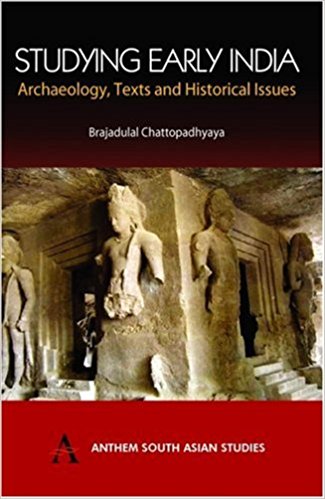
This is a collection of previously published research papers, unpublished conference papers, and endowment lectures written between the 1970s and the 2000s. In the first section after the introduction are four essays that relate to the interface between archaeology and text: seeking the literal truth of the epics; investigating the emergence of complex society and the state in the Deccan and in Punjab; and the nature of the early cities of Bengal.
Iravatham Mahadevan
Iravatham Mahadevan, an administrator- turned scholar noted for his profound scholarship in multiple aspects of the science of ancient scripts in general and Harappan writing in particular, belongs to the galaxy of the leading epigraphists of the world and ranks foremost among the scholars in Brahmi script. The study under review, Early Tamil Epigraphy is his magnum opus.

R. Champakalakshmi
Most narratives of the historiography of ancient India inspire a strong sense of déjà vu. There is the mandatory bashing of the imperialist historians, followed by a litany of complaints against the nationalist historians. This is followed by an account of post-Independence developments, in which the writing of ancient Indian history is presented as coming of age, with the imbalances and biases of the earlier eras replaced by a more sophisticated and sounder understanding of the past.
Ranajit Guha
History at the Limit of World History and The History of History are remarkable because of the somewhat eccentric views that the two authors, of very different persuasions, hold on what ought to be hisory. Aristotle, Hegel, Wittgenstein, Martin Heidegger, Jacques Derida, Jacques Lacan, Michael Bakhtin, Rabindranath Tagore et al are passed in review by Ranajit Guha, and Ranajit Guha, in his turn is passed in review by Vinay Lal along with an equally odd assortment of Hindu communalist historians

Prakash Tandon
1981
Autobiographical notes written by powerful men are usually interesting and thought provoking. One looked forward to this book by yet another notable in the circle, Prakash Tandon. However, one nibble at the book produces the feel of a well designed soap, launched into the market with the correct advertising line at just the right pitch.
Roy K. Gottfried
The synaesthetic response to language in Ulysses is unparalleled. Generally meaning is created through language, but in Joyce language is the meaning. It is entirely for this reason that those unfamiliar with the processes whereby language is turned upside down to create meaning find it difficult to read Ulysses, The processes by which language itself becomes meaning must be explored.
Nischal Nath Pandey
Journalists write the first draft of history, policy analysts prescriptive analysis and scholars give historical context, meaning and analytical coherence to the contemporary rush of events. Rush at all three in a ‘quickie’, and more likely than not you will flounder, as does Nischal Nath Pandey…
V.R. Raghavan
The book under review is a collection of papers presented at a conference on From Winning the War to Winning Peace Post War Rebuilding of the Society in Sri Lanka’ jointly organized by the Centre for Security Analysis and Regional Centre for Strategic Studies at Colombo in August 2009…
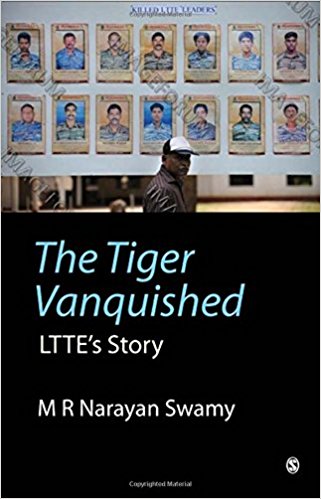
M.R. Narayan Swamy
Given the regular monotony with which Islamist extremists keep blowing themselves up in Iraq, Afghanistan and the border areas
of Pakistan one may be forgiven for forgetting that the suicide bomber was an invention of the Liberation Tigers of Tamil Eelam (LTTE)—the original big daddy of international terrorism…
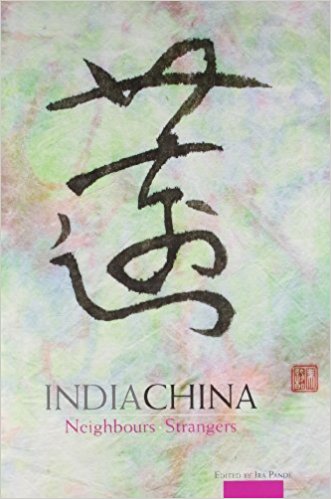
Ira Pande
Many things about this book are unique and unusual. First is the title itself. There are no punctuation marks connecting the four words India China Neighbours Strangers. This may be symbolic of the disconnect that exists between the two ancient civilizations now attempting to acquire nation-state characteristics…