
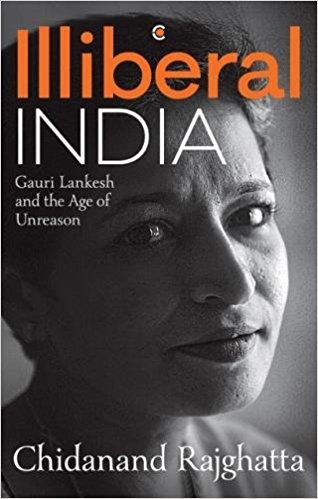
Chidanand Rajghatta
Dissent has had a long and hoary history within India and outside. By definition, dissenters struggle against those in power and raise their voices in protest, while rallying others to do the same, thereby inspiring still others in eras yet to unfold.
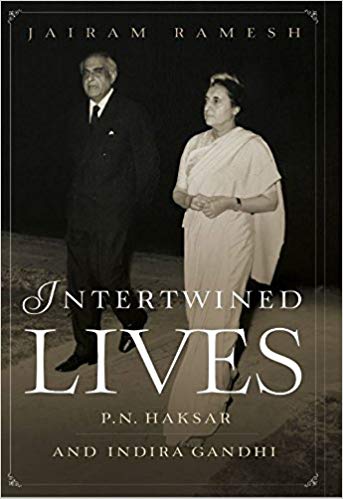
Jairam Ramesh
In his new book, Jairam Ramesh transports us to a time of remarkable consequence for India today. While the author inserts a caveat that the book must be read as a biography of a committed and profoundly sagacious bureaucrat, the running commentary on the times that produced this man can hardly be ignored.
Prasanta Ray
This is a very timely book. At one level, it offers discussions on banking related failures in Bengal Province during the 1940s and 1950s. A serious spate of bank failures had been experienced in the province in this period. It is oft stated that these failures left thousands of ordinary people, all of whom were politically invisible and mute, in financial ruin.
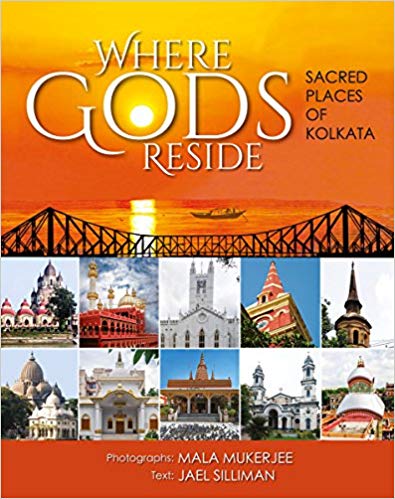
Mala Mukerjee
The city of Kolkata—and earlier Calcutta—has been the subject of a few visually rich books. Some readers may remember Desmond Doig’s amazing line drawings and tongue-in-cheek notes in Calcutta: An Artist’s Impression (1968), a rage when it came out, published by The Statesman for whom he worked.
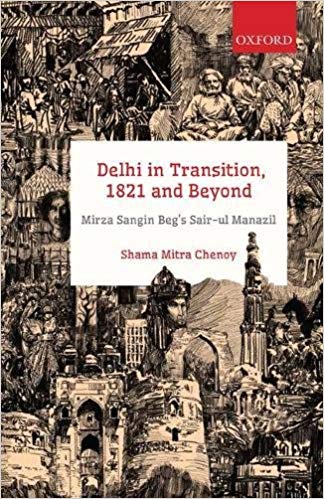
Shama Mitra Chenoy
Delhi has exuded an aura of mysticism and merriment since ancient days. With time it grew to be the nucleus of some mammoth structures of power. As it became the hub of multifarious cultural strains its magic grew. Mirza Sangin Beg’s Sair-ul Manazil in tandem with its translation by Shama Mitra Chenoy makes that invisible emanation visible.
This work of Catherine Asher is a remarkable contribution to the understanding of India’s heritage and India’s history. She studies Delhi’s Qutb Complex in its entirety that includes not only the minaret and the mosque but also the evolution of the village in its vicinity, now popularly known as Mehrauli.
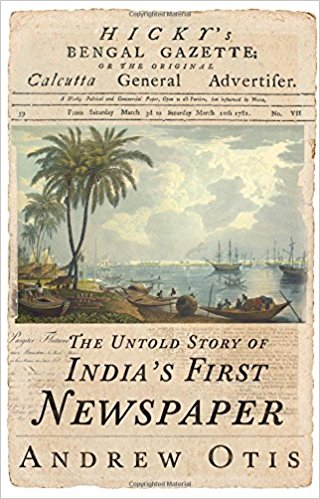
Andrew Otis
While there have been many accounts of the beginning of print in the Indian subcontinent, the enigmatic figure of James Augustus Hicky, the editor of India’s first newspaper, has eluded sustained scholarly attention. The popular perception of Hicky has been that of an irascible Irishman who repeatedly tilted with the redoubtable Warren Hastings and got thrown into jail for his pains.
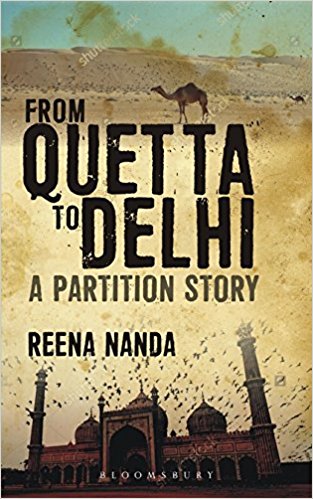
Reena Nanda
In 1947 during the Partition related violence, unlike men, female migrants who crossed the Radcliffe line braved multiple dangers like rape, killing and abduction by men from the ‘other’ community. They had a burden to protect the ‘honour’ of their family by remaining ‘chaste’ and free from any allegation of such ‘violation’.
Biswamoy Pati and Mark Harrison
I suspect that that is a myth of modernity and some mythical ideas of science in the first place. This is instead a tribute to a friend, a valued colleague, a progressive individual and an outspoken one.
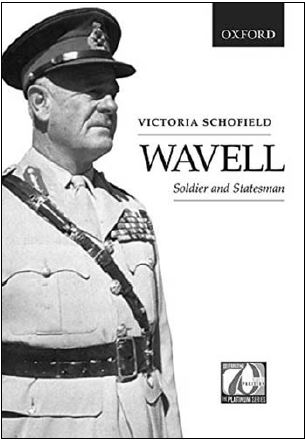
Victoria Schofield
Victoria Schofield’s book is a riveting account of the life of one of the greatest 20th century British Generals. Born into an aristocratic lineage in 1883 with a history of military service, Wavell was perhaps destined for military service. Notwithstanding his lineage the days of automatic entry and distinction had passed by the time Wavell was ready for military service.
Tyler Williams, Anshu Malhotra and John Stratton Hawley
The volume under review is the latest addition in a series of publications that followed in the wake of Sheldon Pollock’s ambitious millennium-by-millennium paradigm for the study of literary cultures in the pre-modern South Asia.
Kesavan Veluthat
The volume under review is an anthology of essays which moves away from the ways in which several themes and issues in Indian history, especially south Indian history, have usually been approached and viewed. Refreshingly, south India has continuously been located within an all-India perspective, and the interactions and change through time have been succinctly presented.
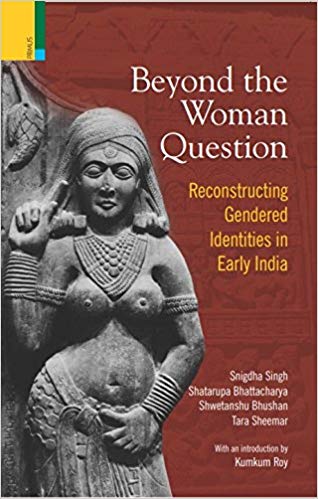
Snigdha Singh, Shatarupa Bhattacharya and Shwetanshu Bhushan
It is intriguing that often when referring to the past, there is a certainty with which assertions are sometimes made—the more distant the past, the more assertive the claims (particularly so in recent times in the context of Ancient India). In reality, one can only be tentative and hesitant about ancient constructs…
Padma Baliga
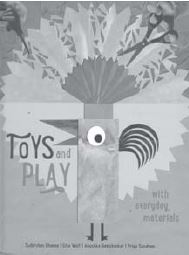
This amazing book by Sudarshan Khanna et al brings to mind the Chinese saying about a man not having to starve if he knows fishing. Certainly, kids can keep themselves engaged for hours with this book as they figure out how to make the toys, how to make them work, and how to play with them in a zillion creative ways.
Syed Umar
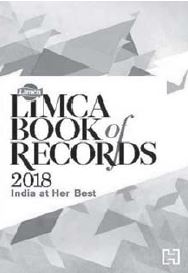
I think the Limca Book of Records is a book that records almost everything a human can ever think of and even things we cannot think of. Some of the records in my opinion describe the awesome, informative and crazy things people do.

Stewart Ross
The main character of this very amazing and exhilarating book who pulls you inside and traps you and won’t ever let you put it down is Sherlock Holmes. Sherlock is a very sharp and amazing detective who solves crime with ease with his partner Watson.

C.N. Subramanyam
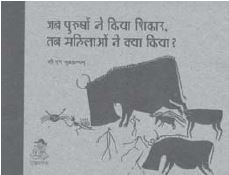
Here, the author brings to light a matriarchal society where women are strong, independent and in the lead. They are the ones who govern their community and civilization. Women are portrayed as hunters who can kill for food and safety. He shows how even during those times, the ‘cart’ of society required the male and female to work together.
C.N. Subramanyam
The author CN Subramanyam comes to mind as an observant man. He is a person who is affected and jostled by his past and hence he digs into it, hoping to skim out some finer details. But being of the present generation, there is a modern edge to his short story.
Ariana Abadian-Heifetz
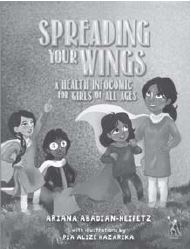
An infocomic! How refreshing! The author, Ariana Abadian-Heifetz has taken the help of a gynecologist to put in valuable information in a menstrual hygiene comic for girls. This book is one of the best uses of books that I’ve ever seen. 110 pages of colour illustrations by Pia Alize Hazarika is a surefire way to get children interested.
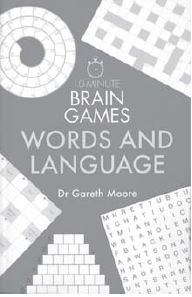
Dr. Gareth Moore
10-minute Brain Games, Words and Language by Dr. Gareth Moore promises hours of productive fun. Each puzzle takes about 10 minutes to solve (you got that from the name, didn’t you?).