
Debali Mookerjea-Leonard
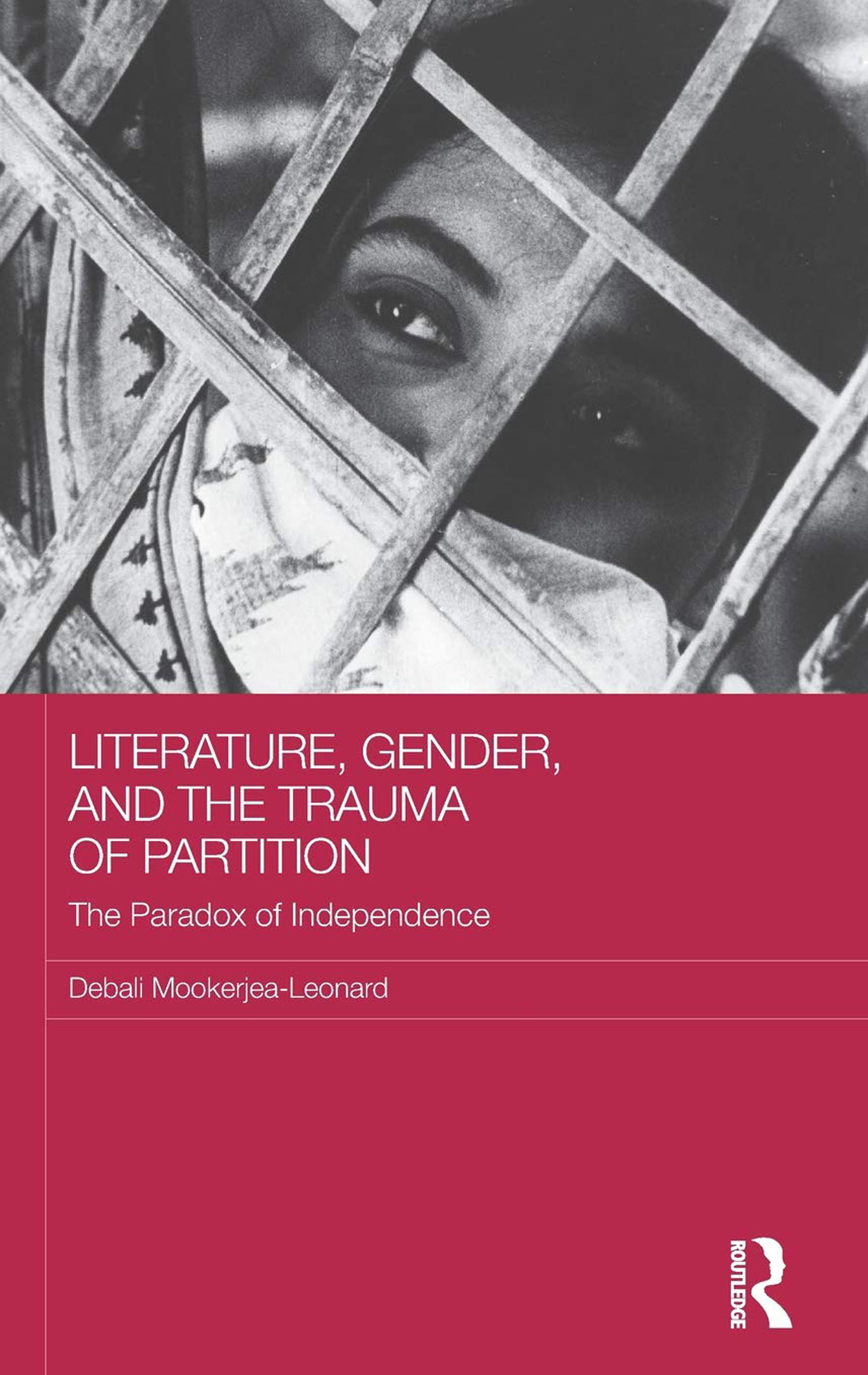
What Debali Mookerjea-Leonard achieves distinctly in this book is to effectively showcase her own reasoned angst and that of the others, regarding the lesser visibility of diverse aspects of Partition literature on the Bengal side in comparison with the abundant and a rich variety of perspectives on Partition fiction from the western side of the subcontinent. In her detailed analysis of the critical writings of such critics as Srikumar Bandopadhyay, she convincingly draws the attention of the reader to the non-acknowledgement of different Partition themes presented by several Bengali authors.
Afsar Mohammad.
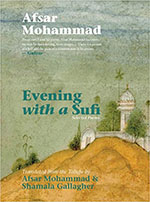
What struck me most in the Evening with a Sufi: Selected Poems by Afsar Mohammad translated by him with Shamala Gallagher are vivid, sometimes startling images such as of ‘a body like a wound peeks from your torn shirt’ or of wounds that ‘open their huge doors’ in a poem like ‘Name Calling’. Or consider the lines in ‘A Piece of Bread’ written in memory of Bismillah Khan

David Davidar
Although the hyperbolic title of this just minted anthology indicates a performance in the realm of extravaganza, the forty stories included within its covers do offer a dazzling spread of assured and exciting writing. In itself the anthology contains a wealth of riches; the editorial decision to print only the best writing of authors belonging to the millennial generation and Generation Z catapults this book into a budding promise: a dynamic product rather than a finished volume, which functions like a tantalizing anticipation of that which is yet to come.
Deepti Naval
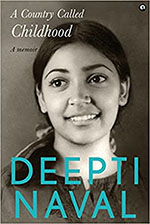
When one thinks of Deepti Naval, one immediately wants to frame her into a film sequence with Farooq Sheikh, both of whom have been remarkably great actors in Indian cinema. And so, when I eagerly picked up her autobiography, A Country Called Childhood, I was half-expecting at least a chapter or two on her life as a Bollywood actress who was at the fore of ‘parallel cinema’ which has left an indelible mark in the history of Indian films.
Rijula Das
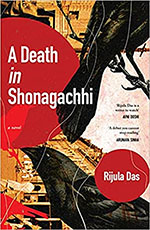
Rijula Das’s book A Death in Shonagacchi, despite its title, is less about death and more about life and living. You cannot find a more unlikely hero than Tilu Shau, even if you determinedly looked for one. A man of unassuming looks, which is to say he is nothing to look at, short of stature with a caved-in chest, falls in love with the dark and buxom Lalee of the red-light district of Shonagachhi. To Lalee, love dove mean nothing. Can the client pay is the only pertinent question. She sees Tilu’s infatuation and ruthlessly moves to raise her rates.
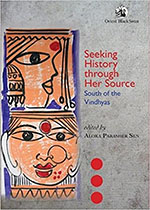
Aloka Parasher Sen
Aloka Parasher Sen’s edited volume under review comprising a collection of eight essays recognizes the need to seek ‘out the “reality” of the past rather than its “truth”’ (p. 2). Inspired by Hayden White’s essay on historical fiction and historical reality, wherein White explains that ‘The real would consist of everything that can be truthfully said about its actuality plus everything that can be truthfully said about what it could possibly be.
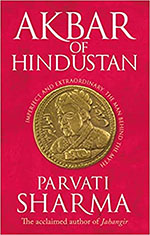
Parvati Sharma
The book is a biographical account with a difference, of an emperor, contested currently in national discourse, in a simple story-telling style to make the narrative thrilling and delightful. Written with passion and curious interest combined with theatrical melodrama and humour, it captures the multi-faceted personality of Akbar, his different moods, temperament, sentiments, emotions, compassion and open-mindedness, yet the focus primarily remains to be on the power-driven, ambitious, warrior, conqueror, imperialist, who is never free of court animosities, politics, resentments, turmoil and turbulence enmeshed in kinship and patronage.
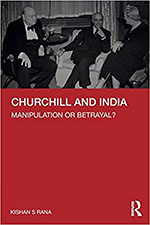
Kishan S Rana
Historian Ramachandra Guha has spoken of what he calls the ‘Boyle’s Laws’ of biography writing; named for their author, Goethe’s biographer Nicholas Boyle, they argue for a biography to be a logical progression to its conclusion, rather than the elaboration of a premise stated in advance; the drawing upon characters other than the principal to illuminate the narrative and extensive reference to sources other than those directly attributable to that subject. Winston Churchill’s views were congruent with Boyle’s on at least the first law
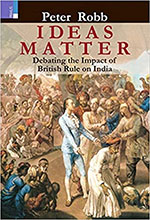
Peter Robb
Peter Robb’s Ideas Matter: Debating the Impact of British Rule on India attempts in nine chapters to present a scenario on the debates regarding the impact of British rule on Indian society, economy, culture and politics. The long-debated introduction titled ‘Changing Governance, Agriculture and Identities’, highlights various colonial themes. The author starts with an analysis of the relationship between India and Britain and argues that ‘both countries would be different today’ without British rule in India.
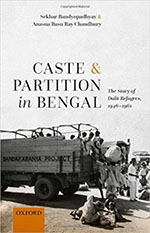
Sekhar Bandyopadhyay
For a long time the Partition of Bengal in 1947 and its manifold complexities and consequences failed to emerge as a subject of serious academic research, and more so in the English writing-speaking world. The reasons behind the relatively (as compared to Punjab) subdued academic attention and consequent paucity of published works on the Bengal Partition were many, ranging from ideological-political differences (among both state and non-state actors/researchers) to the ‘perception’ that the Bengali Partition experience was far less violent and traumatic as compared to Punjab.
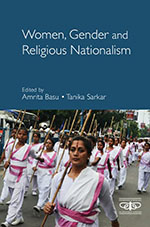
Amrita Basu and Tanika Sarkar
Decentring the gender discourse has emerged as a vital task for those seeking to understand the unprecedented expansion of Hindutva politics and the social and political ground it has gained since the erstwhile Jan Sangh won just two seats in the Indian Parliament in the year 1982. To dismiss the ‘gender’ of the political formation as conservative could be superficial, pernicious or simply convenient; a closer and more incisive examination of the women of Hindutva remains the need of the hour, to use a cliché.
Navaneetha Mokkil
There is a lovely story in Navaneetha Mokkil’s Unruly Figures describing a moment from the sex worker and activist Nalini Jameela’s Autobiography of a Sex Worker. Jameela, used to doing sex work in a darkened room, is asked by her client to go into the light so he can see what she looks like. His face lights up when he sees her, and Jameela realizes for the first time that she is beautiful. Mokkil likens this to how we often ‘see’ ourselves through others.
Mahuya Bandyopadhyay
According to the National Crimes Record Bureau data available in 2016, there is a total of 20 women’s prisons in India, housing more than 3000 inmates. Tamil Nadu has the largest number of women’s prisons, five, and they are less than half full; while West Bengal, Delhi and Maharashtra each have one women’s prison and have more than full capacity of inmates.

C. Rangarajan
This book is the story of India’s monetary policy and its economic dilemmas written by a true savant and patriot who had to deal with a whole lot of crises. Dr Chakravarty Rangarajan, until his retirement in 2014, at the age of 82, devoted his entire life to serving the country in one capacity or another. He has been Deputy Governor at the Reserve Bank of India, member of the now abolished Planning Commission, then RBI Governor, the Governor of erstwhile Andhra Pradesh, and Chairman of the Prime Minister’s Economic Advisory Council. He is currently the Chairman of the Madras School of Economics.

Rajesh Veeraraghavan
The history of welfare provision in post-Independent India has been replete with stories of failure and leakages. Almost every public welfare programme will throw up a side story on how only a fraction of the largesse has reached the intended beneficiaries. India is known for, what Jean Dreze calls, the ‘percentage system’ under which a fixed part of the money is siphoned off as bribe by a wide range of intermediaries across the system.
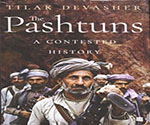
Tilak Devasher
Pashtuns are one of the largest ethnic groups in the world who do not have their own country but straddle across a contiguous stretch of territory, across northern Pakistan and southern Afghanistan. They have been embroiled in wars with the British, invaded by the Soviet Union and suffered an almost two-decade long interference by the United States, albeit sometimes benign.
Ashley J. Tellis
Although the title refers to ‘Southern Asia’, this masterly survey by Ashley Tellis focuses on three countries: China, India and Pakistan. In so doing, the author differs from other western scholars and analysts writing about nuclear deterrence concerning India, who take a dichotomous view of India’s dilemma, either India versus Pakistan or India versus China. Tellis rightly takes a trichotomous view because it is impossible to consider nuclear issues in South Asia in isolation from China.
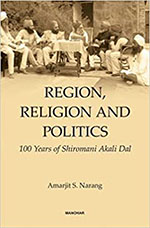
Amarjit S. Narang
Reading the synoptic narrative of the hundred years of the chequered political career of the Shiromani Akali Dal in the volume under review makes us aware about the uniqueness of the oldest State-level Party which emanated from a religious reformist movement and went on to qualify both as a ‘regionalist’ and an ‘ethnic’ party. As ethnic Party, Akali Dal has sought and received considerable political support from the Sikhs in India and even among the Sikh diaspora, while taking up the community’s religious, social and political causes as central to the Party agenda.
Ilyas Chattha
The Punjab Borderland, drawing together an array of archival sources, traces the first ‘comprehensive social history’ of the Punjab border, straddling the states of India and Pakistan (p. 2). Through an extensive study of the border mobility and materiality from 1947 to 1986, it argues that the Punjab border was far more porous and accessible than generally assumed.
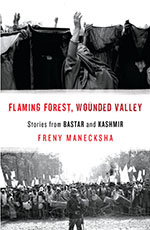
Freny Manecksha
What happens when a state wages a war on people? How do the people navigate a system rigged against them? Flaming Forest, Wounded Valley is a result of Freny Manecksha’s decade-long experience of travelling and documenting in the two most volatile regions in India—Bastar and Kashmir. The book documents state’s action as well as inaction in these volatile regions and examines the meaning that words like ‘home’, ‘safe-space’, ‘development’ and ‘justice’ take on in a conflict zone.