
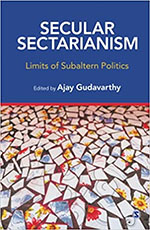
Ajay Gudavarthy
Ajay Gudavarthy has through this edited volume of essays foregrounded the argument that there are internal contradictions giving rise to new power formations which are a result of conflict within and between marginalized groups. He states, ‘today, we cannot understand social dynamics exclusively as conflicts between the dominant and dominated.
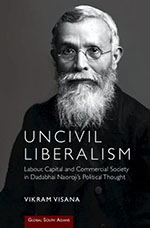
Vikram Visana
2022
The significance of this book is that it adds to our understanding of Western India and more specifically the milieu of the small Parsi community in Bombay that provided the commercial, political and intellectual matrix out of which the political thought of Dadabhai Naoroji emerged. Visana suggests that in the development of Naoroji’s ideas, ‘Bombay had an especially important role to play since it was the “centre of the best political thought in India”.
N. Sukumar
Knowledge, at least in its a priori form, promises to be liberating. The basic thought of being able to learn, to question, to unlearn and then to relearn is deeply empowering. However, knowledge production and knowledge dissemination seldom remain under the control of one single individual. Knowledge can become liberating and empowering only if its systemic functioning is informed by the logic of equity, empathy and respect.
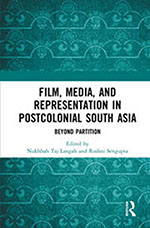
Nukhbah Taj Langah and Roshni Sengupta
Partition is one of the major historical junctures in the history of India, Pakistan and Bangladesh. When it comes to talking about the horrors of Partition, it is mainly categorized in cinema and literature. The edited volume by Nukhbah Taj Langah and Roshni Sengupta is an interesting addition to the discourse.The book does not limit itself to the horror of Partition; it goes beyond and covers its continued trauma.
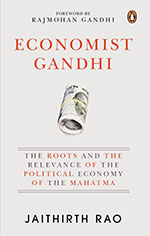
Jaithirth Rao
Gandhi is possibly the greatest Indian to have lived since Buddha. His greatness, however, lies not in his invulnerability—but rather, in his struggle to overcome his many frailties. Gandhi’s story is an alluring, yet rare, tale of the triumph of human will over seemingly insurmountable odds. One is reminded of Albert Einstein’s famous phrase describing Gandhi, ‘Generations to come, it may well be, will scarce believe that such a man as this one ever in flesh and blood walked upon this Earth.
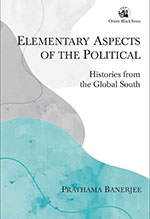
Prathama Banerjee
Prathama Banerjee’s book offers a brilliant academic contribution to the histories of the non-western world with its primary focus on the Indian subcontinent. This book is about ‘histories of the political’ by exploring the question of what is ‘political’ in the context of modern India. Thus, its overall focus is on how the modern ideas of political practice emerged in the late nineteenth to mid-twentieth century Bengal out of different Indian philosophical traditions as well as influence of colonialism.
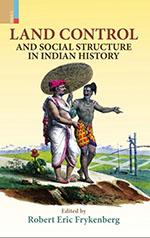
Robert Eric Frykenberg
The two edited volumes under review comprise a collection of twenty-four essays incorporating an understanding of land in South Asia, exploring the purview beyond disciplinary boundaries. They historically map out South Asia’s land distribution and the negotiations involved in it among various actors on those lands. In Land Control and Social Structure in Indian History, among the eleven essays, those by S Nurul Hasan, Tapan Raychaudhuri, Burton Stein, and Nilmani Mukherjee start with a precolonial understanding of the land and extend to their modern-day implications.
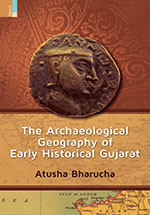
Atusha Bharucha
This book, with about 250 pages and multiple useful illustrations, is a much-needed comprehensive work that fills the existing gap in both academic and non-academic understanding of early historic Gujarat. Apart from the Foreword and Introduction, the Appendix which follows the Conclusion is extremely useful as it introduces the different types of pottery of Gujarat.
Madhwi
Before jumping into analysing the book’s strengths, it is important to highlight the complexity of this project. Tracing a transnational project like the movement of labouring bodies across oceans, while being a scholar in a middle-income country is a feat. While the subjects of this book may be Indians, looking for their archival traces would require transcending national boundaries—something that not many early career scholars find possible.
Daman Singh
Ideas, as we do not adequately appreciate, are profoundly important. They are not merely abstractions, because they lead to actions, to violence or to healing. As a doctor, I was a Resident at a department of psychiatry where ECTs were routine. This treatment is now considered inhuman and is banned in most countries; it continues in India.
Sumanyu Satpathy
Sumanyu Satpathy’s Will to Argue opens with a rather interesting excerpt from Jonathan Swift’s Battle of the Books about the ‘books of controversy’. Another excerpt from the same text, not quoted by the author, makes for a succinct comment on the momentous task that Satpathy has undertaken in this book.[B]ooks of controversy being, of all others, haunted by the most disorderly spirits, have always been confined in a separate lodge from the rest
Thomas Blom Hansen and Srirupa Roy
This volume, divided into four sections, has thirteen carefully selected essays. It attempts at investigating the rise of ‘New Hindutva’ in India. This phenomenon has been defined by the editors as a ‘governmental formulation with considerable institutional heft that converges with wider global currents and enjoys an unprecedented level of mainstream acceptance’ (p. 1).
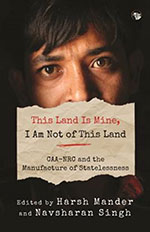
Harsh Mander and Navsharan Singh
Who is a citizen of India and on what terms? This is the momentous question that this anthology poses before us with a compelling force, in the increasingly unsettling climate of vulnerability and fear that the recently sculpted trinity of CAA (Citizenship Amendment Act, 2019)-NRIC-NPR has produced in our Republic. With much care, analytical sophistication, and citizenly conscience, a number of researchers, legal scholars, social activists, journalists, and creative writers examine through the pages of this edited volume the conceptual, constitutional, socio-political and affective dimensions of citizenship, and more pertinently, its denial, and the entangled issues of rightlessness and statelessness that such disenfranchisement engenders.
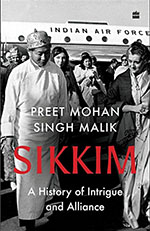
Preet Mohan Singh Malik
Sikkim, a tiny Indian State with a population of less than a million, merged with India and became the 22nd State of the Indian Union in 1975. Ambassador Preet Mohan Singh Malik’s book, Sikkim: A History of Intrigue and Alliance, comes at a time when India’s strategic affairs are much debated notably after the Doklam, and Galwan Valley skirmishes.
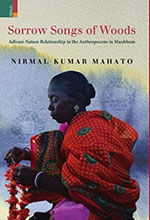
Nirmal Kumar Mahato
In the title story of the short story collection The Adivasi Will Not Dance*, noted Santhal writer Hansda Sowvendra Shekhar sketched the character of Mangal Murmu who had accepted the opportunity to dance at a programme where the President of India would inaugurate a thermal power plant. However, upon learning that the whole project was constructed at the expense of the eleven villages whose inhabitants were evicted by an official diktat
Sharat Sabharwal
Many Indian works analyse Pakistan, to understand this subcontinental neighbour. This book is an important addition thanks to the balanced, nuanced, and insightful perspectives offered.Sharat Sabharwal spent eight years in Pakistan (1995-99, 2009-13). Few in our Foreign Service have had similar lengthy exposure.
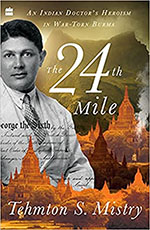
Tehmton S. Mistry
There is much in common between these six books. They all carry a subtitle, are inexpensive and light reading, though about a rather heavy topic; are tales simply told; and are about the lesser remarked aspects of war. Other than the one by Hisila, they have been penned by people other than the respective protagonists, with Punia having his daughter along as co-author. All are of stories in southern Asia, other than Punia’s which is situated in West Africa.
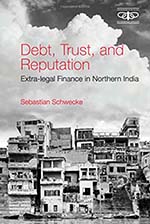
Sebastian Schwecke
The popular image of the village moneylender is often that of a rapacious scoundrel who impoverishes people by lending money at exorbitant rates, a monopolist who retards the development of free market forces, someone who needs to be eliminated in the name of progress. This line has been propagated both by the government (right from the colonial times through enactments such as the Usurious Loans Act) and the Reserve Bank of India.
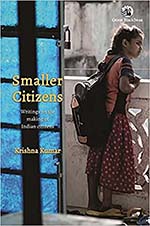
Krishna Kumar
Krishna Kumar’s deep and critical engagement with education and its impact on the child is clearly reflected in the slim volume of 18 collected essays, Smaller Citizens: Writings on the Making of Indian Citizens. Some of these essays have been published earlier, while others appeared in the form of lectures which the author had delivered at various fora. Bringing these essays together in a single volume signifies the common theme that binds all of them together.
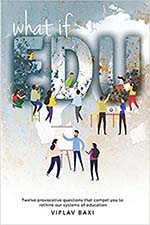
Viplav Baxi
Discussions on what is wrong in classrooms and institutions of education are part and parcel of staff-room conversations among teachers. Some reflective teachers take these discussions as trigger points for further exploration through reading and research. However, there are few spaces where books cover a range of issues in education, with a solution focused approach that is positive, but not prescriptive.