
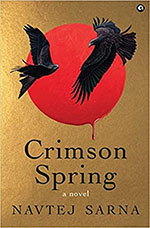
Navtej Sarna
If we write novels so, how shall we write History?’ asked Henry James, the masterly American writer of the nineteenth century. The question remains pertinent each time one confronts a historical novel, especially in the context of India where the official narrative rendered by the colonial authority sketched only one side of events.
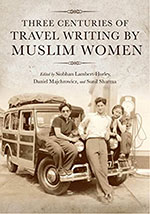
Siobhan Lambert-Hurley
The adage ‘It takes a village to raise a child’ could not be more apt to describe the collaborative nature of a project the scope of Three Centuries of Travel Writing by Muslim Women. A team of translators, researchers, experts, and advisors helped the editors assemble, order, and arrange the travel accounts of the forty-five authors included in the compilation. They selected accounts written across the seventeenth to the mid-twentieth century, from diverse languages and locations including Arabic, English, Indonesian, Punjabi, Turkish and Urdu.
Ruskin Bond and Bulbul Sharma
Between Heaven & Earth is an exhaustive compendium authored by contemporary literary stalwarts and travellers who utilize descriptive writing to produce pages of text reminiscent of Shansui paintings. Bulbul Sharma’s and Ruskin Bond’s cataloging incorporates a plethora of voices, and echoes of the past. The reader is treated to Ruskin Bond, Khushwant Singh, and Keki Daruwalla alongside Bill Aitken, Jim Corbett, Thomas Munro and Rumer Gooden.
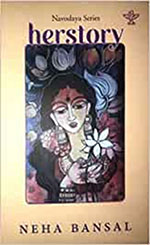
Neha Bansal
2022
It is a tragic irony of our times that the cultural space for poetry is fast shrinking in our midst, and so are its readers and/or publishers. Known to us, humans, as one of the most primordial and also sublime forms of self-expression, poetry is moving out of our lives, almost imperceptibly. Sadly enough, the poetry that speaks the real language of the human heart, doesn’t appear to have many takers, at least, in our hyper-real times.
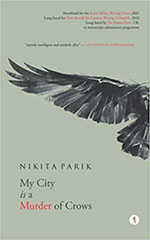
Nikita Parik
It is difficult to review this book, as the smooth writing tempts you to pause and ruminate on techniques used, which inspires you to attempt a few pieces. Nikita Parik’s poems are lessons in creative writing. Both My City is a Murder of Crows, and her debut collection Diacritics of Desire, are important reads for emerging poets working on their craft. Invariably, Parik will teach them concise writing.
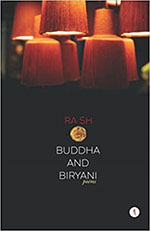
Ra Sh
Dazzlingly unpredictable, Ra Sh’s recent collection of poems, Buddha and Biryani, constructs a world of perception that is playfully irreverent but trenchantly real. The poet, known for his seductively tantalizing referentiality of erotica in The Architecture of Flesh (2015) and The Bullet Train (2019), strikes the raw chords of the readers again.
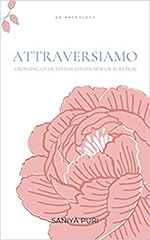
Saniya Puri
The cover of this slim volume of poems is of a flower blossoming and the uneven lines drawn on every petal sets the tone for the ideas that are enclosed within its spaces. On first glance, one is not prepared for what follows inside the book. The stereotypical set of ideas pertaining to flowers and colour schemes that one has been conditioned to, and the way one casually looks at the surface, does not prepare us for the powerful assemblage of poems that will shake you to your core.
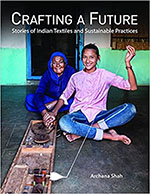
Archana Shah
Archana Shah’s Crafting a Future—Stories of Indian Textiles and Sustainable Practices is organized in three sections—the story of cotton, the story of silk, the story of wool—along with a foreword by Laila Tyabji, an introduction, an afterword, appendices I and II, acknowledgements, photo credits, bibliography, and an index.

Kabir Bedi
At the outset I must confess that I have never been a Bollywood aficionado and that I have not ever seen a film where Kabir Bedi had acted. Yet, I find his life, vignettes of which he has sensitively narrated in his memoir, unusually interesting, sometime even profound. In fact, after completing the book that mixes adroitly the profane with the sacred, I feel tempted to know more about him.
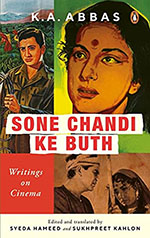
K. A. Abbas
If the advance praise of the book is written by Amitabh Bachchan, Shabana Azmi and Professor Ira Bhasker one can assume the book is going to be good, given that it has been appreciated by actors in the popular area as well as in the critical arena, plus by an academician. And, so it turns out to be. There is something for everyone who is interested in Hindustani Cinema to take away from this book.

Ashis Ghatak
Remember Kasiee Paheli Zindagani from the movie Parineeta? Sanjay Dutt drives the ladies of the house out to a Night Club in Calcutta. Glasses clink, horns and keys come alive as Rekha ascends onstage—and in a red sari she puts a spell on you. Another reference would be Arun Bhai and Meenakshi Mehra from A Suitable Boy and sultry Calcutta evenings providing for a heady mix of jazz and yearning.
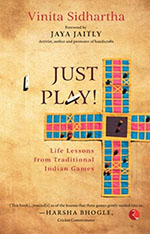
Vinita Sidhartha
The book showcases several traditional games of India—their origin, structure, rules and style of play. In addition, it has extrapolated how these games depict the larger moral values of human life. In this endeavour, the author has sub-divided the book into appropriate sub-themes which enable the reader to grasp its core tenets.
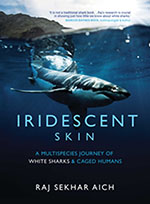
Raj Sekhar Aich
Sharks have maintained an enduring allure in culture. Powerful, magnificent and terrifying—they capture the imagination of audiences, artists, and researchers alike. Yet, this fascination combined with our fear of the unknown has an ongoing impact. A large number of shark species are threatened with extinction.Raj Sekhar Aich is a marine anthropologist and social scientist who studied shark cage-diving by living in New Zealand where the great white shark is classified as ‘vulnerable’.
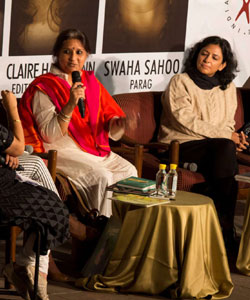
A curated collection of outstanding books in English and in Hindi, for children and young adults, by the Parag Initiative of Tata Trusts. This list, published annually, comprises noteworthy books of the year with brief information about each title. It has been created with careful screening and multiple reviews by experts in the children’s literature sector. The list aims to promote access to a comprehensive curated list of good quality children’s literature that librarians, teachers, parents and children can refer to and read.
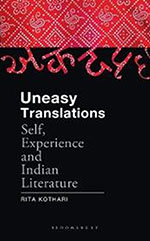
Rita Kothari
Reviewers typically position themselves as being more or less superior to the work under review. Thus, the work being reviewed is discovered to be—discreetly or otherwise—deficient, in the light of the work that the reviewers themselves would write if only they could tear themselves away from important work—like reviewing. (Though it might be more accurate to say that they might have written if they could…) I’m afraid Rita Kothari’s Uneasy Translations: Self, Experience and Indian Literature offers no such comfort.
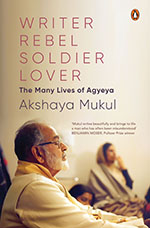
Akshaya Mukul
In 1936, the young and upcoming Hindi writer and poet, Sachidanand Hirananda Vatsyayan, ‘Agyeya’, wrote to Banarasi Das Chaturvedi, his mentor and friend at the time, ‘It is too early yet to tell secrets especially to you’ (p. 130). A few years later, in 1944, to another friend he wrote, ‘a person like me has a very small life outside but a big inner life’ (p. 267). Throughout his lifetime, and even after, those close to Agyeya variously described him as ‘reserved’, ‘quiet’, and ‘restrained’.
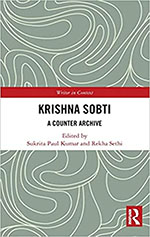
Sukrita Paul Kumar
This book is part of the series ‘Writers in Context’ edited by Sukrita Paul Kumar and Chandana Dutta. The time for such a series has long come and I am glad that we finally have the first books in the series in our hands. To take up Indian language writers and put together an authoritative volume on their writings in English translation with excerpts from their works and their own essays and letters, interviews with them, biographical sketches and memoirs, bibliographical details, and critical readings of their works over the years answers to the needs of scholars of Indian literature all over the world.
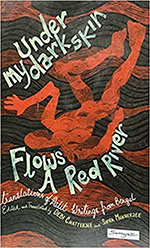
Debi Chatterjee
Although Dalit literature has had a long and variegated presence in Bengal, especially through the oral traditions of Bauls, Fakirs, Sufis and other popular sects, it remains a relatively neglected area in Dalit studies and has only recently found greater visibility via translation. Under My Dark Skin Flows a Red River, seeks to fill this gap with an anthology that combines historical and theoretical frameworks with samples of creative writing across diverse genres.
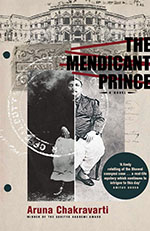
Aruna Chakravarti
The Mendicant Prince spans multiple genres: historical fiction, real-life mystery and a legal drama that inspired a long-drawn-out pamphlet war in pre-Partition Bengal. Aruna Chakravarti breathes life into the Bhawal Sanyasi case that has fascinated generations in Bengal and Dhaka, in yet another novel that demonstrates her mastery over the genre of fiction about colonial Bengal.
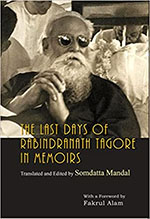
Somdatta Mandal
Somdatta Mandal’s The Last Days of Rabindranath Tagore in Memoirs is a uniquely conceived book that provides a comprehensive look into the final months of biswakabi Rabindranath Tagore’s life when the hallowed man was ‘oscillating between fitness and illness’ (p. 164), until he passed away after a fatal surgery performed against his wishes. The book consists of translated selections from several memoirs and biographies originally written in Bengali by the poet’s associates and other well-known writers and researchers.