
John Kenneth Galbraith
Professor Galbraith’s fuller title for his book is reminiscent of the thoughts of Fitzgerald/Omar on the mystery of life but Galbraith briskly sets about his declared objective (‘Much discussion of money involves a heavy outlay of priestly incantation.’) of dispelling all mystery about money in his book which is lucidly written and eminently readable…
Perveez Mody
In a court complex in New Delhi, Tis Hazari, room number 137C is a rare liminal space where India’s colonial past, intimacy, marriage, norms, love and law collide and merge. It is here that the secular freedom to marry afforded by the 1872 Civil Marriage Act is utilized by couples in love. To marry under the Civil Marriage Act in India…
Mohammad Talib
In Delhi, the social, cultural, psychological and political universe of the large-scale labour in the informal sector have so far been researched only in nascent form. Characteristic of the migrants to Delhi, as of the labour in other cities, is a very high geographical, sectoral and professional concentration. Moreover, the poor, low caste…
Meena Bhargava
It is through the situated/local that several important historical interventions have been made regarding the national/general. Overarching theoretical formulations are invaluable conceptual tools that get their competence from historically and materially specific events. Women’s Studies is one of the disciplines where we see this emphasis on the situated with a political force…
D.N. Chaudhuri
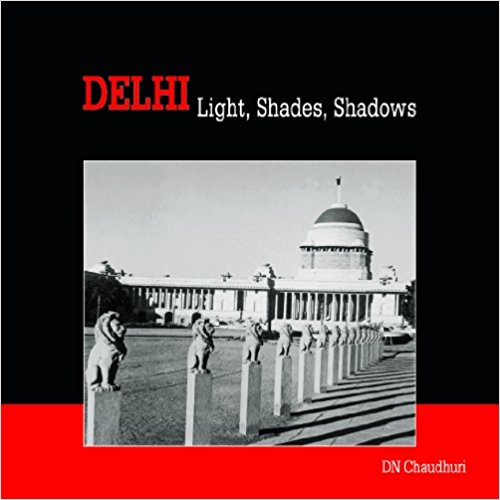
On many a bright winter day, we would see an English family sipping beer or tea in their flowering garden, with a couple of spaniels or retrievers, jumping around them, playing with a tennis ball.Something about this city, lingers… its formidable fortress looking across an imaginary river, the spirited galis, the pungent trail of an open bazaar, soft yellow light filtering through trees in the autumn…
Jim Masselos
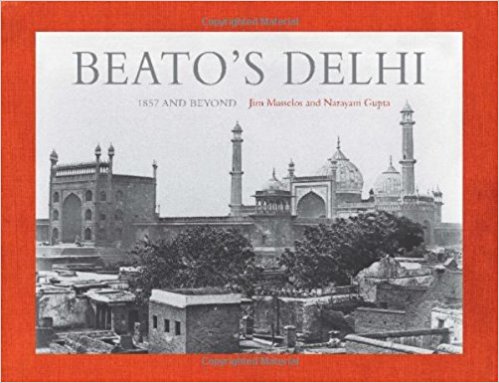
This is essentially a pictorial record of a pivotal moment in India’s history, but also a timely tribute to Ravi Dayal, the renowned publisher. Dayal, who married Khushwant Singh’s daughter Mala, passed away in 2006. He is not only remembered for his role in encouraging new authors but also for his intuitive sense of history…
A. Banerjee
Festschrifts are fashionable these days. In recent years a large number of them have come out in honour of distinguished economists. By and large, they tend to be of poor quality; except for one or two articles in each, these volumes contain material which would not have been otherwise published…
Malvika Singh
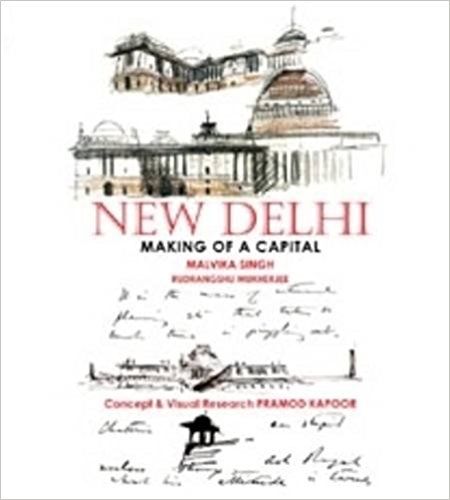
Edifices and monuments are built. Cities grow and evolve over time. There have, however, been exceptions. Mohammad bin Tughlak’s Daulatabad was one. The mad emperor, as some thought of him, ordered that his capital in Delhi be abandoned and the Court be established hundreds of miles south in the Deccan…
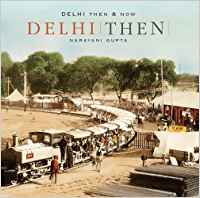
Narayani Gupta
Delhi then and Now is a unique book. In two distinct parts, Narayani Gupta and Dilip Bobb have captured this ‘city in transit’ very graphically, recreating the richness of the nostalgic past juxtaposed with its vibrant presence.In Part-I-Delhi Then-Narayani Gupta has given an account of the evolution of the city interspersed with some interesting tid bits. She starts with a statement that ‘Delhi’ is an attractive name because of its brevity…
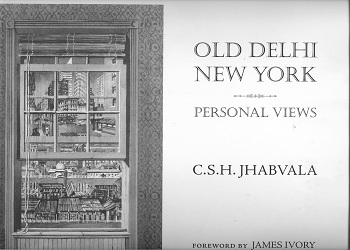
C.S.H. Jhabvala
Before and after Independence, India was engaged in a process of discovering itself and re-fashioning an identity for itself.
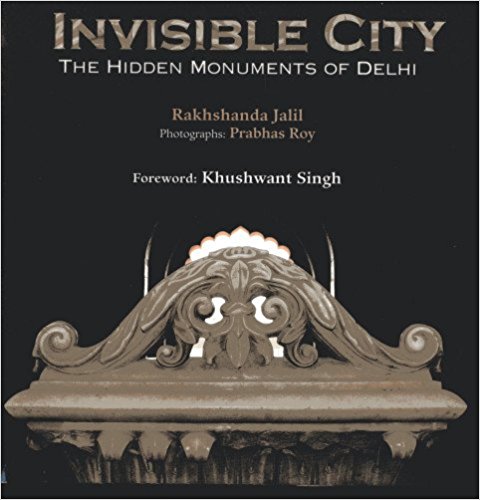
Rakhshanda Jalil
As a proud Dilliwali who loves Delhi, its monuments, history and culture, my study is filled with books on various aspects of the capital city. The latest addition on the bookshelf is the new edition of Rakshanda Jalil’s Invisible City: The Hidden Monuments of Delhi.
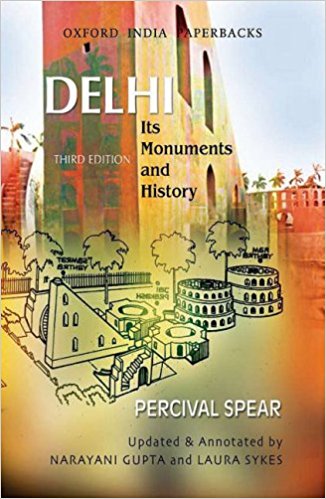
Percival Spear
Between 2004 and 2008 I was involved in running an after-school creative activity centre for children. The place, called Leap Years was the brainchild of Rahul Bhandare, an enterprising young man with interest in music, the arts and much else besides his interests in power generation…
Percival Spear
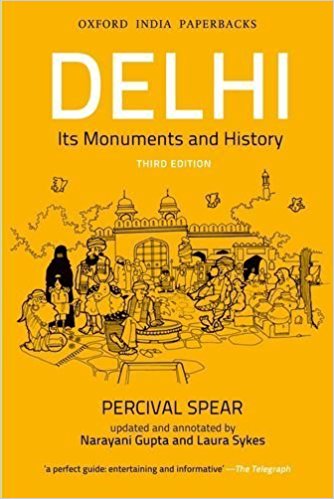
In the majestic setting of the Delhi Darbar of 1911, King George V let out on a secret project. It came as a surprise to most, if not an outright shock to all. The capital of British India was to be shifted out of Calcutta and Delhi was to resume its historical identity.
The fourteen chapters of Nirmala Jain’s Dilli Sheher Dar Sheher (Delhi: Between Many Cities), were serialized in Jansatta and Hans. They are part-autobio-graphical, part-commentary on Delhi since the 1940s.The book opens with stories, anecdotes, sketches of spaces, corners and lanes, intimate accounts of locales, languages, tastes and smells of the Old City…
Intizar Hussain
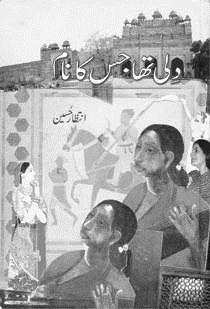
Brick by brick, Intizar Hussain finely constructs Delhi in Dilli Tha Jiska Naam, his own Dillinama. His characters are at times mythical, at others real.
Mushirul Hasan
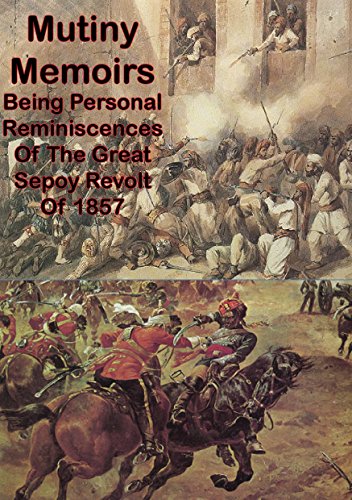
We are indeed grateful to Professor Mushirul Hasan for bringing to public knowledge yet another narrative that can serve as a valuable history source book. Mutiny Memoirs by Colonel A.R.D. Mackenzie, according to Hasan, has not been referred to by many of the important writings on the events of 1857 (p. 9).
Khushwant Singh
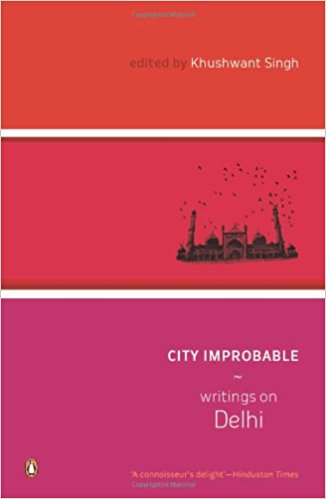
Cities are sites on which humanity plays out life. It symbolizes the vagaries of life or what we choose to call life. They share a symbiotic relationship with culture.

Arun Vishwanathan and Rajaram Nagappa
The slim volume under review is the end-product of a round table organized by the National Institute of Advanced Studies (NIAS), Bangalore in May-June 2012.
S.D. Muni and Vivek Chadha
Asian Strategic Review carries forward the tradition of the Institute of Defence Studies and Analyses to bring out an analytical volume comprising contributions of its own researchers on a current theme having wider ramifications for defence and security in the world in general and India in particular.
M. Rasgotra
Our large neighbour to the north, the People’s Republic of China, has been the subject of Indian scholarship for some time now. Much of this scholarship is focused on issues of traditional security, China’s strides in military modernization and the implications for India.