

Madhu Tandon
Children’s Book Trust, New Delhi, deserves all praise for its efforts to present a varied fare of folklore, biographies and stories for Indian children.
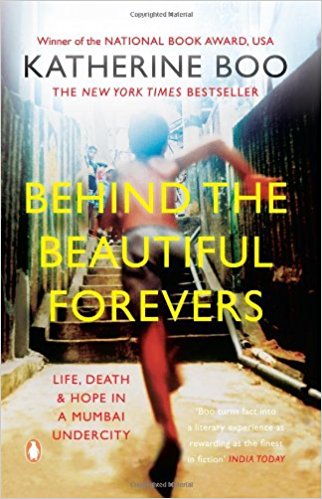
Katherine Boo
Despite its corny title taken, as Boo and her innumerable reviewers highlight, from an advertising hoarding, Behind the Beautiful Forevers combines fieldwork, ethnography, journalism, and literary flair to devastating effect.1 This effect is perhaps evi-dent in the largely laudatory reviews and more so in the density…
Tara Ali Baig
1979
On Growing Up is perhaps the very first book published in India pealing with the processes of puberty. In a warm chatty style, Tara Ali Baig begins by giving a thumbnail sketch of the origin of man and then goes on to place man in the context of other creatures of the earth. She then discusses…
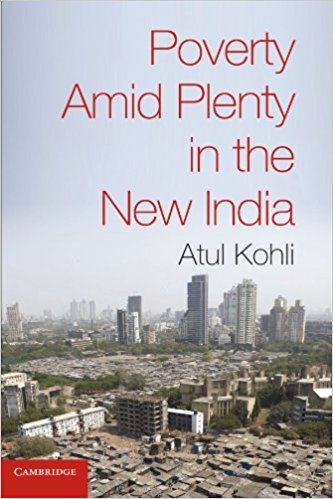
Atul Kohli
Atul Kohli’s book offers a comprehensive understanding of poverty in India from a political economy standpoint. It covers the growth story of India at the national and sub-national level in its entirety. Broadly divided into three chapters titled as ‘Political Change’, ‘State and Economy’ and ‘Regional Diversity’ the book’s strength lies in its clarity of thought and expression complemented by the use of simple and lucid language…

Tara Ali Baig
1979
What is sadly lacking in most Indian story books for children is a light touch with language, originality, and a lively sense of the ridiculous. Most children abundantly possess the last two qualities, but I doubt if they find much in this genre to satisfy them.
R. Srivatsan
This anthology of writings, covering a period of fifty years of development thinking from 1954 to 2004, examines some of the debates in development theory that emerged after the Second World War. It is the outcome of research conducted as part of the development initiative of Anveshi research…
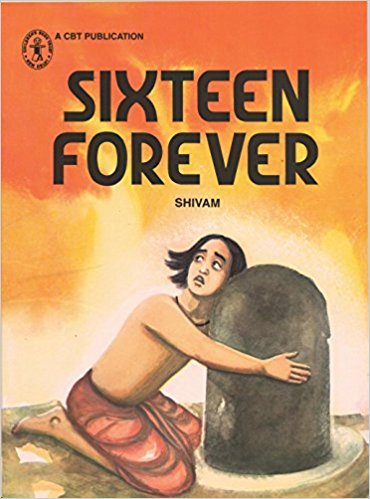
Shivam
Children’s books in India have always been relegated to the last place in anyone’s priorities whether it be the publisher’s or the parent’s! CBT’s pioneering effort in providing some sort of reading material for children aside from the dull text-books that children are burdened with deserves to be highly commended.
T.C.A. Srinivasa-Raghavan
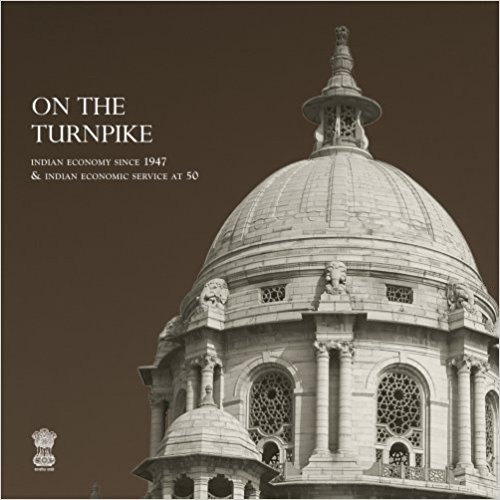
In these days of transparency and disclosure, I should state upfront that T.C.A. Srinivasa-Raghavan is a friend I have known for many years. In Business Standard days, he was also a colleague. He has been a journalist and columnist across a variety of business papers and is widely read…
Lata Singh
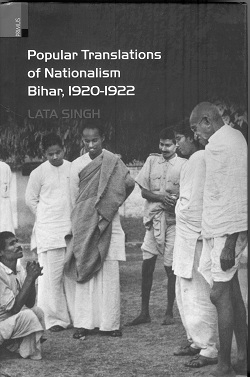
The noncooperation movement was the first mass-based political mobilization on a nationwide scale which involved people from various segments of Indian society. In a sense, it transformed the psyche of the people, trained them in political agitation and made them conscious of their rights…
Nikita Sud
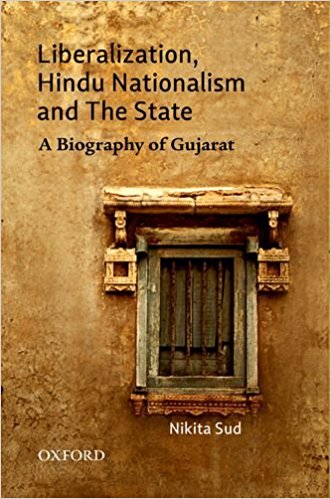
The nature of the relationship between economic liberalization, of expansion of economic opportunities and liberal poli-tical culture is the subject of this study. Nikita Sud has chosen to study this large question through a political, economic and social bio-graphy of modern Gujarat…
William Gould
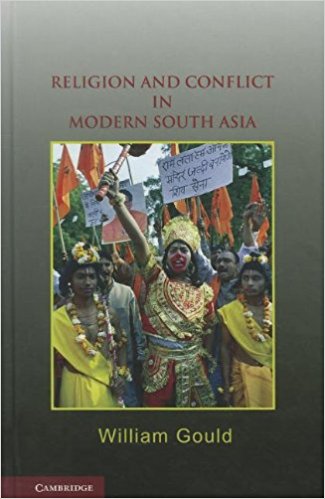
The running threat behind two centuries of violent community conflicts in South Asia is not religion, nor poverty or lack of education. The running threat is the peculiar nature of the South Asian State and the forms of political representation it has engendered…
Bulbul Sharma
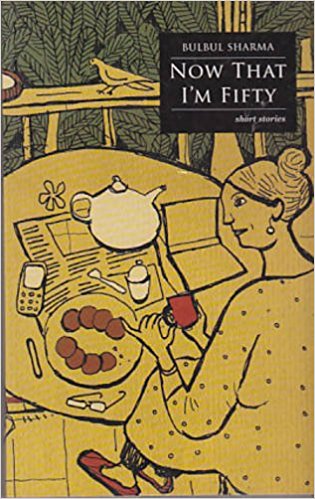
Now that I am Fifty by Bulbul Sharma is a collection of short stories about women who have entered the fifties and their experiences at reaching that milestone.
Sweta Srivastava Vikram
The book is a collaboration between two different genres and cultures—Sweta Srivastava Vikram (USA) and Claire Anna Watson (Australia) met as part of an Artists exchange programme and this is the result of their interaction—a combined expression of poetry—both written and visual.
Ishtiyaque Danish
2012
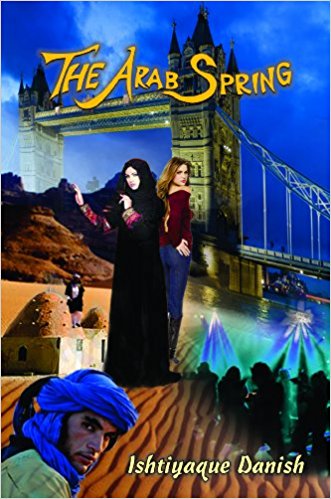
Ibrahim, a youngster from a rich Saudi family in Riyadh goes out to the restaurant with his mother and sisters, and comes out shell-shocked. He has seen his father take a young woman to a ‘family cabin’. The immediate inference (and it turns out to be the right one) is that his father has married again…

Abdus Samad
The Journey of a Burning Boat is a work of fiction which sweeps its reader deep into the unrelentingly brutal, inhuman, world of the flesh trade. A subterranean world whose existence everyone is aware of and which manifests itself often in newspaper headlines, only to be forgotten or pushed to the peripheries…
Richard Adams
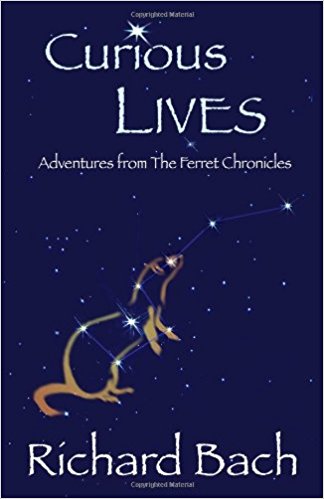
Curious Lives is a collection of five ‘moralistic adventures’, previously and separately published, set in the world of virtuous ferrets. The cover of the book has a pair of bright yellow eyes gleaming from behind dense foliage. It is just the eyes that can be made out and it is just as well. The internet informs…

Jugal Mody
2012
Toke means puffing a pipe or pot filled with marijuana. And true to its title, you get high with the novel’s surreal plot. The story is set in motion as you are introduced to Nikhil the protagonist who is fighting to come out of ganja-induced hallucinatory dreams. He is a regular guy with a regular job and suffers from regular bouts of insecurity…
Hemanta Mishra
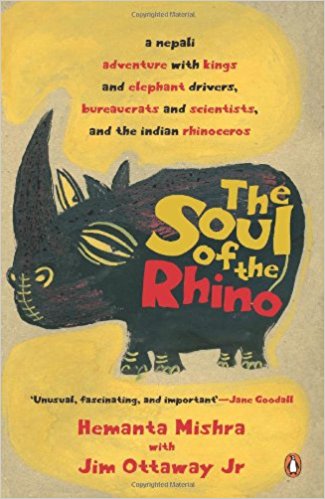
A work of non fiction, the book highlights one man’s courageous and sometimes frus-trating but always enduring struggle against politicians. He is often confronted by apathy in his quest to help protect the rhino. But he also enjoys small victories and help and support from unexpected quarters…
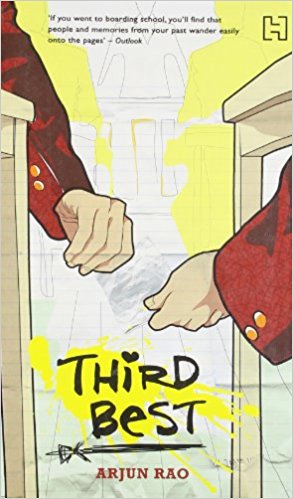
Arjun Rao
2012
Nirvan Shrivatsava steps into Shore Mount, a posh residential school, with the weight of his lineage on his young shoulders. Three generations of Shrivatsavas, including his parents and older brother, have been stars at the same school and Nirvan is uneasy with his legacy. Third Best is a coming of age novel that traces Nirvan’s life from Class VII to Class XII—from being a bullied junior to a respected senior…
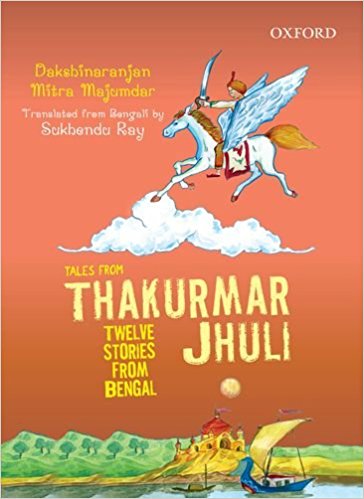
Dakshinaranjan Mitra Majumdar
The moment I read ‘Arun, Barun, Kironmala’, ‘Sukhu and Dukhu’ and ‘Saat Bhai Champa’ I had regressed to being a wide eyed seven year old listening breathlessly to my maternal grandmother, my Didima, weaving her magic around a Bengali rupkatha. She knew every story of Dakshinaranjan’s Thakurmar Jhuli…