
History

By A.R. Venkatachalapathy
Before long, Chidambaram Pillai became drawn into the scheme initiated by a few Tuticorin traders to charter a steamer from a Bombay-based firm called Shah Line Company. He successfully exerted himself on behalf of this syndicate. By April 1906, the first chartered steamers arrived in Tuticorin; two months later there commenced a regular ‘Swadeshi’ service to Colombo. Soon, though, there was discord between the Swadeshi syndicate and the Shah Line Company. In an audacious move, Chidambaram Pillai now set about to create an indigenous shipping company with its own steamers. The first prospectus appeared in August 1906, and by October SSNCo was registered as a limited liability joint-stock firm. We learn, too,

By Iqbal S. Hasnain
The author seems to be too obsessed with Iran and Shias, he looks suspiciously at anything which is associated with Saudi Arabia and Wahhabi Sunnis and this he seems to be doing without caring for facts. His assertion that ‘a message had gone across to global Sunni and Arab communities that the US had snatched Iraq from the hands of true Islam and delivered it to the heretic Shias’

By P. Sainath
The writing moves you. It leaves you seething at the indignity and injustice inflicted on the last heroes and countless others by a system seeped in colonial bureaucratic rigmaroles/bureaucracy. Sainath highlights the irony of how independent India chose to recognize its freedom fighters and framed the eligibility criterion for pensions such as the Swatantra Sainik Samman.

By Ruchika Sharma
The author cautions against using the words ‘natives’ or ‘whites’ or ‘Anglo-Indians’ among others, as these are politically contested terms in themselves. While they are loaded terms, the colonial archives’ understanding them became a way to address non-European locals, thus staying away from their identity or parentage.

By T.C.A Raghavan
Raghavan’s reflections, as a seasoned diplomat, on the problems that Asaf Ali had to face as India’s Ambassador to the United States (appointed by the Interim Government a few months before Independence), allow us to appreciate the adverse conditions under which the first set of envoys had to function. They were ridiculed if they were ostentatious

By Nico Slate
The present volume, going ahead, narrates Kamaladevi Chattopadhyay’s friendship and interactions with a host of political leaders across ideologies. Gandhiji, Jawaharlal Nehru, Sardar Vallabhbhai Patel, Ram Manohar Lohia and Jayaprakash Narayan were some of such leaders.

By H.A. Qureshi and Shreya Pathak
This research monograph based on fresh, unknown and by that token unutilized sources of the political history of Varanasi offers insights and presents incisive analysis of many known and unknown events. The historians’ gaze has largely remained oblivious to the sources, scattered as they are, not only in many regional repositories, various State Archives

By Anne Feldhaus
The numbers that Feldhaus has used to illustrate her argument are fascinating. There are the 12 jyotirlingas, the twelve major sites of pilgrimage of Siva worshippers, and while most do not explain the multiplicity of such sites
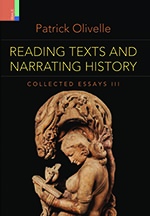
By Patrick Olivelle
Early Indian texts, especially those that are part of the vast corpus in Sanskrit, have acquired a sadly paradoxical status in recent years. On the one hand, many serious scholars tend to view them with suspicion, if not contempt.
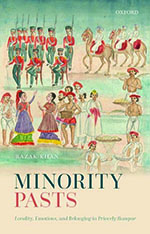
By Razak Khan
Minority Pasts investigates local history and politics of Rampur, the last Muslim-ruled Princely State in colonial United Provinces, and studies with remarkable ease and competence aspects of political, economic, socio-cultural and affective history of Rampur and the Rampuris in the South Asian subcontinent across borders in the post-1857 period.
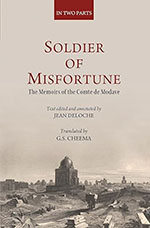
Text edited and annotated by Jean Deloche. Translated by G.S. Cheema
It is usually overlooked while talking about India of the latter half of the eighteenth century that the Mughal court continued to have some political relevance till at least the turn of the century.

By Amitav Ghosh
This is precisely what Ghosh has done. Eight years after the publication of Flood of Fire we have a book in which he has written about the key concerns that shaped the novels comprising the trilogy. As the narrative progressed from the first novel Sea of Poppies (2008)
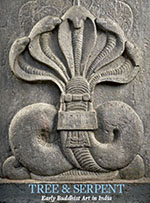
By John Guy
James Fergusson’s Tree and Serpent Worship, published in 1868, got many things wrong but one thing right. It drew attention to the abundance of trees and snakes in the sculptures at Sanchi and Amaravati.
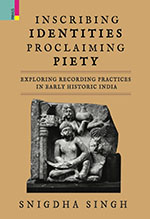
By Snigdha Singh Primus Books, Delhi
To locate the occupations, religious preferences and mobility of the ordinary man in early India, a source of utmost importance were the donative records.
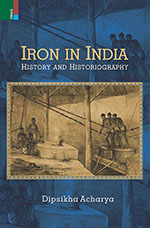
By Dipsikha Acharya
Instead of getting into the long-drawn ‘Iron Age and Social Change’ debate, she makes a case for bringing up the different aspects of iron production and their relationship with the social formations in the context of early India.
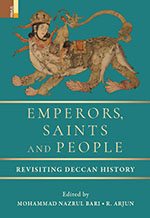
Edited by Mohammad Nazrul Bari and R. Arjun
One quickly turns the pages of the book to find out what is being ‘revisited’ to which we get an immediate answer that the book has intended to revisit ‘lesser-known history of Deccan’s social and cultural vibrancies’ (p. xvii). At the same time, at the end of their Introduction to Emperors Saints and People

By Brian C. Wilson
This is an unusual and innovative book that captures the history of Velha Goa through the lens of archeology as method, and urbanism as the heuristic category for understanding the Portuguese city as it was designed and constructed since the 16th century.

By Rahul Govind
2023
The British state, in order to establish its dominance around the globe, used a range of instruments of power. Among others, two closely linked instruments of power were the ‘Prize Laws’ and the ‘Prize Courts’.
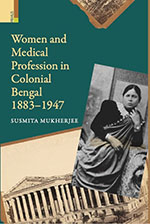
By Susmita Mukherjee
Susmita Mukherjee’s book under reviewexamines the historical and sociological processes that resulted in the concentration of women doctors in India in the Department of Obstetrics and Gynaecology.

By Fali S Nariman
Fali Nariman, now aged 94, is among the last of a generation of legendary lawyers whose ranks included the likes of Nani Palkhivala, Soli Sorabjee, Ram Jethmalani, and K Parasaran, and who effectively laid down the foundations of India’s postcolonial legal development.