
History
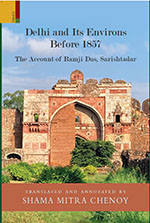
Translated and Annotated by Shama Mitra Chenoy
While Sair-ul Manazil was the first attempt to chronicle the city, its structures, its people and their culture and weaving its past with the present, Reminiscences of Imperial Delhi was a compilation of the pictures, paintings and brief texts on certain people and structures of Delhi as it was in 1844
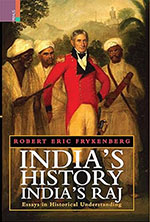
By Robert Eric Frykenberg
Each of the twenty-five chapters is an essay written by Frykenberg, one of the most important economic historians of our times, during a career spanning over six decades. Besides economic issues, the articles in the present volume also deliberate upon facets pertaining to social,
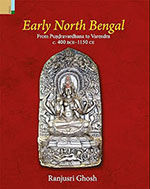
By Ranjusri Ghosh
The author informs that these sculptures are housed in different places—homes, courts, schools, private collections and police stations.
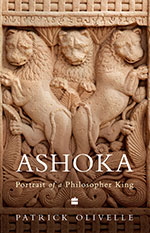
By Patrick Olivelle
Ashoka has not been spared either of these, this intervention, at once scholarly and empathetic, is timely. Also, as the first volume in a series titled Indian Lives, it raises expectations, which are more than met.
Expectedly, there is much that the reader will find familiar.
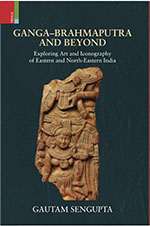
By Gautam Sengupta
A very important aspect associated with an aesthetic tradition is the making of the art pieces. A related question is thus based on the choice of materials which the sculptors used. The third section entitled ‘Interrogating Artist’s Choices’,
History as a modern discipline has its highly developed protocols. Specialists spend years learning the craft of the historian—an extremely sophisticated craft practiced in easily recognizable ways all over the world. We have been witnessing attempts to undermine the discipline with assertions that disregard its protocols.
By Firas Alkhateeb
This book is an attempt to give an overview of the history of Muslim civilization from its inception to the present times. It is based on the author’s notes prepared for teaching his students at the high school level in the US. Starting with the time of Prophet Muhammad when monotheism challenged the existing belief system of the Arabs, he talks of the rise of Islam from the Arabian Peninsula.
By David Hardiman
The book starts with a brief introduction outlining the theme in seven well-structured chapters. The first chapter apart from analysing the origins of pan-Islamic sentiments in India traces the circumstances under which the Khilafat movement emerged;
the Muslim League, and the Communists. The British panicked because the mutiny sparked revolts in other branches of the armed forces. As news of the uprising became known, there were widespread agitations in different parts of the country although the worst affected was Mumbai itself
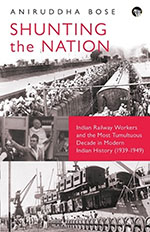
By Aniruddha Bose
In the textbooks of modern Indian history, the railways appear almost fleetingly, something like this: introduced in 1853; the guarantee system was so very exploitative for the Indians
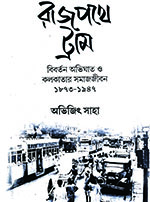
By Abhijit Saha
Trams were introduced in Calcutta in 1873 and in Bombay a year later in 1874 and in Madras in 1886. Trams remained in place as Calcutta became Kolkata.
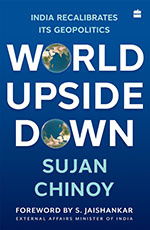
By Sujan Chinoy
The so-called ‘New World Order’ is taking a ‘New Shape’ and Asia is emerging the centre of attention in 21st century. This book is unique in that it covers the subject in detail and is thematically organized into four parts.
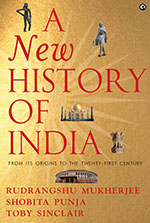
By Rudrangshu Mukherjee, Shobita Punja, Toby Sinclair
This is a textbook with a difference. It covers a well-known story of the development of India as a civilization, of its march to modern nationhood and does it with elegance, precision and sensitivity. It is this quality of tying together discrete elements of updated research, well-known debates and understanding with a brilliant array of visual material that makes this textbook genuinely a novel exercise in synthesis and analysis.
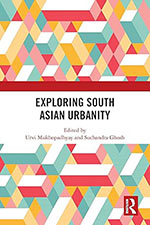
Edited by Urvi Mukhopadhyay and Suchandra Ghosh Routledge
Exploring South Asian Urbanity edited by Urvi Mukhopadhyay and Suchandra Ghosh comprising fifteen essays explores the idea of urbanity in history. Divided into five themes, viz., the concept, urban spaces, textual representations, evolution of cities and urban violence
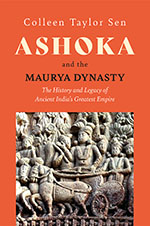
By Colleen Taylor Sen
Colleen Taylor Sen, a culinary and food historian of South Asia—as the Foreword informs—picked up this study of Ashoka, the greatest and third ruler (c. 272/268-233 BCE) of the mighty Maurya dynasty
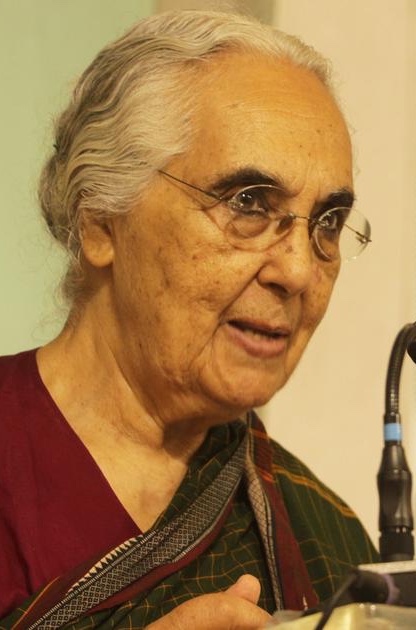
Romila Thapar
Where nationalism ceases to be the movement of citizens from across society and is reduced to one identity which is given priority, this becomes a denial of the very important component of nationalism, namely, democracy and the secular.
Nigel Biggar
What Biggar has done is to pick up some aspects of the history of the British Empire on which there are writings that seek to dispute a particular point in critiques of colonialism, often taking the narrowest view of a complex historical phenomenon, to build his arguments in defence of British colonialism.
Tan Tai Yong and Gyanesh Kudaisya
The most interesting portion of the book is the ‘Epilogue’. It primarily concerns the deliberations which took place at the administrative level. It underlines the long and intense tussle which took place between Lord Mountbatten, the incumbent Viceroy, and Sir Cyril Radcliffe, the Chairman of the two boundary commissions.
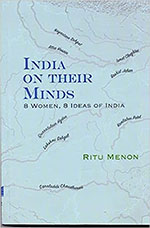
Ritu Menon
This slim volume is a sparkling crystal that could inform our celebration of the Diamond Jubilee of our nationhood.
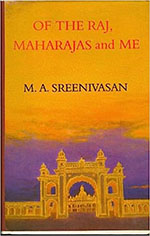
M.A. Sreenivasan
The 39 chapters of the book cover Sreenivasan’s experiences as a family man and administrator, from his selection for the Mysore Civil Service in January 1918 to his tenure as a Minister in the Princely State of Mysore in 1943, and Dewan of Gwalior in 1946.