
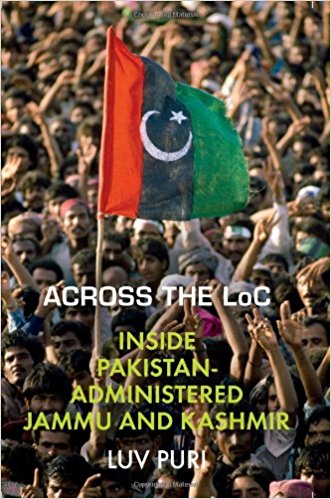
Luv Puri
In the early 1970s,’ wrote the political activist—and, in his youth, would-be insurgent—Nasir Gilani, ‘the crossing of (the) LoC was as mystical for a Kashmiri youth as the Eve St. Agnes to a virgin.’ His contemporaries, Gilani noted, ‘seemed mesmerized by a belief that a solution to all their ills on the Indian side of Kashmir lay on the Pakistani side of Kashmir.’..
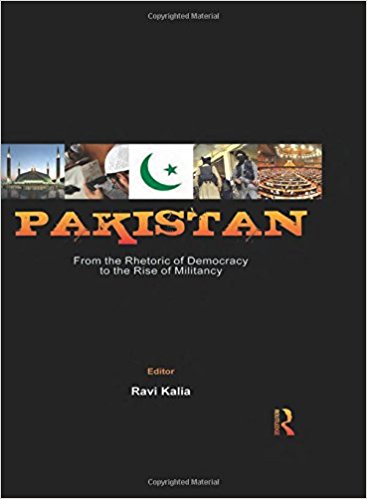
Ravi Kalia
At Independence in 1947, Pakistan was a nation, full of hope, aiming to become a progressive homeland for South Asia’s Muslims. That dream remains unfulfilled. Despite roughly comparable socio-economic and political conditions as in India, democracy has consistently failed to take root in Pakistan and the country remains…

Bruce Riedel
The nature of the US-Pakistan relationship has been very difficult for many analysts to fathom. Is it a relationship based on some broad principles and common objectives or is it an opportunistic alliance—from which neither is able to disengage? That there is little trust between the two countries has been obvious over the years…
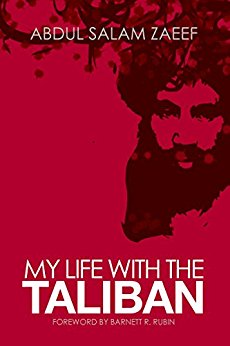
Abdul Salam Zaeef
Ten years after the invasion of Afghanistan, the countdown for the American withdrawal has formally begun. The United States President, Barack Obama, has announced that 10,000 American troops will leave Afghanistan by the end of this year and another 23,000 by the summer of 2012. Over the next two years,…

Namichand Jain
Muktibodh Rachanvali is a six volume compilation of the total literary output of one of the most remarkable writers of our time. Born in 1917 at Sheopur, Gwalior, in a middle-class family, Muktibodh died in New Delhi in 1964 after a prolonged illness, leaving behind a sizeable body of work most of it unpublished.

Faizur Rasul
This unexpected and delightful autobiography would have been extra-ordinary enough for its lively, concrete and witty prose (all qualities rarely found in English written by Indian authors) but becomes even more so when one discovers it is the work of a Bengali Muslim who left school.
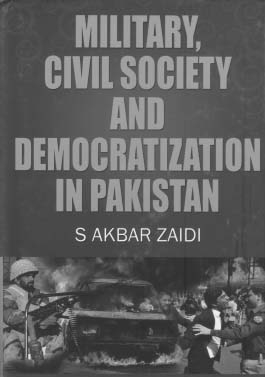
S. Akbar Zaidi
Akbar Zaidi’s book on the relationship between the military, civil society and political parties in Pakistan is primarily a compilation of what he has written in the past on the impact of militarization on his country’s national life.
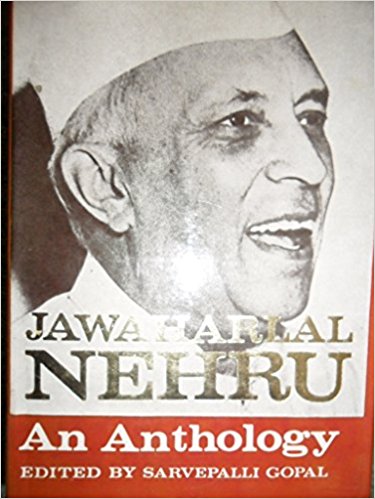
Sarvepalli Gopal
Anthologies of the writings of a single individual of this type are rare; either they are collections of admonitory sayings with a political purpose on a much briefer compass like Mao Tse-tung’s Red Book or varied selections of the utterances of the great man concerned on a particular topic spread over the years.

Detlef Kantowsky
‘SARVODAYA’ movement launched by Mahatma Gandhi and pursued by others like Vinoba Bhave and Jayaprakash Narayan in India, and A.T. Aryartne in Sri Lanka, has attracted the attention of scholars an over the world.

Anatol Lieven
Are the Pakistani people faced with a devil-and-the-deep-sea choice: condemned to live forever in backwardness and anti-democratic mould, of remaining permanently in a feudal set-up or going the Taliban way?
K.N.S. Nair
The contention that modernization of the agrarian sector is a precondition for economic growth and development is not a mere claim. It is an irrefutable fact which the economic history of the present day advanced countries has admittedly established.
Maleeha Lodhi’s edited volume is one of the few books that Pakistan military’s Inter-Services Public Relations’ head Maj. General Athar Abbas recommends to his visitors. The value of this book for Pakistan’s armed forces and establishment is that it presents Pakistan as ‘beyond a crisis state’. The basic thesis of the volume…
David Malone
The elephant has become an obvious, even if cliched, symbol of modern India but the imagery of the dancing elephant has been used in other contexts as well. Thus Louis V. Gerstner in his Who Says Elephants Can’t Dance? recounts the dramatic turnround in the fortunes of IBM that was once considered too big and not nimble enough to survive…
Unaiza Niaz
Terrorism as a subject has evoked a great deal of academic interest from various disciplines. Professor Unaiza, a consultant psychiatrist and psychotherapist, has put together this work ‘to sensitize and create awareness about the relentless sufferings of innocent civilians globally following 9/11.’…
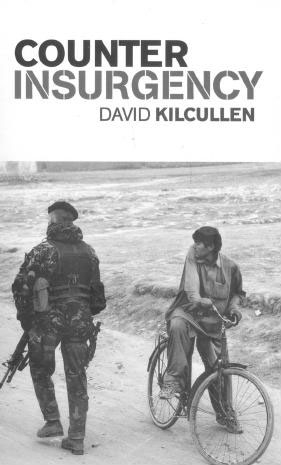
David J. Kilcullen
Despite being consciously underestimated’ and described in anodyne terms as ‘unconventional’ or ‘irregular’ conflict’ the fact is that ‘insurgency’ has been the most common form of warfare in history. Conventional or regular conflict’ in brief’ ‘wars’ as commonly understood’ is the exception’ rather than the rule’ if past conflicts were to be reviewed…
Jonathan Shapiro Anjaria
The study of urban sociology has fast gained ground in India in the preceding decade. This is concomitant with the rapid pace of urbanization taking place across the country. The city has always been the focal point of aspirations. Almost as soon as India realized its aspiration of integrating with the world in a fuller manner, its populations,…
T.V.Paul
It is commonly argued today that the greatest threats to world order and security come not from strong and well-organized sovereign states, but the world’s most fragile states, alternatively called ‘failing’, ‘quasi’, ‘faltering’ or ‘weak’ states. While the first murmurs about these so-designated ‘failed states’ began to be heard around the time of the Clinton adminis-tration…
Nandini Nopany
Translation, like criticism, must be perpetually re-undertaken. Art, proverbially, is long, so that translation, in so far as it is an art, should also be timeless, persistently reappearing as an inevitable response to stimuli felt by succeeding generations.

Smruti S. Pattanaik
With increasing globalization, economic integration is an important part of development efforts in any region. Despite a lack of cohesive economic unit in South Asia, there has been growing interest in South Asia as a destination for trade and investment. Also politically South Asian countries are in a state of flux given…

Jivanta Schotti
The book under review is a refreshing volume rich with brilliant theoretical insights, first-rate empirical analysis and bold academic arguments which would not only be useful for students of South Asian international politics but also policy makers of the region. However, the book also suffers from a number of shortcomings…