
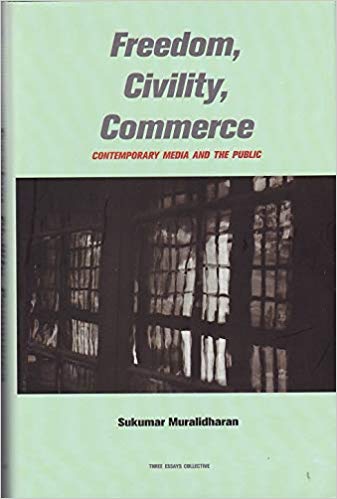
Sukumar Muralidharan
This is a fascinating book on contemporary media studies comprising eight chapters focusing on the existing debate on speech and freedom, nationalism, the state, civil society, satire, media, market, advertising and journalism.
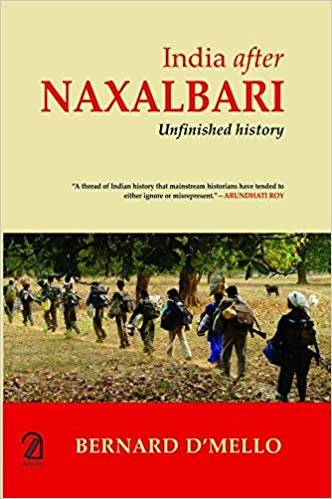
Bernard D’Mello
Maoism in India has evoked the interest of and intrigued social scientists and scribes in India and across the world of all persuasions for over seven decades. Though generally chronicled from the uprising in Naxalbari in 1967, its history goes back to the Communist Party of India-led uprising in Telangana in 1946 with the same intent, ideology and strategy. The Naxalbari movement of 1967 in West Bengal has a historical continuity with Telangana.
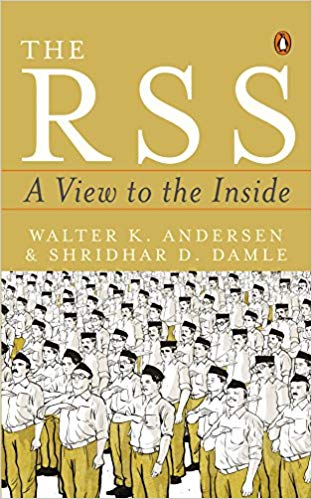
Walter K. Andersen
The Rashtriya Swayamsevak Sangh (RSS) is ideologically driven, has a strong and complex organizational structure and is demonstrably the most powerful non-government organization in present-day India, with a determining influence in cultural and political life. In terms of its appeal and reach across social and geographical boundaries, both its growth and expansion have been phenomenal. Yet, it remains inexplicably mystifying and beyond the reach of those who wish to understand its unfolding strength objectively.
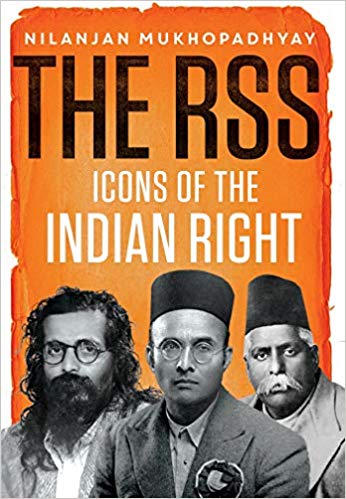
Nilanjan Mukhopadhyay
Nilanjan Mukhopadhyay is better known as a prolific columnist and author. Quite often his journalism is considerably informed by modern Indian history, more particularly Hindu-Muslim relations. Besides, he has also authored a few books which include a biographical account of Narendra Modi and also a detailed account of the anti-Sikh pogrom which was unleashed after the assassination of the then Prime Minister Indira Gandhi in 1984.
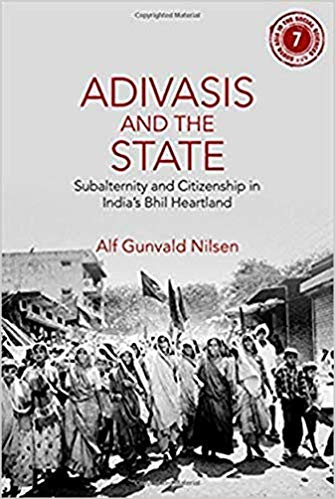
Alf Gunvald Nilsen
In the post-liberalization era the tribal communities are facing two contradictory situations. On the one hand, neo-liberalization has enhanced the processes of dispossession and marginalization and on the other hand, tribal organizations have compelled the Indian state in recent years to introduce various national laws like the FRA and MNREGA, which give tribal and other marginalized communities ownership and livelihood rights.
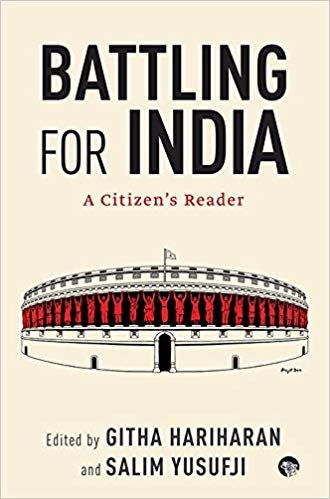
Amir Ali
This book is a necessary compilation that comes from an embattled republic of letters in a nation slowly being desiccated by the philistinism of its politics. The great merit of the book is its comprehensive nature as it focuses expansively on many themes. There is the question of the economy being roiled by adverse global headwinds that the ruling dispensation seems to be gloriously inept at handling.
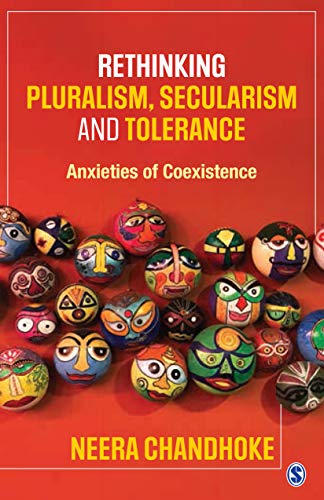
Neera Chandhoke
From India’s most clear-headed political theorist Neera Chandhoke (a former Professor of Political Science at Delhi University), comes a new page turner—an extraordinarily accessible and yet tightly argued monograph on the nature and value of contemporary India’s plural democracy. Anyone familiar with Chandhoke’s earlier works such as Democracy and Revolutionary Politics (Bloomsbury, 2015)
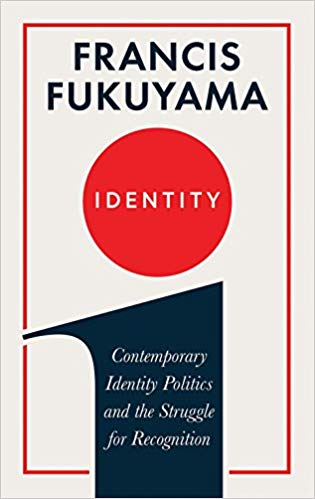
Francis Fukuyama
Francis Fukuyama needs no intro- -duction. He shot into prominence with the publication of his widely read book, The End of History and the Last Man in 1992. In brief, Fukuyama had put forth the thesis that with the collapse of Communism ideological wars have come to an end and the future belonged to liberal democracy, which—in a Hegelian sense—was the culmination of all human associations, and indeed, its very pinnacle. Fukuyama’s contention was problematic and in a short period it became widely apparent that liberal democracy faced severe challenges from within.

Enid Blyton
‘Storytelling is a simple make-believe but she has a knack for making her tales absolutely irresistible to young readers—her specific descriptions of food were the same. The specifics she mentioned are not elaborate—but opposite in fact—but the sheer pleasure she takes and everything from sardine sandwiches to cherry cake sings out of the pages,’ says Allegra.
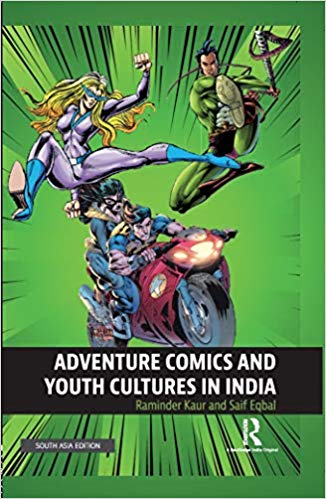
Raminder Kaur
Raminder Kaur and Saif Eqbal take on the mammoth task of analysing and categorizing the immense corpus of the north Indian vernacular superhero and adventure comics published by popular comic houses such as Indrajal, Raj Comics, and Manoj Comics.
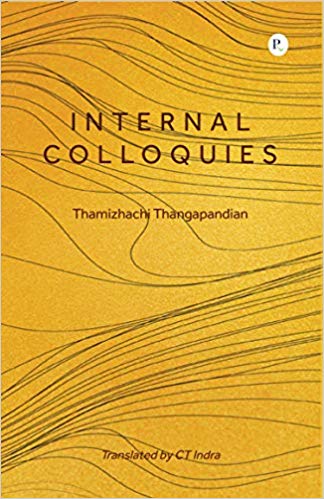
Thamizhachi Thangapandian
2019
Professor CT Indra has, over a period of time, evolved as a committed translator, covering a wide range of genres that include plays, novels and short stories. Internal Colloquies, a translation of selected poems from Thangapandian’s Vanapechi is, by her own admission, Indra’s ‘maiden attempt’ at translating poetry.
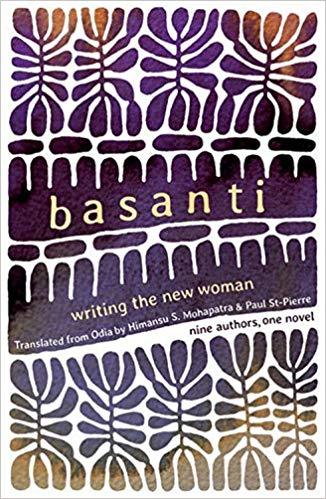
Annada Shankar Ray
Basanti, the protagonist of the novel is a misfit in conservative, pre-Independence rural Odisha not only because she reads and writes on her own choice, but also because she marries out of love a man not belonging to her own caste and in spite of confronting regular conflicts with her conservative mother-in law, manages to run a girls’ school in the village. Suppressing her liberated values, she sacrifices her life for the well-being of her new home ‘through sheer will power’
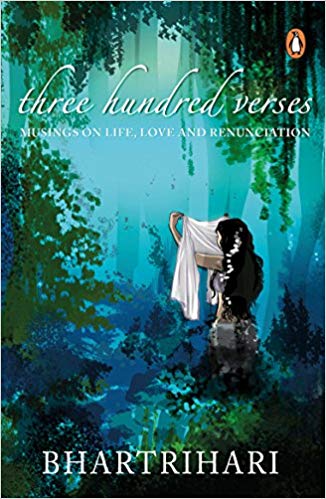
Bhartrihari
Two books translated by Haksar have been released in quick succession. They share something in common in that they both have been translated from Sanskrit into English. Otherwise they are different in perspective and context. One was Ritusamharam, reviewed recently* and the other is Three Hundred Verses, a translation of the famous Trishatakam by Bhartrihari.
Mridula Garg
2016
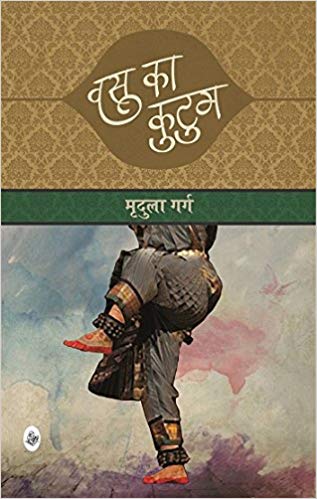
That’s the denouement of one of the characters of Mridula Garg’s new novel––she dances and dies. Ratnabai begins as a minor character, a household help in an upmarket middle class neighbourhood in New Delhi, in Vasu ka Kutum, and ends up with one of the most powerful scenes in the novel––performing the dance of death, more vigorous than Nataraj himself, as the author puts it.
Dev Nath Pathak
At its most basic level–and it has many levels of engagement–the book under review is about Maithili folk songs as well as living and dying. Dev Nath Pathak tells us that the folksongs in Mithila he focuses on are mostly sung by women. And they tend to be associated with cyclical events, rites of passage, and quotidian situations of ordinary life.
Jonathan Gil Harris
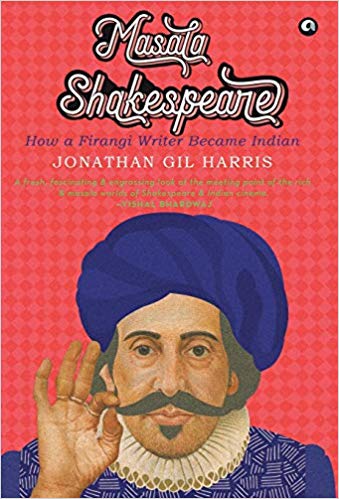
Shakespeare and India…
Sarina Kamini
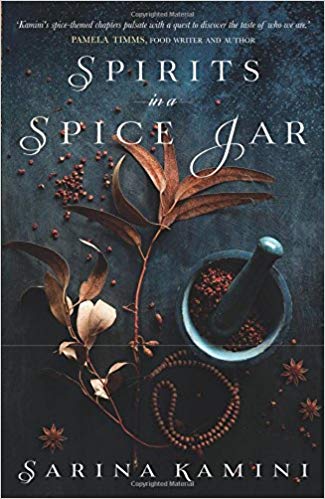
Spirits in a Spice Jar by Sarina Kamini is a book about finding oneself, about reinterpreting faith and recording the poignant, emotive and deeply personal role which food can play in the life of an individual and a family. The autobiographical narrative is interspersed with traditional Kashmiri recipes but these are recipes tempered by the experiences and individuality of the protagonist.
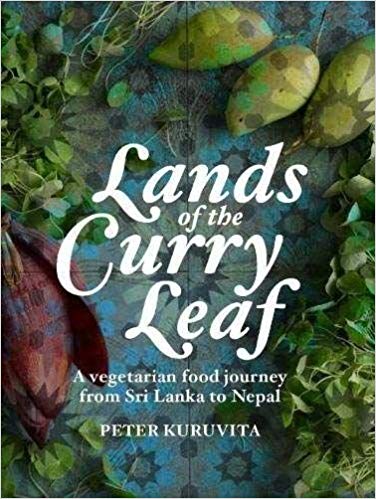
Peter Kuruvita
To anyone who says vegetarian food is boring, offence taken! I’m not a vegetarian. I love meat, but raised by a vegetarian mother, I grew up with a healthy appreciation for vegetables and the various ways in which you can tease out their flavours. In most cases, leaving vegetables alone and using a light hand with spices and herbs does the trick.
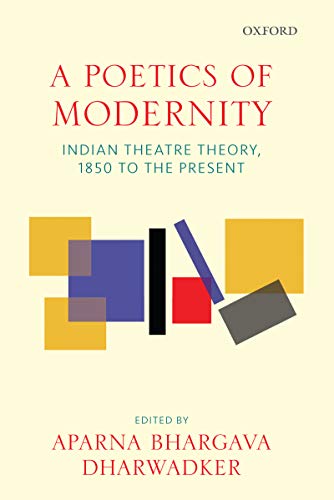
Aparna Bhargava Dharwadker
There’s something dangerous about theatre. People pretend to be who they are not, in settings that are fake, and speak words that do not come from their own minds. It excites passions, both in the people performing, as well as in the people watching.
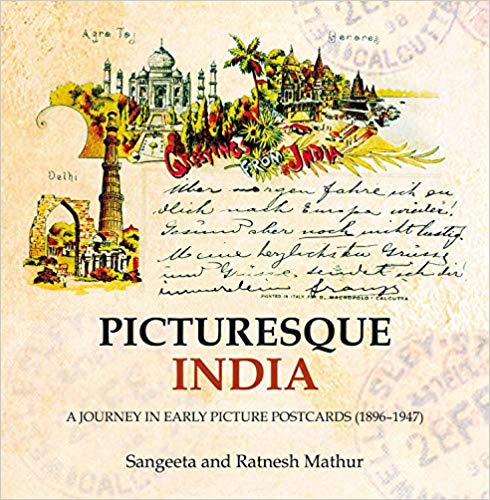
Sangeeta
Picture postcards, i.e., cards that have pictures on them and can be sent by post, came late to India, probably only in 1896, years after their launch in Europe. However, millions of postcards showing views of India were sold in the years that followed, especially during their Golden Era, which lasted till around 1915.