
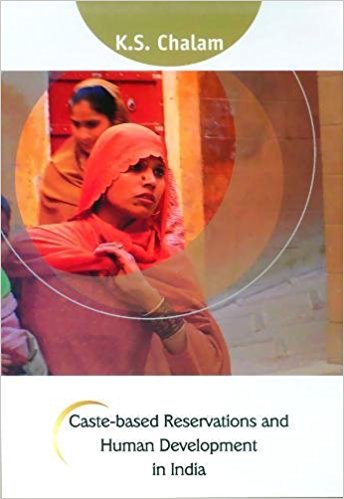
K.S. Chalam
The book under review by K.S. Chalam makes three observations on the subject of caste-based reservations in India in the introduction. First, it points out that there are few studies on the impact of the policy of reservations on development.
David Edmonds
Every once in a while we come across a book whose value is greatly enhanced if seen in a context other than the one for which it is explicitly written. David Edmonds’ ‘Caste Wars’, claims to be no more, and no less, than a philosophy of discrimination. It focuses on the ethics of treating people as if they are parts of groups.
Dilip M. Menon
Let me concede at the outset that Dilip M. Menon has forcefully presented the cause of dalits and their right to live in the caste-ridden in India. Caste violence has not received much attention of the social science scholars compared to the attention given to the study of communal violence.
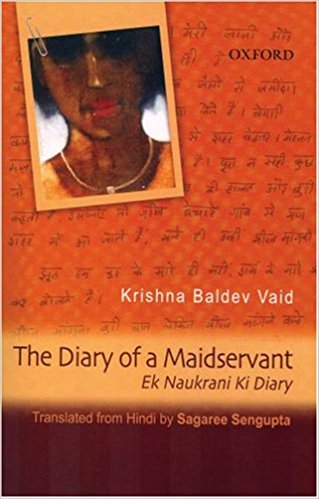
Krishna Baldev Vaid. Translated from the Hindi by Sagaree Sengupta
Those of us who live in cities, especially in metros like Delhi, would have come across ‘problems’ posed by ‘domestic helps,’ – those people living in our society bearing this nomenclature of our middle class ‘humanist’ coinage.

Dilip Chitre
We are living at a time when dalit literature is fast being assimilated into the mainstream of Indian literature which also implies a potential loss of its power to provoke and disturb the status quo.The spurt of translations of dalit poetry, fiction and autobiography in English
Pradeep K. Sharma
Indian democracy has seen the mobilization of the subalterns in the later half of the 1980s culminating in the enthronement of a third front called Janata Dal both at the Centre and in Uttar Pradesh, a state which gives direction to national politics.
Shyamla
This book is about the social movement of an untouchable caste – the raigars, a caste whose traditional occupation has been disposal of the dead animals, tanning and dyeing their hide.
Satya Jit Singh and Pradeep K. Sharma
In recent past there have been several publications on Decentralization for good reason. One that it is an emerging dimension of our polity which is bound to change both the political and social order. Besides, it seeks to alter the character of economic growth so as to make it edible for all, that is, ensure to every adult equitable earning opportunities and access to its fruits.
Narender Kumar and Manoj Rai
This book is a welcome contribution to the body of literature generated by the 73rd Constitutional Amendment Act (CAA), a historic piece of legislation adopted in 1992, giving a new impetus to democratic decentralization.
Gopal Guru
B.R. Ambedkar christened his first political party as ‘The Independent Labour Party’ (ILP). He seemed to be particular about the title (read category) by which the party was to be known. He did not want it to be an exclusive political party of the Scheduled Castes.
Joe Arun
Structurally the centuries old village with all its rigidity and unequal power relations is live and kicking, at least in south India. The book under review captures this reality in one of such Indian villages. The age old draconian social structure in the village becomes alive with the lucid and effective description by the author of the book.
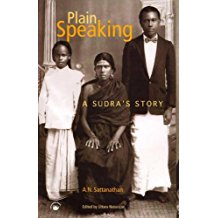
Uttara Natarajan
This book comes at an opportune moment for our understanding of caste in India, and particularly of the experience of belonging to an intermediate caste. The last year has been marked by debates, protests and court rulings on the issue of a central government reservation for ‘Other Backward Classes’ – a category of intermediate castes ranked above the Scheduled Castes.
Yagati Chinna Rao
The world ‘dalit’ or “crushed underfoot” in the contemporary period has replaced the world “untouchable”. The term “dalit” owes its origin to the writings of Jotirao Phule in the last decades of the nineteenth century.
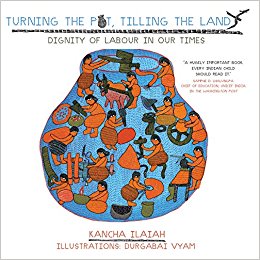
Kancha Ilaiah
Reading through *Turning the Pot, Tilling the Soil *my mind raced back several winters. I had landed up at a tribal farmer’s house in western Maharashtra, accompanied by a group of Delhi school students who were there for a rural exposure camp.
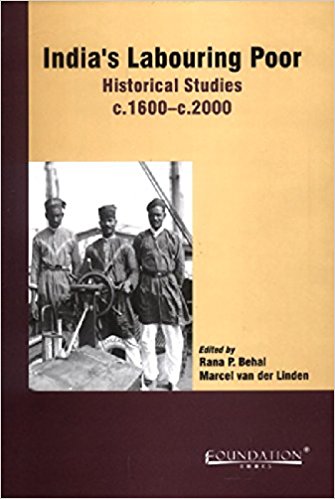
Rana P. Behal and Marcel van der Linden
In the aftermath of the furore created by the implementation of the Mandal Commission Report in the early 1990s, V P Singh had commented somewhere that Indian society was extraordinary in the way it stigmatised those very social groups who created a large part of the material wealth on whose basis we all survived: agricultural workers, artisans and the peasantry.
Utsa Patnaik
As the author puts it at the outset, the unifying theme of the twelve essays included in The Republic of Hunger is “the impact on the third world of the new imperialism in the present era, which takes the form of deflationary neo-liberal ‘economic reforms’ and a thrust towards free trade”.
Jan Breman
Jan Breman’s enquiries into the world of rural labour in post-independence India are well-known. Much of his work, on this subject, is based on field-studies in the rural landscape of South Gujarat, from the early 1960s onwards.
Martha C. Nussbaum
Almost four decades ago John Rawls presented liberal egalitarianism as a philosophical justification for liberal democratic states. The theoretical premises underlying a general conception of justice consisted of the distribution of all social primary goods – liberty and opportunity,
Gopalkrishna Gandhi
For our own sake—for the sake of humanity today and tomorrow—let us have more Gandhi. More of the living spirit, life and teachings of Mahatma Gandhi. Near the end of his life he said, ‘…I shall be alive in the grave and, what is more, speaking from it…’ (Oxford Gandhi, 649). Let us hope so.
Rohit Handa
2009
Rohit Handa, who some years back gave us A Twisted Cue, a fine novel set in the India of 1965, has now given us his second novel, actually his first one, for Comrade Sahib was first published in 1977.