
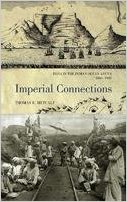
Thomas R. Metcalf
Metcalf’s new book charts a new course. If in line with his earlier books like Ideology of the Raj and Imperial Visions, the scope and range of this one are different. It shows how the Indian Ocean area formed a sub-empire under the British, where India had the dubious distinction of being at the centre and an active agent of the empire.

Raziuddin Aquil
In the opening line of his new history of the Indo-Afghans, Raziuddin Aquil complains that ‘the study of medieval Indian history suffers from what is characterized as Mughal centrism’ (p. 1). He is right at a number of levels, for the problem is not only that the imperial Mughal behemoth has captured the lion’s share of modern historians’ attention, but also that most of the Persian histories of the Indo-Afghans were written during the reign of the Mughals.
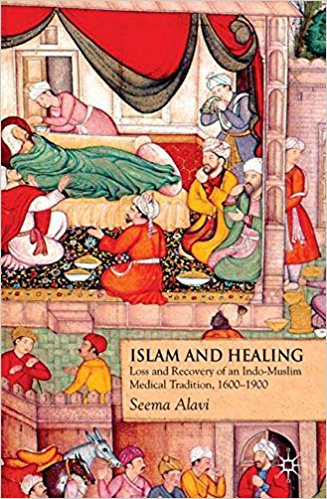
Seema Alavi
The robust and adaptive medical traditions of Tibb-i Unani have contained complex and changing meanings and practices over time. Seema Alavi’s extensive research, including into the oral traditions of her own distinguished Azizi family of hakims based in Lucknow, informs her sophisticated social and cultural history of Unani in north India from the time of the Mughal empire through the British Raj.
Meena Bhargava
The Emergence of the Delhi Sultanate is a voluminous work, considering that it covers only a phase i.e. 1192-1286 ad. It is a refreshing intervention and convincingly breaks the long-held opinion that the Delhi Sultanate was a monolithic, authoritarian, centralized state.
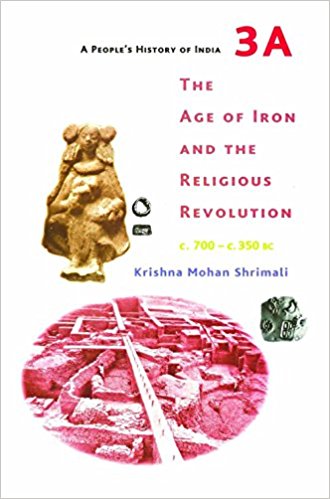
Krishna Mohan Shrimali
The book under review is part of a series titled A People’s History of India whose general editor is Irfan Habib. It deals with the period between c. 700 and c.350 bc in which several important historical developments have been identified in the spheres of economy, society, polity and religion and each of these is discussed separately in the four chapters of the book.
Romila Thapar, Jonathan Mark Kenoyer, Madhav M. Deshpande, Shereen Ratnagar
At the heart of the book are two masterly surveys of the issues at stake in the interpretation of the available linguistic and archaeological evidence. J.M. Kenoyer brings his reputation as one of the most accomplished Harappan archaeologists of his generation and crafts a measured piece documenting what archaeological reason can illuminate and equally demonstrate what constitutes inappropriate questions for the discipline.
Ashwini Chhatre and Vasant K. Saberwal
In theory, the word ‘conservation’ brings to mind a science requiring careful knowledge of ecological principles for the preservation, protection and restoration of human-impacted landscapes. In practice, it has also become a contentious stage for debate, where politics – local, national and global
Rohan D'Souza
Drowned And Damned is a difficult book to review. Though empirically strong, analysed and discussed well, it is written rather densely.
Ghazala Shahabuddin and Mahesh Rangarajan
An overwhelming impression, after being confronted with the experiences of fourteen analyst–practitioners in Shahabuddin and Rangarajan’s edited volume, is the strong legacy of 150 years of state run conservation policy in India.
Pushpam Kumar and Sudhakar Reddy
This volume is an effort to focus attention of economists primarily and also policymakers and citizens on the impact of changing economic policies on natural resources, their management and the overall influence of these on human well-being.
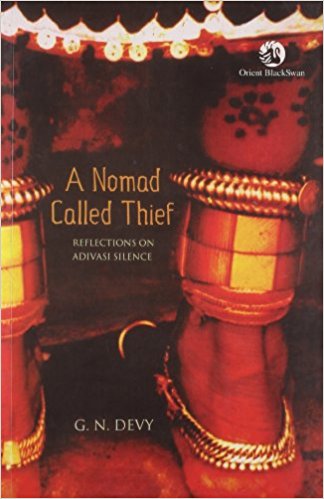
G.N. Devy
The volume under review is a collection of short pieces previously published by the author in a number of dailies and periodicals – many of which have been revised and expanded for inclusion in the book.
Elaine Kennedy-Dubourdieu
The book under review brings together the experiences of affirmative action from different parts of the world and offers rich insights from a comparative perspective. The countries covered include the United States, Britain, Canada, India, Britain, Northern Ireland
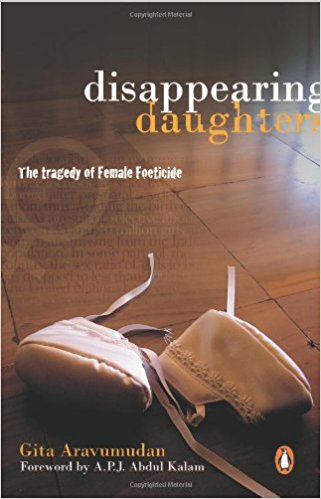
Gita Aravamudan
Disappearing Daughters is a collection of stories about women’s views of life, about a campaign, about a society in which daughters are becoming rare. Gita Aravamudan travels across the country interviewing women, medical professionals, activists in civil society organisations and academics.
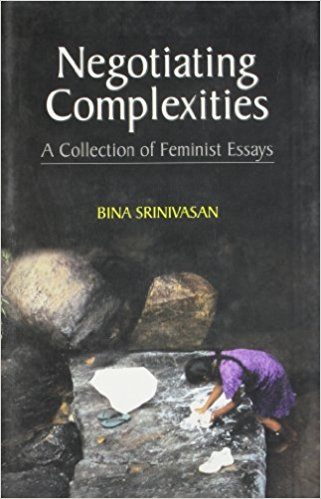
Bina Srinivasan
A collection of eight essays written by the author at different points of time have been compiled together in this book. Bina Srinivasan, the author acknowledges that things have changed; she has moved on.
Rachel Simon-Kumar
The book under review has a different sub-title on the inner cover (Ideology and Population Policy in India) was avoidable as the book’s focus is the state’s ideology of development, gender, underlying reproductive health policies and programme, and the discursive processes giving birth to these ideologies.
James Petras
There has been a huge explosion of studies in medical anthropology – some good, some indifferent, and many appalling – in recent years.
Romain Bertrand, Jean-Louis Briquet and Peter Pels
Although it presents itself as a historical ethnography, this is as much a volume in the rather rare but always exciting genre of political ethnography. The essays explore – in a variety of country contexts, some historical, others contemporary – the meaning of the vote as a material technology as well as performance.
Sukhadeo Thorat
The idea of reservation in the private sector arose in the Indian context almost entirely because of the drying up of employment opportunities in the government and public sector – negative growth in employment since 1995 and a significant increase of about 1.9 per cent annually in the organised private sector from 1995 to 2002.
Ishita Bannerjee-Dube
2008
The editor of this volume quotes Nicholas Dirks from his book Castes of Mind to show the ubiquitous presence of caste in today’s India. Caste continues and ‘continues to trouble’. Caste names and jati classifications have found their way into every Performa, ranging from school admissions to student scholarships and plush jobs.
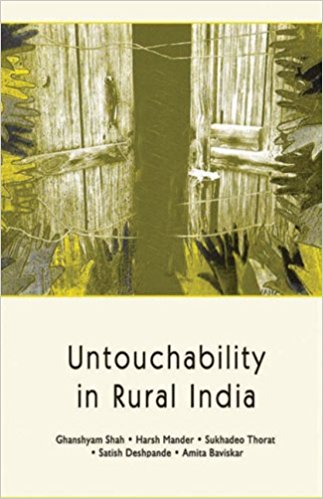
Ghanshyam Shah, Harsh Mander, Sukhadeo Thorat, Satish Deshpande and Amita Baviskar
A few months ago, several televison channels – local and national – were telecasting the reactions of young professionals or aspiring students on the policy of extending reservation for the students of Other Backward Castes (OBCs) in IITs and IIMs and other centrally sponsored professional colleges.