
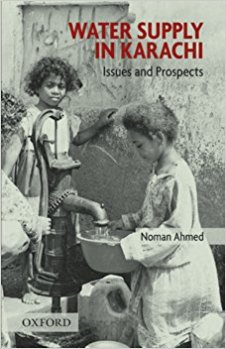
Noman Ahmed
Let me begin this review by borrowing the first sentence of Noman Ahmed’s book which reads: ‘Water supply issues, particularly drinking water supply, are acquiring frontline importance due to the gravity of the prevailing situation’;
Jasveen Jairath and Vishwa Ballabh
2009
Droughts of varying intensity frequently visited the South Asia region, not only the arid and semi arid parts of India and Pakistan, but also countries like Bangladesh and Sri Lanka, where rainfall is considered adequate, also have occasional spells of drought.
Carol Upadhya and A.R. Vasavi
2009
One of the much noted achievements of India in the recent past has been its emergence as a leading player in the world market for software and IT enabled services. Apart from the tangible benefits, (eg. export earning and employment) it has also brought along with it substantial intangibles like the organizational and managerial innovations (Arora and Athreya 2002) and credibility which in turn contributed towards creating the imagery of an emerging India.
Ponna Wignaraja
Persistent mass poverty has been a major problem afflicting a large number of countries in the so-called developing world. Even if one conceputalizes poverty in the extremely narrow sense of inadequate food to generate a certain minimum calorie level,
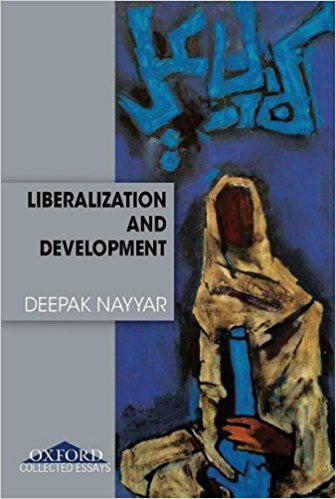
Deepak Nayyar
These two companion volumes put together thirty essays of, in Joseph Stiglitz’s words, ‘one of India’s foremost economists’ who has straddled the worlds of both academia and policy making.
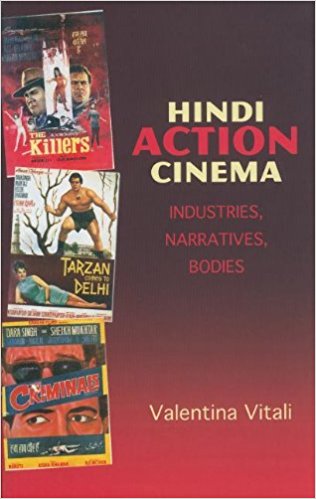
Valetina Vitali
Valentina Vitali’s book Hindi Action Cinema: Industries, Narratives, Bodies, traces the historical trajectory of action as a significant component of popular Hindi cinema. Moving from the silent period to the contemporary, the author attempts to locate the ideological function of action as a defining element in popular cinema.
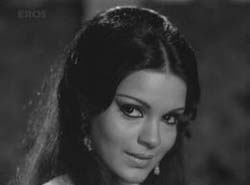
Several Writers
This is a surprising collection of reasonably longish short booklets – called monographs by general editor of the series, Nasreen Munni Kabir – about some of the heroines of popular, commercial and mainstream Hindi cinema, starting with Nutan of the 1950s, Saira Banu, Mumtaz of the 1960s, Zeenat Aman, Jaya Bachchan and Smita Patil of the 1970s, Madhuri Dixit of the 1980s and 1990s.
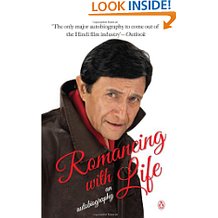
Dev Anand
Situated somewhere between an autobiography and a memoir, Dev Anand’s narrative of his life and times in the Bombay film industry and his rise to stardom, opens up certain contradictions which are usually connected with a star’s autobiographical project.
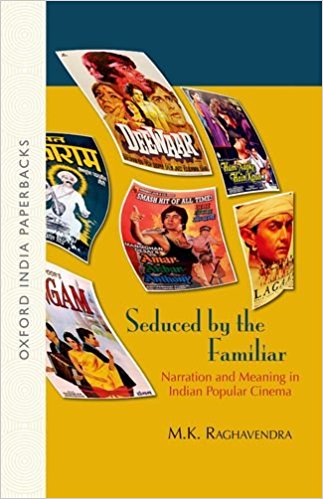
M.K. Raghavendra
There has been a lot of writing on the Hindi cinema as popular culture in recent years that has ranged from the journalistic to the academic. The spread of film studies as a discipline since the eighties put the pressure of academic writing on writers who were specialists in their field, but who had not internalized academic theory.
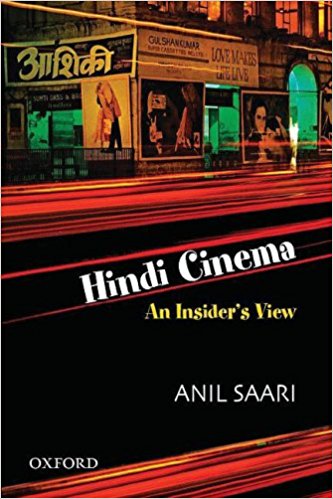
Anil Saari
With new publications on Hindi cinema arriving with startling frequency, every month or so, it is daunting to keep track of what new is being said. However, Anil Saari’s writings on Hindi cinema are hardly recent. Born in 1945, film journalist Saari began to write on films and filmmaking in the seventies and continued to do so till his demise in 2005.
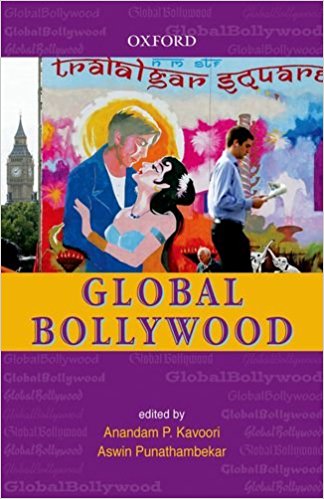
Anandam P. Kavoori and Aswin Punathambekar
2009
When I first heard the title, I mistook this co-edited volume to be a sequel to Global Hollywood and Global Hollywood 2, the well-known co-authored books that provide an analysis of how Hollywood globalized itself to become the most powerful film industry in the world.
N. Manu Chakravarthy
It is apt that this review is written at a time when Girish Kasaravalli’s latest film Gulabi Talkies has won the Osian’s Best Indian Film Award. It is ironical that someone who is an important figure within the stream of parallel cinema has not found a place in the intellectual debates around parallel cinema.
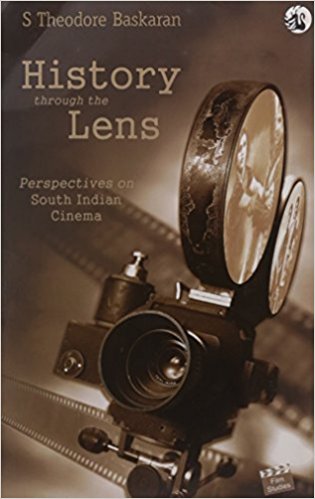
Theodore Baskaran
There has been a new interest in the histories of regional cinema industries in academic institutions which are manifested in ongoing research and recent conferences.
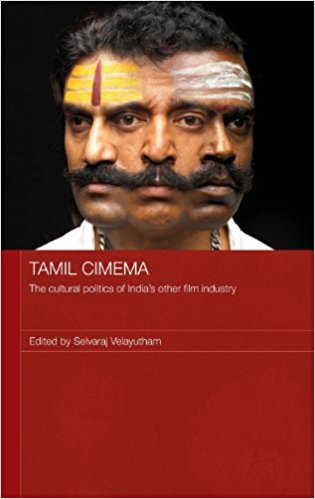
Selvaraj Velayutham
Selvaraj Velayutham’s edited volume, which is perhaps one of the first academic attempts to take a comprehensive look at the Tamil film industry , “of one of India’s largest, most prolific and increasingly significant cinemas” (Velayutham: 1) has hit the market at a time when Bollywood is hogging attention and space in academic circles as a global brand.
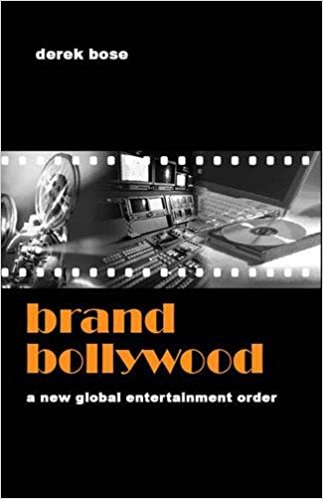
Derek Bose
Brand Bollywood by Derek Bose is a study of the commercial possibilities of popular Hindi cinema of Mumbai. It looks at the many strands of technology available to increase the revenue of Hindi films.
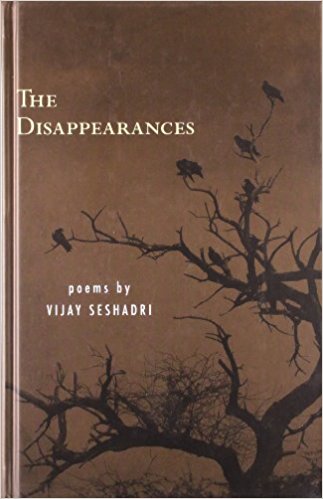
Vijay Seshadri
Vijay Seshadri’s two earlier collections, Wild Kingdom and Long Meadow (Graywolf Press, 1996 and 2004 respectively), have already been reviewed well. Richard Wilbur, Frank Bidart, Evan Boland, and Campbell McGrath (the known and the lesser known ones) have noted his poetic merit in unmistakable terms. The Los Angeles Times Book Review, The New York Times Book Review, and The New Yorker had words of praise for him.
Sujata Bhatt
2009
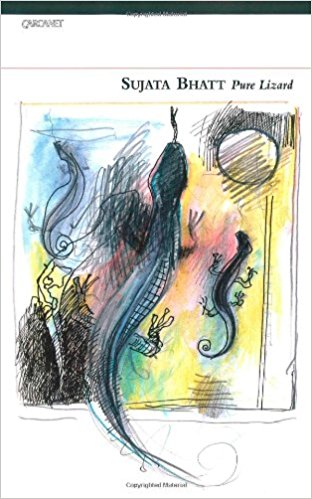
Sujata Bhatt’s meditative and reflective verse has established her among the much feted poets of promise writing in English today. Her poetry is marked by a poignant search for home, language and love. She conducts this search with deep sympathy and empathy through the use of memory and history in her work.
Vijay Seshadri
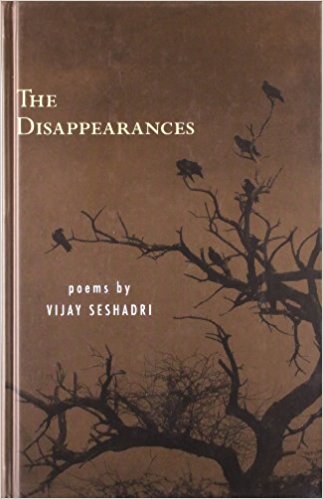
Vijay Seshadri’s two earlier collections, Wild Kingdom and Long Meadow (Graywolf Press, 1996 and 2004 respectively), have already been reviewed well. Richard Wilbur, Frank Bidart, Evan Boland, and Campbell McGrath (the known and the lesser known ones) have noted his poetic merit in unmistakable terms. The Los Angeles Times Book Review, The New York Times Book Review, and The New Yorker had words of praise for him.
Juhi Sinha
2009
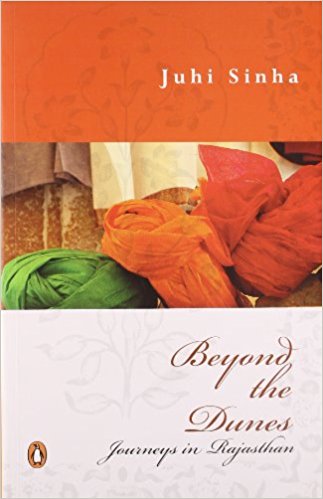
There are many kinds of travelers in this world. On one end of the spectrum, you have the “been-there-done-that” variety. Every place they visit connote just another ‘conquest’ and memorabilia they bring back (not to forget the footage on that indispensible handycam), ‘trophies’ to show off. And then you have the type that are mentally so scared to venture out of their environment…
Richard Zimler
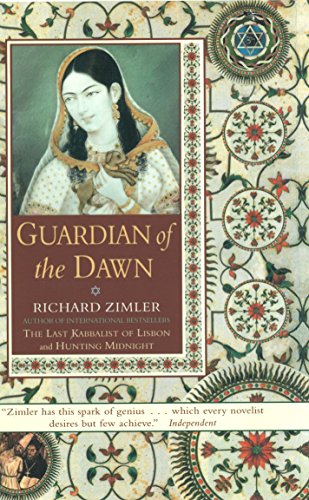
Richard Zimler’s Guardian of the Dawn, a historical mystery, is the third of his trilogy on the Zarco family, the other two being The Last Kabbalist of Lisbon, and Hunting Midnight, set in the 16th and 19th centuries, the setting encompassing different countries and different generations of the family. Guardian of the Dawn is set in 16th century Goa against the background of the Roman Catholic Inquisition and Portuguese colonialism.