
Politics
The persistent under-representation of the Indian Muslim in the legislative arena has been a longstanding feature of Indian politics. The community comprises 14 percent of the population, and their average representation in the Lok Sabha, for instance, stands at 5 percent. This is same as their representation in the Lok Sabha after the last parliamentary elections in 2019. Therefore, it would not be wrong to argue that the Muslim under-representation in the legislative arena, and the fact that the community also lags behind on almost all socio-economic indicators, is not a recent trend but a longstanding feature in Indian politics
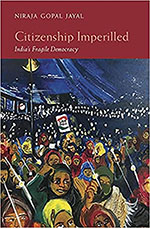
Niraja Gopal Jayal
Citizenship Imperilled: India’s Fragile Democracy by Professor Niraja Gopal Jayal unravels the complex and contested layers of the theory and practice of citizenship in independent India. The underlying query of the book is whether the constitutional ethic of Indian citizenship as an inclusive and egalitarian civic-national norm has been imperilled and ‘irretrievably undermined’ in more recent times. In response to this question, the book argues that the expansion or erosion of Indian democracy is contingent upon its citizenry.
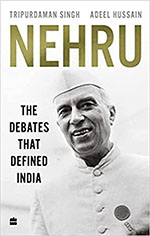
Tripurdaman Singh
Books on Jawaharlal Nehru are seldom rare—Nehru, indisputably, is a perennial favourite of publishers and authors, as can be seen in the countless books on him that relentlessly keep pouring out, year after year. In the recent past, Nehru’s views, his persona and his policies, have become a matter of intense debate, and shall I say controversy, especially with the present ruling dispensation propping him up as an ideological counterfoil to polish its grand Hindutva narrative.
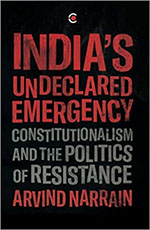
Arvind Narrain
The phrase ‘undeclared emergency’ is not new to Indian political discourse. The features of the Emergency period (1975-77), imposed by the Indira Gandhi-led Congress government, have since then provided political actors and analysts alike with a framework of comparison to evaluate the state of Indian democracy.
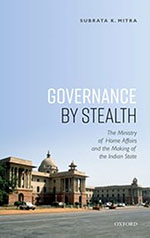
Subrata K. Mitra
The legislative initiatives of the Narendra Modi government in the cases relating to CAA/NRC, the repeal of Articles 370 and 35A of the Constitution of India and the speeches made by Union Home Minister Amit Shah, while raising plenty of heat and dust, also highlighted the significance and the reach of the Union Ministry of Home Affairs (MHA) in the constitutional and political affairs of the country.
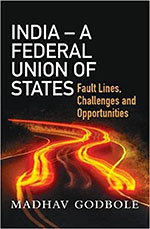
Madhav Godbole
In celebrating Azadi ka Amrit Mahotsav, the issue most debated is federalism in its various manifestations. Because of the implicit majoritarian manifestation of the Bharatiya Janata Party, questions are being raised regarding accommodation of and tolerance to opposing political parties in power in different federal units. On the basis of the evolving nature of federalism in India, nomenclatures like ‘quasi’, ‘bargaining’, ‘cooperative’, have been affixed as adjectives to the Indian version of federalism.
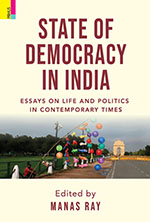
Manas Ray
The books under review are actually two accompanying volumes with forty contributors, the genesis of which lies in an issue of the journal Seminar that Manas Ray had edited in October 2015. Both these volumes engage with the concept of democracy in an unconventional manner. They take the reader beyond the realm of a traditional understanding where the concept and idea of a democracy is mostly perceived and discussed as a ‘political system’ with a written Constitution.
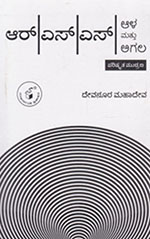
Devanoor Mahadeva
In the new lows that we have reached in our national public lives, none has been as troubling as the self-imposed silence by many writers on the depredations of the RSS and the BJP. Of those who do write critically, about the multiple erosions of our democracy and cultures, it is to a consenting audience or as in the English academia it is in the language of liberal social sciences.
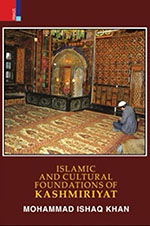
Mohammad Ishaq Khan
Mohammad Ishaq Khan’s book, brought out eight years after his death, is a collection of articles published/presented over the years by him. The articles have been selected in order to match the theme of the book. In a time when serious aspersions are cast on the concept of Kashmiriyat, and also when the concept has been gravely abused, the book is an attempt to save Kashmiriyat against such raging tides
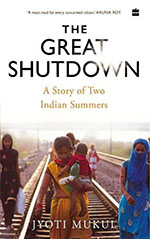
Jyoti Mukul
Jyoti Mukul’s debut volume catalogues the ramifications of the nationwide lockdown announced on 24 March 2020; the subsequent shutting down of the Indian Railways which caused emotional turmoil to millions of migrant workers separated from their families amidst dire economic crisis and a health emergency; and the complete breakdown of the healthcare system during the second wave of the pandemic in 2021 leading to a humanitarian tragedy.
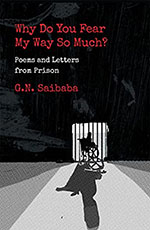
G.N. Saibaba
Having perused GN Saibaba’s recent collection, Why Do You Fear My Way So Much?: Poems and Letters from Prison over the last few days, I’m filled with grief and sadness. The UAPA (Unlawful Activities [Prevention] Act), under which GN Saibaba has been arrested, is a draconian colonial law, and will hopefully be revoked in the years to come, but one cannot overlook the damage it has caused in present times. I am thinking of fellow dissenting voices, scholars (Anand Teltumbde, Umar Khalid), Professors (Shoma Sen, Hany Babu), poet (Varavara Rao), and human rights activists (among others, Rona Wilson, Gautam Navlakha, Sudha Bharadwaj, deceased Stan Swamy), who have been incarcerated.
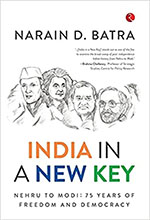
Narain D. Batra
India in a New Key—Nehru to Modi: 75 Years of Freedom and Democracy, targeted at a global audience, takes the reader on a journey through the history of India from Independence to the present times. The author, Narain D Batra is puzzled as to why the new-found freedom did not break this huge and diverse country called India and nudge it towards authoritarianism, as was the case with so many other newly independent countries of Asia and Africa. To unpack the mystery of India’s resilience and evolution as a constitutional democracy, he looks in depth into important developments and issues during the tenures of all Prime Ministers from Nehru to Modi.
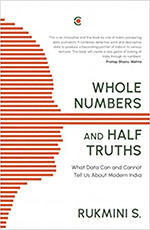
Rukmini S.
Given the general fear of numbers, a book on numbers is unlikely to excite many. However, in Whole Numbers and Half Truths: What Data Can and Cannot Tell Us About Modern India, Rukmini S makes sure the numbers do not hit you in the face but instead speak to you and encourage you to ask questions. With the so-called data explosion and the fact that everybody claims to be relying on data, Whole Numbers is essential reading for both data presenters as well as its consumers.
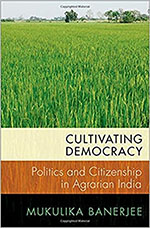
Mukulika Banerjee
The book under review presents a fascinating ethnographic study of the relationship between formal political institutions and the everyday experiences of the citizens of rural India. It presents a study of two villages in West Bengal, Madanpur and Chishti, and covers the period of fifteen years (from 1998 to 2013) to understand the changing dynamics of political life and the cultivation of active citizenship in both villages. Banerjee explores the reason behind the faith of common villagers, like the residents of Madanpur and Chishti, in the democratic processes, which they have been expressing through high voter turnout in consecutive elections.
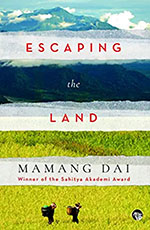
Mamang Dai
Mamang Dai, the Sahitya Akademi Award winning author is one of the most prolific voices from Arunachal Pradesh as well as the region of the North East. Her works have delved deeply into the transitions that the State of Arunachal Pradesh has gone through from time to time, including the administrative changes which first treated the region as a ‘frontier’ in the wilderness and then a resourceful unexplored area waiting to be ‘harnessed’.
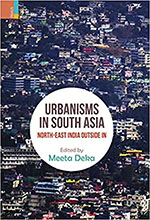
Meeta Deka
Emerging scholarship on urban studies in South Asia poses a critique of the application of Eurocentric models to capture urban processes in the global South. South Asian scholars, while arguing that urbanization is not uniform, argue for a contextual understanding of urban shifts. In addition to examining urban patterns concerning colonial history, and the roles of the state and the market, studies on urban processes also bring under their purview other categories such as gender, caste, kinship, ethnicity and culture.
Nalin Mehta
The BJP’s meteoric rise to the top of Indian politics has been variously and copiously recorded by several book-length attempts at authenticity. While The Rise of the BJP: The Making of the World’s Largest Political Party (Bhupender Yadav and Illa Patnaik), How the BJP Wins: Inside the World’s Largest Election Machine (Prashant Ojha), Bharatiya Janata Party Past Present and Future: Story of the World’s Largest Political Party (Shantanu Gupta) and Jugalbandi.
Suryakant Waghmore and Hugo Gorringe
We can extrapolate from the title of the book that civility in India is in serious jeopardy. Despite the fact that majoritarian politics and democracy in India are in place, the book discusses the challenges of ensuring civility for its population. Each chapter delves into this duality and critically assesses the obstacles and problems with democracy by looking at caste and civility in the context of several Indian States.
Edited by K. Raju
After more than seventy years of Independence, the caste question remains one of the most intractable vices of contemporary India. Dalits’ struggles in particular have been made strategically invisible amidst the call for how the ‘dreams of our nation’ must always supersede ‘sectarian agendas’. Both are politically loaded terms.
Pratip Chattopadhyay
As India’s influence in global politics increases, there has been a corresponding increase in the number of books on Indian foreign policy. Increasingly, one sees more books and articles based on India’s archives. However, the impact of India’s domestic politics on the formulation of foreign policy remains an under-researched area.