
Politics
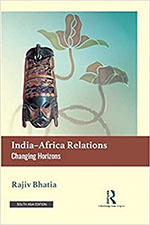
Rajiv Bhatia
he publication of two important books on India-Africa relations in early 2022 is a striking event. The authors are Foreign Service Africanists with multiple assignments on the Continent. They complement each other rather well.Rajiv Bhatia addresses the wide historical canvas, and a range of political and other connections.
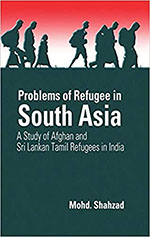
Mohd. Shahzad
Euriphides once remarked, ‘There is no greater sorrow on earth than the loss of one’s native land.’ It does not augur well for today’s modern civilized world that a whopping number of people are born and die in refugee camps, and millions of people each year are forced to leave their countries and seek refuge in other countries, while many others are displaced within their own countries.
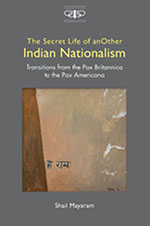
Shail Mayaram
Eric Hobsbawm in the introduction to Nations and Nationalism since 1780 notes that although the idea of nationalism is constructed chiefly from above, it needs to be studied from below as this is where it takes root and is most powerful and capricious. Shail Mayaram’s new book The Secret Life of anOther Indian Nationalism: Transitions from the Pax Britannica to the Pax Americana is a sincere attempt in this direction.

Anirudh Suri
The Great Tech Game comes with a promise to explain one of the pre-eminent challenges of our times, which concerns the rapid growth in the technological domain and its implications for the economic and strategic sectors in countries across the world. The fact that a book on geopolitics is written around the theme of technology underscores the high stakes now attached to the gadgets and algorithms that were once dismissed as a domain for ‘geeks and freaks’.
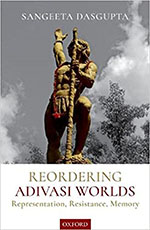
Sangeeta Dasgupta
The debates on colonial construction of tribal identity and the need to revisit the concept are gathering space in academic discourse in recent years. Dasgupta stretches this debate a little further from her previous work. Tribal identity is similar to caste used extensively by colonial ethnographers, anthropologists, and census enumerators to fix identities of the numerous communities living in India.
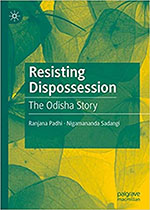
Ranjana Padhi and Nigamananda Sadangi
No story has ever been fully told, it is said, because no story can ever be fully told. However, as Ranjana Padhi and Nigamananda Sadangi tell us in Resisting Dispossession: The Odisha Story, all stories are only half told. That said, it ought to be conceded that this book, which sets out to tell the story of development and its discontents in Odisha from 1948 to the present, tells it remarkably well.
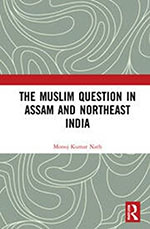
Monoj Kumar Nath
Muslims in Assam comprise one-third of its population. Since Independence, the politics of Assam has been shaped by the question of alleged illegal immigration from erstwhile East Pakistan. The spectre of an illegal immigrant minoritizing the ‘khilonjia’(original inhabitants) of Assam has been a constant in the popular as well as political discourse.
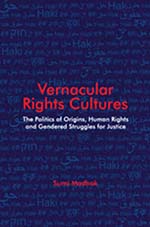
Sumi Madhok
2022
If the challenge is that of ‘theorizing from the global south’ (p. 50), then the question to ask is, to what extent has the author of this book been successful in meeting this call. Madhok’s interest in offering us an empirical account of ‘subaltern struggles and contestations over rights’ (p. 2) from South Asia is to bring to our notice the conceptual vocabulary used in these struggles, pointing to a different notion of human rights.
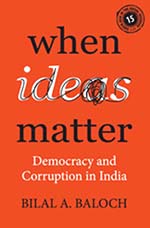
Bilal A. Baloch
In his debut volume, When Ideas Matter: Democracy and Corruption in India, Bilal A Baloch seeks to underscore the salience of ideology in shaping, dictating, and motivating the political elite’s behaviour. Political analysts have conventionally focused on material motivations behind elite political behaviour during the course of an electoral cycle. However, to what extent executive action is determined by ideational frameworks of those in power has largely remained an under-explored theme.
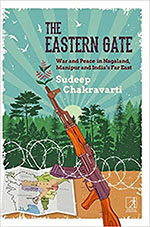
Sudeep Chakravarti
Located in a remote corner of India and, regrettably, the minds of most ‘mainland’ Indians, the North Eastern region has never been an easy site and space to think of, let alone write about. Immensely complex in terms of geography (territory), history, immigration and ethnic composition, economics and politics, the North East, which Sudeep Chakravarti quite correctly rechristens as (India’s) Far East, emerged out of the subcontinental decolonization process
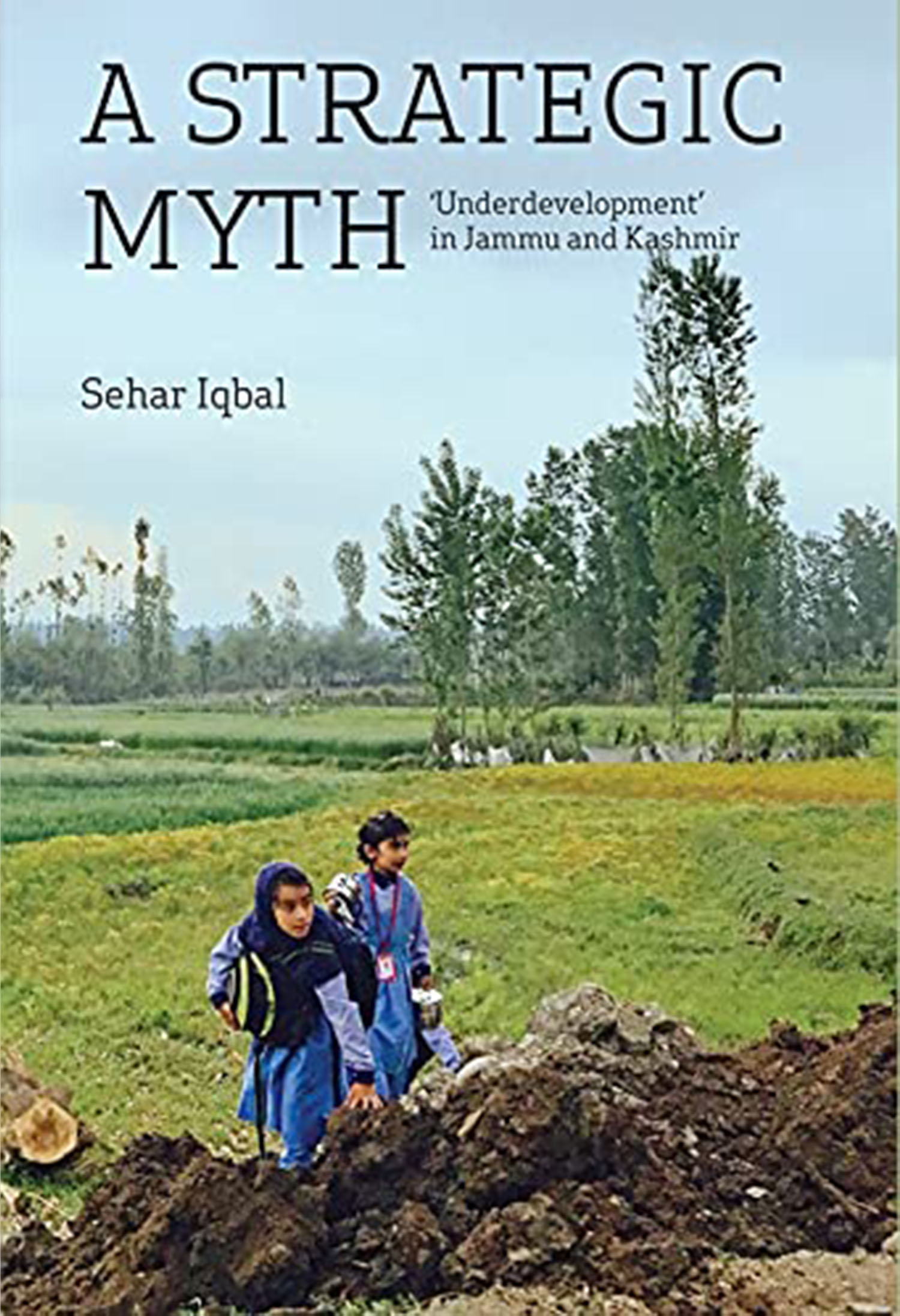
Sehar Iqbal
One of the arguments put forward for the abrogation of the special status of Jammu and Kashmir (J&K) under Article 370 in August 2019 by the Central Government was that it hampered development in the erstwhile State. This ‘underdevelopment’ narrative was stressed vehemently by the ruling party at the centre at that time.
Neera Chandhoke
In The Violence in Our Bones: Mapping the Deadly Fault Lines Within Indian Society, Professor Neera Chandhoke compels us to deliberate on violence in its many manifestations in India and suggests how we may extricate ourselves from this abyss by inventively imagining participatory democracy. The treatment of violence in the social sciences often diminishes the starkness of human tragedy, when reduced to mere statistics. While recognizing that violent urges might lie dormant in our psyche, Chandhoke is concerned with stalling the eruption of these violent urges onto the socio-political arena.
Harihar Bhattacharyya
Contemporary buzz on Indian democracy (Roy Chowdhury and Keane, 2021; Yadav, 2020; Nielsen and Nielsen, 2019; Rudolph and Rudolph, 2014) analyses its evolving features. The book under review, written in memory of Professor Kalyan Bhattacharya (a faculty of Political Science in Vivekananda Mahavidyalay under the University of Burdwan, 1966-1994), probes into the making of the democracy discourse in India.
Nehal Ahmed
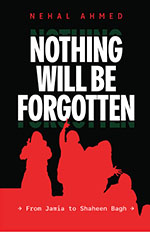
15 December 2019 was the darkest day of my life. On this day, the Delhi police entered our campus and beat us like animals.’ These lines from the introduction of Nehal Ahmed’s new book Nothing will be Forgotten transport our minds to the day when the University campus was turned into a warzone. Students were labelled terrorists. Gory visuals still refuse to leave our minds. A peaceful protest culminating in students running for their lives. Police rampaging through reading rooms and libraries, hunting for students like a pack of wolves.
Kristin Victoria Magistrelli Plys
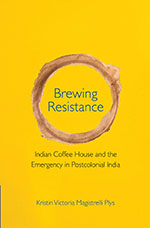
In the last couple of years, a fairly large number of accounts ranging from popular pieces to research-based scholarship, of the Indian Emergency have appeared in the public domain. The book under review is the latest addition to the fast-expanding repertoire of Emergency writings. The Emergency, which Plys aptly calls the ‘particular totalitarian moment’, reconfigured forever, among others, the postcolonial political (and socio-economic) landscape of India. Imposed by Prime Minister Indira Gandhi-led Congress in 1975, the Emergency was effective–thanks to the PM’s lackeys and her wayward, roguish son Sanjay Gandhi–until 1977.
Akhil Ranjan Dutta
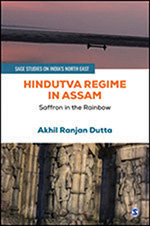
The 2014 elections witnessed an unprecedented performance by the BJP in Assam. This was further followed in the Assembly elections of 2016 which saw the Party come to power in the State for the first time. Similar electoral victories were registered in the Parliamentary elections of 2019 and the Assembly elections of 2021. Akhil Ranjan Dutta in Hindutva Regime in Assam puts forth an elaborate account of this rise of the BJP in the State.
Christophe Jaffrelot. Translated from the original French by Cynthia Schoch.
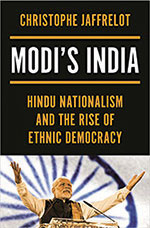
Modi’s India: Hindu Nationalism and the Rise of Ethnic Democracy is a meticulously documented book. It tries to unpack India’s journey from populism to ethnic democracy and authoritarianism. It is divided into three parts.In the first part, Jaffrelot starts by explaining the rise of Hindu nationalism. He studies the rise of Modi in Gujarat and how he went from the RSS to the BJP in the 1990s, where he rose above the organization, subjugated it, and to some extent liberated himself from it. He gradually became a national-populist hero, cleverly turning the stigma of the Gujarat riots to his advantage by using his charisma and a well-orchestrated public relations campaign run by pro- fessionals to build his superhuman image.
Mohita Bhatia
It is well known to students of political science and modern history that the Kashmir dispute has two dimensions—external and internal. The external dimension involves India, Pakistan and the UN. The involvement of the latter was sought by India under Jawaharlal Nehru to resolve the mutually opposite claims of India and Pakistan over J&K’s political future. Besides internationalizing the Kashmir dispute, the external context led to wars between India and Pakistan, as well as constant instability in J&K.
Nasreen Chowdhory and Biswajit Mohanty
This book is an important academic intervention. It unpacks the political complexities associated with the much debatable refugee status of Rohingya community in South Asia. The vast empirical data/information is systematically organized to evolve an innovating theoretical framework. As a result, one finds an interesting sequence that links different individual essays to produce a highly engaging intellectual commentary on complex ideas such as nationalism and citizenship.
Partha Chatterjee
The problems that confront us now—the pandemic, a warming planet—require concerted action, yet what we hear constantly is loud voices pitting ‘us’ against ‘them’. In this context, should we rescue nationalism through our usual binaries of civic versus ethnic nationalisms, or liberal versus illiberal nationalisms? This is Partha Chatterjee’s concern as well, as he attempts to separate the truths of nationalism from its lies, through this manuscript which he says was left at his doorstep during the pandemic, with the inscription that the narrator was Charvak: ‘the first page began with a heading in two words—Carvaka uvaca’ (p. vii). As the manuscript seemed to be about the ‘principles of a new concept of Indian nationalism’ (p. viii), Chatterjee felt that it must reach a wider audience and decided to translate it into English.