
Politics
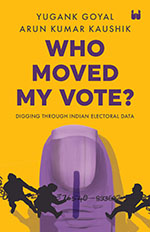
Yugank Goyal and Arun Kumar Kaushik
In Who Moved My Vote?, Yugank Goyal and Arun Kumar Kaushik have a simple point to make. Elections are pivotal to modern representative democracy, and the credibility and legitimacy of the political system depend on how well election results reflect the people’s will. The authors highlight some quirks of the First Past the Post (FPTP) system.
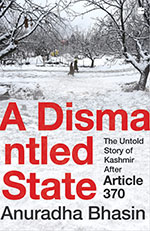
Anuradha Bhasin
Anuradha Bhasin hit the national headlines with her challenge in the Supreme Court on the Government disconnecting Jammu and Kashmir (J&K) from India and those living there from each other by turning off the internet as part of its massive crackdown to usher in Naya Kashmir with the evacuation of Article 370 of all meaning.
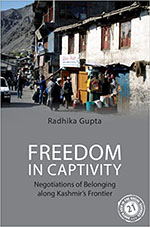
Radhika Gupta
Britain’s botched cartographic endeavour to partition the Indian subcontinent not only left behind a legacy of bloodshed but also people who, till now, are trying to fit into the larger picture of ‘India’. Freedom in Captivity: Negotiations of Belonging along Kashmir’s Frontier by Radhika Gupta tries to explore what meaning belonging, identity, and freedom have for the people in Kargil along the most militarized border of the world.
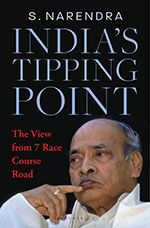
S. Narendra
The author, S Narendra, formerly of the Indian Information Service, has comprehensively explored the extraordinary rise of PV Narasimha Rao (PVNR) from the grassroots, a journey that saw him become Prime Minister in June 1991 and the only one till then, from outside the Nehru-Gandhi fold, to complete a full term in office. He was known for his sharp analyses of political situations and was prominent in many an electoral battle.
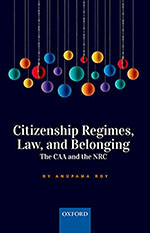
Anupama Roy
Who belongs to the nation? And, how do we become members of a state? The responses to such questions are often contested. These contestations have led to violent conflicts, and therefore, citizenship laws were created to determine the membership to a political community. In Citizenship Regimes, Law, and Belonging: The CAA and the NRC, Anupama Roy examines the form and content of recent changes to citizenship regimes and laws in India by locating the Citizenship Amendment Act (CAA 2019), the National Register of Citizens (NRC), and the Land Border Agreement (LBA 2015) in their historical, ideological, and political contexts.
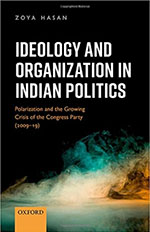
Zoya Hasan
This timely study of the Indian National Congress of yore, now widely referred to as the Congress Party, in the context of political processes in the post-sixteenth general elections in India in 2014, comes at a time when Rahul Gandhi, a scion of the Nehru-Gandhi dynasty, disparaged as ‘Pappu’ (immature and naïve) by the BJP, has recently completed the ‘Bharat Jodo Yatra’ that began on 7 September 2022 to traverse 3,570 kilometres to reach Srinagar after a 150-day journey.
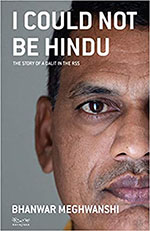
Bhanwar Meghwanshi
I Could Not Be Hindu: The Story of a Dalit in the RSS by Bhanwar Meghwanshi, an autobiographical note of his political genesis, where he shares his experiences with the RSS and the reasons he quit, is the narrative of an agonized author. Unlike other autobiographies which focus on different aspects of life, this book premises Meghwanshi’s metamorphosis of political career and varied discourses of political engagement.
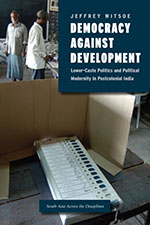
Jeffrey Witsoe
2021
First published in 2013 from the University of Chicago Press, this book is one of the most important interventions into comprehending Bihar, an eastern Indian province. With reference to post-1947 Bihar, among the western scholars, Francine R Frankel’s essay (1989), many long essays of Harry W Blair, and Paul Brass, too, in his book, Language, Religion and Politics in North India, and also his essay, ‘Political Uses of Crisis: The Famine of 1966-67’ (Asian Survey, 1986)
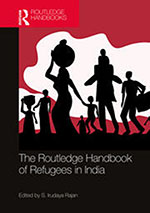
S. Irudaya Rajan
Stateless were we branded and stigmatized…as outcaste vagabonds at the bottom we remain, with shattered and bleeding hearts we leave, like dumbed cattle benumbed we go (p. 247). The apathy and difficulties in the lives of refugees and stateless people are innumerable, and there will never be enough words to describe their predicament’s severity adequately.
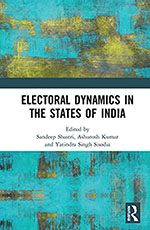
Sandeep Shastri
With the establishment of a new dominant party in India since 2014 and its re-election with a thumping majority in 2019, a new political era has been identified with the BJP being called a ‘system defining party’. A lot has been written about the changing political climate of the country with the Bhartiya Janata Party as the dominant party in order to analyse the reasons for the BJP wave sweeping across the nation.
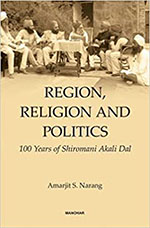
Amarjit S. Narang
Reading the synoptic narrative of the hundred years of the chequered political career of the Shiromani Akali Dal in the volume under review makes us aware about the uniqueness of the oldest State-level Party which emanated from a religious reformist movement and went on to qualify both as a ‘regionalist’ and an ‘ethnic’ party. As ethnic Party, Akali Dal has sought and received considerable political support from the Sikhs in India and even among the Sikh diaspora, while taking up the community’s religious, social and political causes as central to the Party agenda.
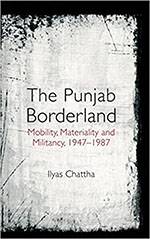
Ilyas Chattha
The Punjab Borderland, drawing together an array of archival sources, traces the first ‘comprehensive social history’ of the Punjab border, straddling the states of India and Pakistan (p. 2). Through an extensive study of the border mobility and materiality from 1947 to 1986, it argues that the Punjab border was far more porous and accessible than generally assumed.
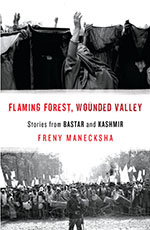
Freny Manecksha
What happens when a state wages a war on people? How do the people navigate a system rigged against them? Flaming Forest, Wounded Valley is a result of Freny Manecksha’s decade-long experience of travelling and documenting in the two most volatile regions in India—Bastar and Kashmir. The book documents state’s action as well as inaction in these volatile regions and examines the meaning that words like ‘home’, ‘safe-space’, ‘development’ and ‘justice’ take on in a conflict zone.
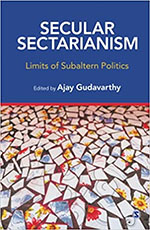
Ajay Gudavarthy
Ajay Gudavarthy has through this edited volume of essays foregrounded the argument that there are internal contradictions giving rise to new power formations which are a result of conflict within and between marginalized groups. He states, ‘today, we cannot understand social dynamics exclusively as conflicts between the dominant and dominated.
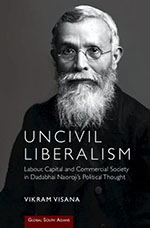
Vikram Visana
2022
The significance of this book is that it adds to our understanding of Western India and more specifically the milieu of the small Parsi community in Bombay that provided the commercial, political and intellectual matrix out of which the political thought of Dadabhai Naoroji emerged. Visana suggests that in the development of Naoroji’s ideas, ‘Bombay had an especially important role to play since it was the “centre of the best political thought in India”.
N. Sukumar
Knowledge, at least in its a priori form, promises to be liberating. The basic thought of being able to learn, to question, to unlearn and then to relearn is deeply empowering. However, knowledge production and knowledge dissemination seldom remain under the control of one single individual. Knowledge can become liberating and empowering only if its systemic functioning is informed by the logic of equity, empathy and respect.
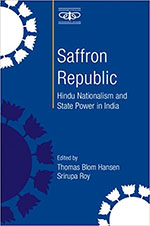
Thomas Blom Hansen and Srirupa Roy
This volume, divided into four sections, has thirteen carefully selected essays. It attempts at investigating the rise of ‘New Hindutva’ in India. This phenomenon has been defined by the editors as a ‘governmental formulation with considerable institutional heft that converges with wider global currents and enjoys an unprecedented level of mainstream acceptance’ (p. 1).
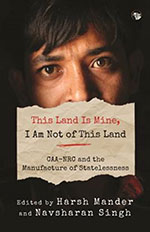
Harsh Mander and Navsharan Singh
Who is a citizen of India and on what terms? This is the momentous question that this anthology poses before us with a compelling force, in the increasingly unsettling climate of vulnerability and fear that the recently sculpted trinity of CAA (Citizenship Amendment Act, 2019)-NRIC-NPR has produced in our Republic. With much care, analytical sophistication, and citizenly conscience, a number of researchers, legal scholars, social activists, journalists, and creative writers examine through the pages of this edited volume the conceptual, constitutional, socio-political and affective dimensions of citizenship, and more pertinently, its denial, and the entangled issues of rightlessness and statelessness that such disenfranchisement engenders.
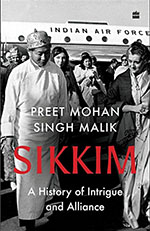
Preet Mohan Singh Malik
Sikkim, a tiny Indian State with a population of less than a million, merged with India and became the 22nd State of the Indian Union in 1975. Ambassador Preet Mohan Singh Malik’s book, Sikkim: A History of Intrigue and Alliance, comes at a time when India’s strategic affairs are much debated notably after the Doklam, and Galwan Valley skirmishes.
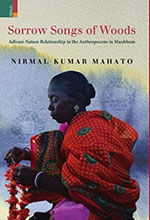
Nirmal Kumar Mahato
In the title story of the short story collection The Adivasi Will Not Dance*, noted Santhal writer Hansda Sowvendra Shekhar sketched the character of Mangal Murmu who had accepted the opportunity to dance at a programme where the President of India would inaugurate a thermal power plant. However, upon learning that the whole project was constructed at the expense of the eleven villages whose inhabitants were evicted by an official diktat