
International Relations
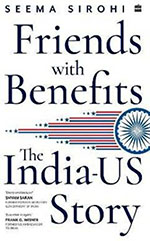
By Seema Sirohi
The book explores the dynamics of Indo-US relationship in the post-Cold War context. In this endeavour, it has a detailed discussion of the core issues, the major challenges and the mutual perceptions the two countries possess towards each another.
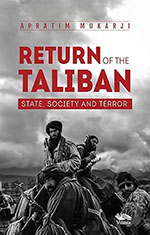
By Apratim Mukarji
Mukarji gives a lot of space to the role of Commander Ahmad Shah Massoud, a man of Tajik descent, a minority group in a country of Pashtun majority, who led the Northern Alliance consisting of other minority groups in fighting the Soviet occupation. As he claims: ‘If you want to know the best part of Afghanistan’s recent history
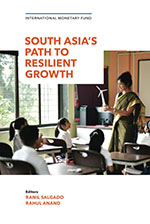
Edited by Ranil Salgado & Rahul Anand
In the aftermath of the COVID-19 pandemic, Salgado and Anand have attempted to craft a digitalized and green route for resilient growth by identifying the potential demographic dividend in South Asia and pushing for more significant trade and financial openness.
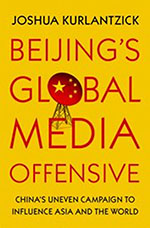
By Joshua Kurlantzick
‘Developing states, and particularly those in Africa, Southeast Asia, and parts of Eastern Europe, are some of the most vulnerable to the growing influence of Xinhua, since they have few restrictions on content-sharing deals,
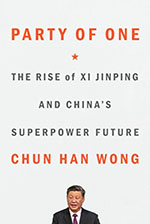
By Chun Han Wong
Despite being at the helm of affairs in China for more than 12 years now, Xi Jinping is still somewhat of an enigma for the world and may be even for a large number of people within China.
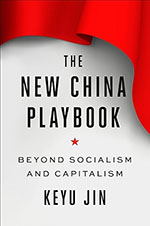
By Keyu Jin
Keyu Jin attempts to dispel notions that China’s functioning resembles some form of state Capitalism. She brings out that while ‘Public Sector type of companies’ undoubtedly dominate several sectors of the economy, they are not necessarily in themselves the principal growth engines.
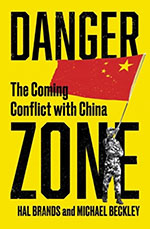
China’s growing assertiveness in the last two decades, its ‘wolf warrior’ diplomacy under Xi Jinping’s leadership, rapidly expanding coercive power

By Scott Ezell
‘In the dark times, will there also be singing? Yes, there will also be singing. About the dark times.’ These famous lines by Bertolt Brecht aptly fit Scott Ezell’s epic Journey to the End of the Empire: On the Road in Eastern Tibet.
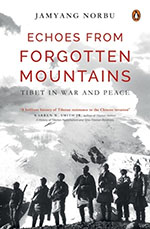
By Jamyang Norbu
The book is an epic work of forty chapters each with its own quintessence. ‘The Ghost of Chamdo’, ‘March Winds’, ‘Wind and Wildfire’, ‘Memory Songs of Lhasa’, ‘Four Rivers Six Ranges’, ‘Silent Struggle’ and many more are worthy of mention.
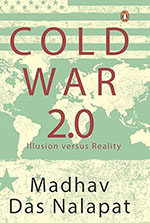
By Madhav Das Nalapat
The central argument that Professor Madhav Das Nalapat makes in his timely book is that the new Cold War, which he terms as Cold War 2.0 is different from the earlier Cold War and that it would be a mistake to assume that the Soviet Union has been replaced with the Russian Federation.
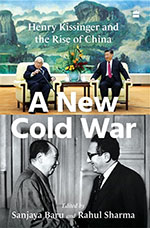
Edited by Sanjaya Baru and Rahul Sharma
As foreign policy cum security experts, academicians and politicians try to understand the current international order and what shape it may take, Sanjaya Baru and Rahul Sharma have brought together 19 essays in their first edition (2021) to coincide with the 50th anniversary of US President Nixon’s historic visit to China in 1971.
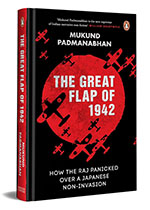
By Mukund Padmanabhan
We are living in the post-pandemic era having fresh memories of evacuation, lockdown, information, and disinformation—overall a situation of panic.
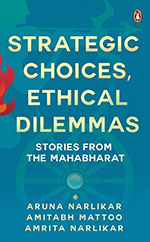
By Aruna Narlikar, Amitabh Mattoo and Amrita Narlikar
The Ramayana and the Mahabharata are not just two great epics but also great treasures of our civilizational heritage that have inspired generations over many centuries.
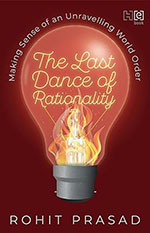
By Rohit Prasad
Prasad adopts an orthodox Eurocentric framing of the dawn of enlightenment and the coming of the age of rationality wherein he treats it as an endogenous phenomenon starting from the Renaissance down to the Industrial Revolution.
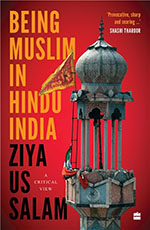
By Ziya Us Salam
The very first sentence of the ‘Preface’ in the book under review is crafted to grab readers by the scruff of their necks—‘To be a Muslim is to be an orphan’—and then keep them glued to each page.
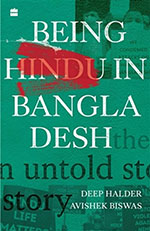
By Deep Halder and Avishek Biswas
There are several books and articles that have been published on the state of Hindu minorities in Bangladesh, the role of Hindus in the 1971 liberation war and the Vested Property Act that disposed off their property. While the status of minorities in Pakistan is accepted as fait accompli in India
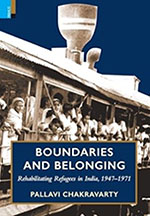
By Pallavi Chakravarty
Boundaries and Belonging: Rehabilitating Refugees in India, 1947-1971 by Pallavi Chakravarty provides a critical analysis of the Indian state’s post-Partition programmes for rehabilitating refugees.
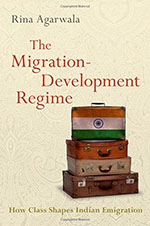
By Rina Agarwala
‘Migration-Development Regimes’ (MDR) and painstakingly traces the history of emigration in India. She thus reframes the emigration practices of sending states as a regime to help capture the sending state’s ‘ideological, economic
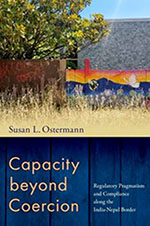
By Susan L. Ostermann
However, human beings differ in their interpretation of laws and that becomes a reason for conflict within government circles and in the society, and non-compliance by those whose interests are not tantamount with them. The other point made by the author is that there are certain bureaucrats or judges who have the legal knowledge and ensure their enforcement.
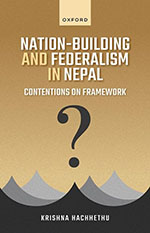
By Krishna Hachhethu
That conjunctive moment galvanized a spontaneous popular people’s uprising, Jana Andolan II (April 2006) which gave the democratic imprimatur to the demand for a systemic overhaul of the old unequal power structure. The Maoists fused class ideology with identity politics which tapped into the discontent of the institutionally excluded.