
International Relations

By Harun-or-Rashid
Bangladesh has had democratic governments with intermittent breaks when the military junta took over power through coup d’etat. The recent uprising was not an intervention by the army—to many it appeared to be spontaneous outburst of the masses although now, with the unearthing of many sources, the narrative does not correspond with that which attracted our attention at the outset.

By Lok Raj Baral
There is disappointment, particularly at the exclusion of Dalits in the Republic’s politics of representation as Nepal de facto returns to the pre-revolutionary political system of domination of hill khas Nepali upper castes. Dalits may be 14 percent of the population but in the November 2022 elections

By Antony Loewenstein
The world witnesses Israel’s barbaric destruction in Gaza, and people took to the streets to demand a ceasefire to end the horrific destruction on Gaza instigated in October 2023. The Israeli (occupation) defence and armed forces, along with private industries, seized this opportunity to market their goods. Israel uses video footage of their weapons in action to aim at boosting their sale of arms and surveillance technology.

By Valdimir Hamed-Troyansky
In many parts of the Ottoman Empire, the massive immigration of Caucasian refugees created a demographically chaotic situation, as what Lord Curzon, Britain’s Foreign Secretary termed in the early 20th century, ‘unmixing of peoples’ which later on spawned a plethora of parochial nationalist and sub-nationalist movements in the post-Ottoman era.

By Michael Mandelbaum
Regardless, the book’s framework still makes the following speculations possible.
First, even as the societal consensus around America’s ruling ideology of democracy, capitalism and freedoms has collapsed at home, the number of its takers internationally has dwindled, including within the West, as the rise of inward looking, nationalist and far-Right forces across the West indicates.

By Stephen Maher
The first section of Part Two deals with Trudeau’s foreign policy, Canada’s failure to win a non-permanent seat in the UN Security Council and his challenges in dealing with US President Donald Trump and Indian Prime Minister Narendra Modi.

By Vyjayanti Raghavan
The book is structured imaginatively in two sections, A and B. Section A deals with Northeast Asia and B with South Asia. In Section A, there are three sub-chapters which discuss extensively the countries in the region, such as North Korea, Japan and South Korea and their relationship with China, in particular under Xi Jinping, and separately the influence of Donald Trump in Northeast Asia. In Section B, relations of the US with three countries of South Asia, namely, India, Pakistan and Afghanistan are studied in detail followed by the developments in these countries under President Trump.

By Rajesh Basrur
The Indo-US nuclear deal and the Sri Lankan affairs count for Basrur as exemplars of drift. These two cases show why the Indian state got checkmated by domestic conflicts and institutional infirmities. In contrast, Basrur argues that the absence of a cohesive policy in Indian nuclear strategy and its approach to cross-border terrorism caused a ‘responsibility deficit’.

By Joya Chatterji
‘The Age of Nationalisms: Competing Visions’, the first chapter sets the stage by exploring the rise of nationalism in early twentieth century. The author highlights the diversity within nationalist movements in South Asia, showing how they were marked by competing visions and internal conflicts.

By Chinmaya R. Gharekhan
However, the book falls short of mentioning any American departure and post-war impacts on the West Asian region. The US withdrew from a long, bloody war in Iraq on the assumption that they had left the country in a better place and condition. Nevertheless

By Samuel Helfont
Midway through the book, the author sheds light on how a series of networks were built by the Iraqi regime during the war to appeal to the western world against US actions in Iraq. Numerous political cells were created by Baathist supporters of Saddam to mobilize people in cities like New Jersey

Edited by Kingshuk Chatterjee
The three essays in the final section centre on war and diplomacy. Shantanu Chakrabarti discusses the writings of Hiranmoy Ghoshal, who spent considerable years of his life in Poland. These writings include Ghoshal’s ‘eyewitness account’ of the German invasion of Poland during the Second World War

By Yalidy Matos
According to Matos, white socialization teaches white individuals about their obligations, anticipated behaviours, assigned roles, and strategies to preserve the exclusive nature of their community. She explains that the moral choice that whiteness affords (which ‘not all racial groups have’) is the choice to either continue to follow and strengthen a system that is structured on white supremacy or challenge it.

In the interconnected web of global politics, the dynamics of International Relations wield significant influence in shaping the trajectory of nations and regions. However, in today’s global landscape, disorder prevails as established rules and norms of International Relations are frequently disregarded.
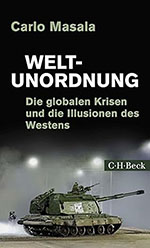
By Carlo Masala
Western views are not universally valid, and this liberal way of thinking divides countries in an imperialist manner into ‘good’ democratic and ‘bad’ autocratic ones and thus creates defensive reactions, says Carlo Masala, Professor, International Politics at the Bundeswehr University, Munich
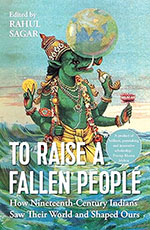
Edited by Rahul Sagar
As a young man, Raja Ram Mohun Roy saw his bewildered and wailing 17-year-old, widowed sister-in-law pushed into her husband’s funeral pyre, which made him a lifelong campaigner against the practice of sati, idolatry, and obscurantist rituals.
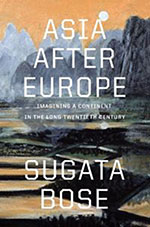
By Sugata Bose
The section highlights the fact that instead of searching for causes of Asia’s descent into poverty in the acquisition of wealth by European powers, we should try to understand the manner in which the colonial powers manipulated the ‘intra-Asian connections’
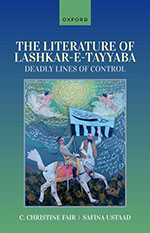
By C. Christine Fair and Safina Ustaad
The titles of the works included in this compilation are in themselves revealing of the LeT, its mindset and equally of its priorities: ‘Why are We Waging Jihad’; ‘In Defence of Jihad’; ‘The Mujahid’s Call’; ‘We the Mothers of the Lashkar’
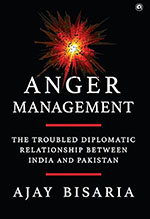
By Ajay Bisaria
Former Indian High Commissioner to Pakistan (2017-20), Ajay Bisaria has written an engaging book, an easy read, despite 500+ pages of text.
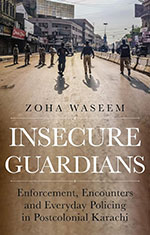
By Zoha Waseem
Policing in postcolonial South Asian countries has been a complex mix of legacies from the colonial era, local traditions and the freedom struggle. Post Independence, they had to deal with the mammoth task of reforming and transforming their policing institutions.