
History
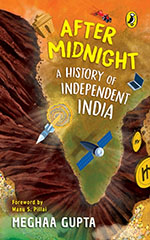
Meghaa Gupta
In 1984, Rajiv Gandhi became Prime Minister and launched a far-sighted tech policy which subsidized and allowed the liberal import of personal computers. A PC at world prices was prohibitively expensive and still out of reach for most middle-class urbanized Indians. The subsidy and easy terms for a loan allowed many to own a chunky PC and institutions also gradually started converting.
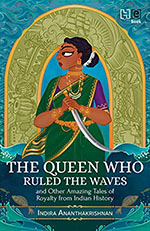
Indira Ananthakrishnan
The annals of Indian history are rich and expansive, filled with the most amazing tales of both valour and idiosyncrasies. School textbooks often gloss over these incidents because it is impossible to capture all of these tales in one comprehensive text and also because textbooks need to build a cohesive narrative, a sequence which may not grasp the complicated and interlinked histories which spread across time and space
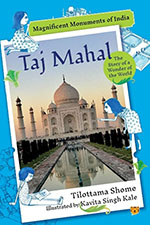
Tilottama Shome
Open the book and you ‘see’ Shah Jahan, imprisoned by his son Aurangzeb, gazing at the Taj Mahal from his prison. Reading on, and with the help of Kavita Singh Kale’s illustrations, you get pulled into the captive emperor’s thoughts and get a peep into his cherished memories. Those of the happy days spent with his beloved wife Mumtaz Mahal. And of the sad days too, when Mumtaz died after giving birth to their fourteenth child
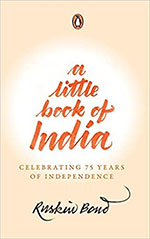
Ruskin Bond
A little book that says it all—from beautiful descriptions of Nature’s bounty, and the history of an ancient nation and its civilization—to memories, old and precious. It is only the talented Ruskin Bond who can do it.
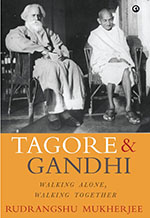
Rudrangshu Mukherjee
Rudrangshu Mukherjee’s Tagore & Gandhi: Walking Alone, Walking Together is an arresting book laced with fresh insights and perspectives, notwithstanding that it is about a subject that is well-trodden in the annals of academia. Tagore and Gandhi both bestrode the Indian firmament like two towering Colossuses. Attempting a book on either of them is fraught with danger.
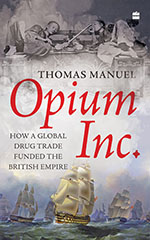
Thomas Manuel
One of the aspects studied by scholars of globalization is its antiquity. Questions have been asked about whether globalization is a novel phenomenon from the 20th century, or merely varying manifestations of an old pattern over periods of time. Convincing arguments have been made on either side. One pattern that is undeniable is the search for products, profits and resources, all contingent upon control of people and territory.
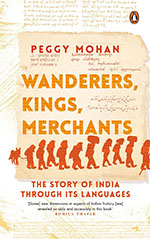
Peggy Mohan
The paradigmatic method of studying the story of India is through its languages, declares Peggy Mohan with a rhetorical flourish in the title of her book, Wanderers, Kings, Merchants: The Story of India Through its Languages.Mohan’s thesis draws upon Jawaharlal Nehru’s archetypal statement about the Indian subcontinent which likened it to…some ancient palimpsest on which layer upon layer of thought
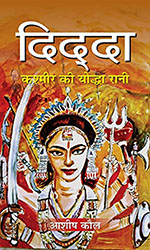
Aashish Kaul
This is the story which has been buried in the rubble of history of twelve hundred years ago of a warrior Queen, who was brave and beautiful and intelligent. She was a legendary queen of Kashmir, who ruled from 950 to 1003 AD. She became a legend for her valour. Her father was the ruler of Lohar, a hill principality near Kashmir. Didda was physically handicapped due to polio and because of that her parents neglected her and she was jeered at by other members in the palace.
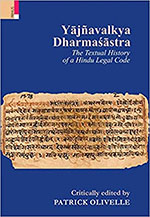
Patrick Olivelle
Patrick Olivelle is amongst those to whom scholars of ancient Indian history, Sanskrit and others interested in early textual traditions are indebted, as he has, for decades, tirelessly and painstakingly provided access to a wide variety of texts. This volume represents yet another contribution, a typically generous act of scholarship that we have now begun to almost take for granted.
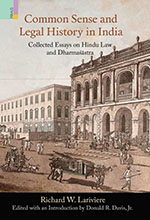
Richard W. Lariviere
The landscape of Dharmaśāstric historiography has changed considerably since the publication of Patrick Olivelle’s Dharmasütras, The Law Codes of Āpastamba, Gautama, Baudhāyana and Vasiṣṭa (1999) and his critical edition of the Mānava Dharmaśāstra (2004). Hitherto, PV Kane’s monumental work, History of the Dharmaśāstras, was the starting point for any scholar on Dharmaśāstric traditions
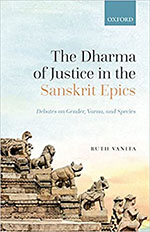
Ruth Vanita
Ruth Vanita’s new book titled The Dharma of Justice in the Sanskrit Epics is a compendium of many articles by her, some of which have been published before and as such not all of it is recent research. Ruth Vanita has been an iconic intellectual who has made significant contributions in the field of Gender and Queer Studies and has been followed widely.
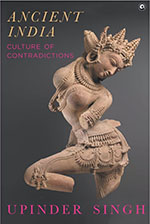
Upinder Singh
Professor Upinder Singh’s new book is bound to intrigue a random onlooker by its title, since one of the most reputed scholars of early Indian history describes the civilization of ancient India as a ‘culture of contradictions’ at a time when an image of a pristine, monolithic, singular Indian civilization, stemming from ancient roots, is not only being projected but often being enforced, and the voices of contradiction systematically shunned.
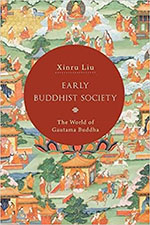
Xinru Liu
There has been no major monograph on early Buddhism by an Indian historian after Uma Chakravarti’s book, The Social Dimensions of Early Buddhism (Delhi: Oxford University Press, 1987). While the body of scholarship on the subject has been growing, Xinru Liu’s engagingly written Early Buddhist Society, originated and published by Permanent Black in India, is an important addition to the historical work on the time of the Buddha.
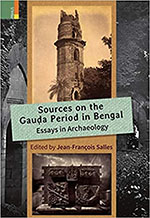
Jean-François Salles
Gauda as a political entity remains an elusive concept in the early history of Bengal. Although it is considered to have emerged in about the middle of the sixth century CE in the present-day northern Bengal (incorporating parts of modern West Bengal and Bangladesh), there is no textual evidence verifying this. Hence its genesis and rise in the regional power trajectories of early Bengal continue to be obscure.
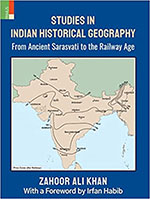
Zahoor Ali Khan
Zahoor Ali Khan’s Studies in Indian Historical Geography: From Ancient Sarasvati to the Railway Age, a cartographic enquiry encompassing sixteen chapters, takes readers from historical-geography discourses on the river Sarasvati theories to map the impact of railways on the national markets. The book ends by mapping the uprising of 1857—offering a tribute to Kunwar Singh and his comrades
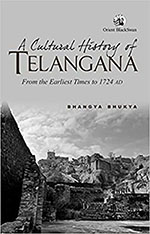
Bhangya Bhukya
Bhangya Bhukya, Professor of History at Hyderabad University, has written an engaging textbook on the history of Telangana. The book weaves a socio-economic and political history of the Telangana region from the prehistoric times to 1724 when Mughal control over the Deccan came to an end. In his book, Bhukya underscores the importance of writing a history of the South
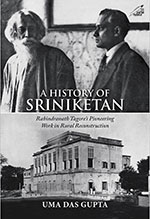
Uma Das Gupta
Born into a wealthy family in Calcutta in 1861, there was very little scope, so to speak, in Rabindranath Tagore’s childhood years for experiencing country life first hand. It was only in the 1890s, after Tagore was well past youth, that he was tasked with the supervision and management of the family’s (zamindari) estates in the rural areas of eastern Bengal.
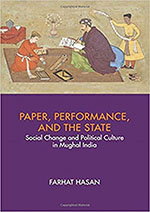
Farhat Hasan
As per the recent research, the earliest remains of paper found in India are from early 11th century Multan. By the end of the 13th century, if one believes Amir Khusrau, it came to be manufactured even in Delhi; however, its production and its general availability was so limited that, as per Ziya Barani’s information, the paper would sometimes be washed and re-used for writing again.
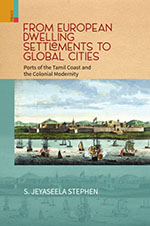
S. Jeyaseela Stephen
The Tamil country has a long history of being a part of the larger world of maritime trade in the Indian Ocean region, with its trade links extending even up to Rome in the ancient period. The coastline was thus dotted with ports which were essential links between the hinterland and the external world. Whereas the patterns of trade remained remarkably stable over the centuries, the scenario with regard to the ports and their relative prosperity
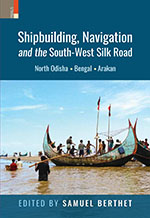
Samuel Berthet
Focusing on the northern Bay of Bengal region, this book is a welcome addition to both the corpus of Indian Ocean studies in general, and to the study of smaller regions within this large body of water in particular. Divided into two parts, the first being ‘Chittagong and the Northern Bay of Bengal in the Early Historical Period’, and the second on ‘Shipbuilding Culture and Technology in Chittagong and the Northern Bay of Bengal’, the book, while not being strictly chronology bound, covers a wide sweep of history.