
History
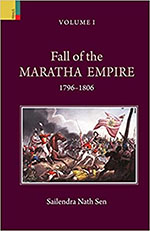
Sailendra Nath Sen
The history of Maratha-ruled States in the last quarter of the eighteenth century is rather complicated, to some extent because it is the intertwined history (apart from the Pune court) of four major States. These four were the territories ruled by the Shinde, Holkar, Bhonsle and Gaikwad dynasties, all of which acknowledged the Peshwa as their nominal overlord.
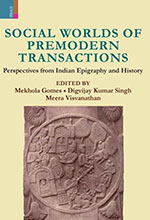
Mekhola Gomes
Fernand Braudel’s call for studying the interactions among interrelated ‘ensembles’ (politics, social hierarchies, economy and culture) in a complex society (Afterthoughts on Material Civilization and Capitalism, 1977, p. 8) finds resonance in this thought-provoking collection of essays on pre-modern South Asia. The seven contributors, including the three editors (who are authors too), demonstrate an exemplary maturity in handling pre-modern testimonies. In the current preferences for cultural studies in South Asian history, often privileging literary texts, synchronic treatments of the past(s) are common.
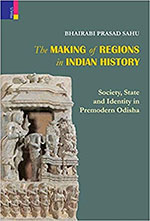
Bhairabi Prasad Sahu
The very title of Bhairabi Prasad Sahu’s book The Making of Regions in Indian History: Society, State and Identity in Premodern Odisha suggests that he is looking for processes that went into the making of regions and the associated individualities. The book reminds this reviewer of a volume, Centres Out There? Facets of Subregional Identities in Orissa, edited by Hermann Kulke and Georg Berkemer, published in 2011 where attention was drawn to look beyond the ‘Golden Triangle’ of Bhubaneswar, Puri and Konarak and focus on their hinterland and periphery.
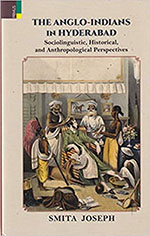
Smita Joseph
The book is a welcome addition to the field of the history of sociolinguistics and sociolinguistic anthropology. Though the book is very short with 122 pages of analysis, the history of sociolinguistics is accurately presented with a nuanced socio-cultural understanding of the Anglo-Indian community in Hyderabad. Divided into six chapters, including the introduction and conclusion.
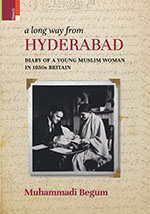
Muhammadi Begum
This book is the translation of a diary in Urdu by a young Muslim woman Muhammadi Begum that was written when she was a student in England at Oxford University in the early 1930s. Born in an elite Muslim family in Hyderabad, she studied Arabic, Persian and Urdu at home, and went on to do a BA at Osmania University where she topped her class; her academic prowess was rewarded by a scholarship to Oxford University by the Nizam’s Government.
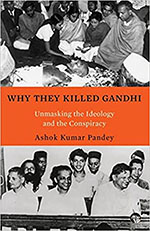
Ashok Kumar Pandey
Well-known Gandhian scholar Sudhir Chandra has poignantly noted in one of his essays, ‘Gandhi’s Sorrows’, that while in the thirty-two years that he spent resisting colonial rule Gandhiji was never once harmed, Independent India was able to keep this apostle of peace alive only for a mere five and a half months. This has remained a shameful blot on the otherwise glorious history of India’s struggle for Independence. Ashok Kumar Pandey’s Why They Killed Gandhi: Unmasking the Ideology and the Conspiracy and Appu Esthose Suresh and Priyanka Kotamraju authored The Murderer, The Monarch and The Fakir: A New Investigation of Mahatma Gandhi’s Assassination provide fresh perspectives to one of the most hotly contested political developments in Independent India
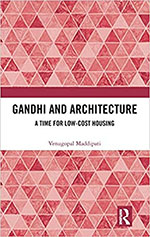
Venugopal Maddipati
Venugopal Maddipati’s book opens with a charming anecdote of Charles Correa toppling over a model of a high-rise block strategically placed by his side during a lecture to architecture students at School of Planning & Architecture, New Delhi. Correa’s performance was meant to demonstrate that low-rise, medium density housing could easily create more humane and economical solutions for living (than in a high-rise), and therefore possibly more suitable to India’s climate and cultural context.
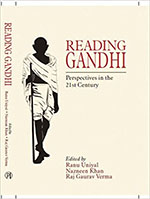
Ranu Uniyal, Nazneen Khan and Raj Gaurav Verma
Reading Gandhi: Perspectives in the 21st Century as the acknowledgement page states is an outcome of a one-day conference held in the Department of English at Lucknow University in 2019. Structurally divided into an introduction and fourteen chapters, the anthology captures several interesting and less considered aspects of Gandhi’s life written by scholars drawn from diverse regions. The book is designed to present Gandhi’s thoughts navigating from his politics to principles and code of life. It helps us understand the Mahatma’s legacy and his philosophy which has always been a topic of discussion, especially in the contemporary world.
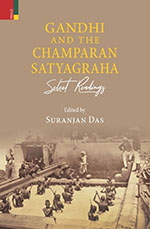
Suranjan Das
The eight-week Champaran Satyagraha, the scene of the first triumph of Gandhian technique in India was a striking example of protest action and mustering support for that from the urban nationalist leadership through the initiatives of local peasants. Since his South African days, it had been Gandhi’s wish to invoke passive resistance or Satyagraha, as he preferred to call it, in his own country. He considered Satyagraha a panacea for all ills of the country.
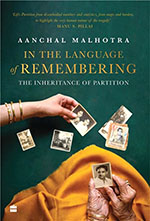
Aanchal Malhotra
The further we get from the events of Partition, the more the art of writing about it changes. Memories fade and change, its custodians no longer those who were direct participants as they have aged. In the Language of Remembering looks at the implications of these flows through a carefully collated selection of interviews both with those who lived through the traumatic events of the mid-20th century in South Asia and their descendants.
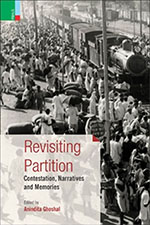
Anindita Ghoshal
It is now generally accepted that the Partition of India happened in two quite different ways. In the West, it was short, swift, extremely violent, and quite definitive, while in the East the process was prolonged, fluid, and relatively less bloody. Thus, the historians have termed the Partition in East India as the ‘Long Partition’. Another difference between these two processes of Partition seems to be associated with the dual process of forgetting and remembrance.
Declaring India to be an independent nation in 1947 encapsulated fundamental historical changes. India was no longer a collection of kingdoms as it had been before it was colonized, nor were the people of India any longer subjects of the British crown as under colonial rule. We were now a sovereign democratic state whose population consisted of free and autonomous citizens of a nation.
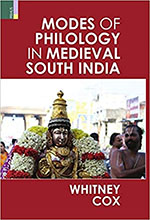
Whitney Cox
Commentarial traditions and language-centred interpretive conventions were arguably the most important modes of knowledge production in India for much of the second millennium CE. This practice commenced in all earnest in the eighth century CE, although we know of several instances of earlier commentaries too, including Patañjali’s Mahābhāṣya that is older than the first century BCE. Modern scholarship has relied upon these works for a long time, and works such as Sāyaṇa’s commentary on the Rigvēda and the ones on the bṛhattraya texts (Bhāravi’s Kirātārjunīya, Māgha’s Śiśupālavadha and Śrīharṣa’s Naiṣadhīyacarita) have been indispensable in producing critical editions of the respective texts.
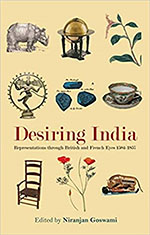
Niranjan Goswami
Conference volumes are not easy to review as the essays do not always cohere to form a clear and lucid narrative. The volume under review, however, does partially better on this count as it reflects on a plethora of writings—travel accounts, professional histories, women’s memoirs—to index the shifts in the way India was represented by Europeans from the late 16th to the mid-19th century. Consequently, while the subject of representing India, in itself, is hardly new, given the number of books that have been written to make sense of the way India was constructed and staged by Europeans, the volume manages to bring fresh perspectives.
Iqtidar Alam Khan
The book is a collection of essays on varied themes comprising the concept of India in Alberuni, Hindu chiefs in Sultanate polity, economic theories during the period, economic implications of political disintegration and Shaikh Abdul Quddus Gangohi’s relations with political authorities. Even as these essays focus on the study of thought, polity and economy, they investigate the history of India during the period 1000-1500 CE with particular reference to the Delhi Sultanate. It relates valuable paradigms of the period that gave the Delhi Sultanate a different character notwithstanding its Islamic identity.
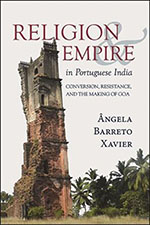
Ângela Barreto Xavier
It would be fitting to state at the outset that this is an important book. For many reasons, but mostly because it speaks with ease to many audiences. Ângela Barreto Xavier’s convincing narrative comes from an evident expertise in her Portuguese sources as much as from a deep engagement with current debates across themes in Indian and Iberian history.The title encapsulates the two main themes of Portuguese imperialism and Christian conversion in the territory of Goa.
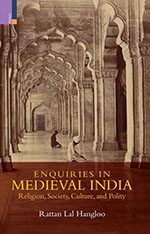
Rattan Lal Hangloo
R L Hangloo provides a panoramic view of the medieval period with a focus on periodization, medieval state and legitimacy, Sufism and urbanization. By drawing upon case studies from Delhi, Deccan and Kashmir, the author discusses the distinctiveness of medieval politics, diplomacy, religion and culture.At the outset, he discusses the methodology adopted by colonial and nationalist historians regarding periodization and points out the problems in usage of the term Muslim in place of medieval. He argues that the usage of the ideological lens to understand the medieval period precludes the possibility of objective understanding of the past and the complexities in the making of medieval society .
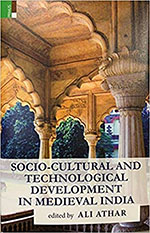
Ali Athar
Socio-Cultural and Technological Development in Medieval India edited by Ali Athar brings together thirteen articles focusing on the sub-themes: literary sources; state and administration; society and culture; science and technology.Some articles in the book offer insightful discussions, particularly those on 18th century north India. The article by Rohma Javed Rashid, for example, engages with the shahr ashob poetry that used humour, satire and dramatized language to lament the dwindling fortunes of the elite and rise of lower social groups in 18th century Shahjahanabad, meant to convey the decline of the city.
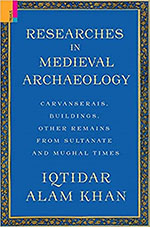
Iqtidar Alam Khan
A collection of eight essays which variously analyse the oft under-explored subject of medieval archaeology, the book under review brings to light not only many hitherto unknown structural remains belonging to medieval India such as dyeing vats, dykes and makeshift capitals but also aims to dispel the notion that archaeology as a discipline is only associated with the remote past or with ‘remains dug out from under the earth’ (p. 2). Khan’s book points to a plethora of structural remains pertaining to medieval India that are lacking in conservation primarily because they do not make the cut for being ‘important’ monuments.
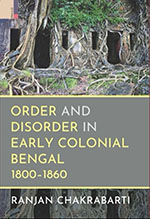
Ranjan Chakrabarti
A major trend in history writing that began in the late 1960s to early 1970s in Europe and America was the study of cultural history where various aspects of social behaviour and cultural patterns of societies were being studied in their historical context. Multidisciplinary studies became the norm in the study of social sciences and history was not untouched by these developments. The subject matter of history did not merely include aspects of political narratives but also included the study of social, economic, behavioural and environmental aspects.