
History
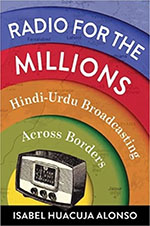
Isabel Huacuja Alonso
Members of the Ajnabi Radio Shrota Sangha (Strangers’ Radio Club) in Bhagalpur, Bihar, regularly tuned into Radio Ceylon, broadcast from Colombo, Sri Lanka, to vote for their favourite songs on Binaca Geetmala, a subcontinental hit countdown show. The club was among 400 radio listeners’ groups that were voluntarily formed by Hindi film music fans in India, mid-1950s onwards, to collectively listen to and talk about the popular music that they ironically did not have access to via their national broadcaster, the All India Radio (AIR).
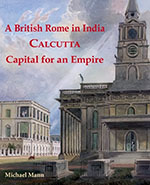
Michael Mann
In Gillian Tindall’s engaging book on Bombay, City of Gold (1982), she describes initial encounters with colonial buildings and her incredulous response: ‘Hallo! Fancy seeing you here?’. Indeed, colonial buildings may seem strange implants in the tropical landscape despite their historic presence for three centuries on Indian soil. Michael Mann argues for Calcutta that between 1770s and 1830s, the East India Company committed itself to a vision—that of building another Rome and set a trend.
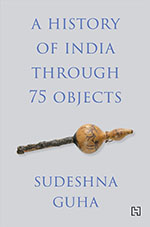
Sudeshna Guha
History is an ever-evolving subject. Historians have, in recent times, attempted to study this subject through various novel ways. And understanding the human past through historical objects is one such technique which has become quite popular in recent times. Sudeshna Guha’s latest work A History of India through 75 Objects belongs to this category of history writing.
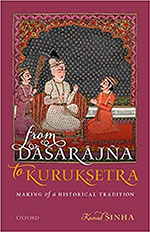
Kanad Sinha
A young and yet, already an acclaimed academic, Kanad Sinha has brought out a stunning book entitled From Dasarajna to Kuruksetra. The very utterance on Kurukshetra immediately connects one to the Mahabharata. On the other hand, Dasarajna, literally the battle of ten chiefs who were defeated by another powerful chief, Sudas, on the banks of the river Parushni (modern Ravi) refers to the outstanding political event in the Rigvedic clan society. The book seeks to establish connections between these two battles fought in separate historical epochs.
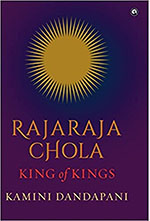
Kamini Dandapani
Growing interest in the history of peninsular India has sparked a series of excellent books of value to the specialist and lay reader alike. Kamini Dandapani disavows being either a historian or a writer by profession, but her Rajajraja Chola, King of Kings does long-delayed justice to a ruler who is among the greats of the world and to a dynasty that for several hundred years was the shining light of India with a legacy that stretches to this day.
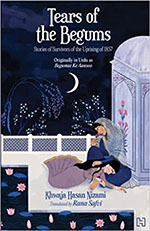
Khwaja Hasan Nizami
Tears of the Begums is the first-ever English translation by Rana Safvi of Begumat ke Aansoo, originally written in Urdu by Khwaja Hasan Nizami, a follower of the Sufi order Chishti-Nizamiya and a descendant of Hazrat Nizamuddin Auliya. Born almost twenty years after the revolt of 1857, Hasan Nizami’s spiritual pursuits led him to investigate the events of 1857, the encounters of the Mughal Emperor Bahadur Shah Zafar, the cruelties meted out to the royal family and the plight of royal family members, many of them women, who survived the revolt.
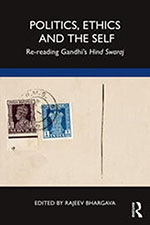
Rajeev Bhargava
Hind Swaraj is one of those key texts published in the twentieth century, which on the one hand, were denounced by many critics, and on the other hand, attracted many scholars and activists, who have been working for an alternative model of modernism. The book was criticized by many scholars, including the first Prime Minister of India due to its so-called ‘outdated’ ideas. However, in this book, Gandhi critically evaluates modern civilization and technologies related to it and questions the modern conception of religion, nationalism, and the prevalent violence-based method to counter the unjust and exploitative system.
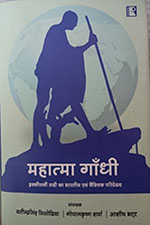
Yatindra Singh Sisodiya
The book under review, written in Hindi, is a compilation of research papers that were presented as part of a two-day national seminar held to celebrate the 150th birth anniversary of Mahatma Gandhi at the M.P. Institute of Social Science Research. Titled, ‘Mahatma Gandhi: 21vi Sadi ka Bharatiya evam Vaishvik Pariprekshya’, the seminar was held in Ujjain. There are twenty essays in this book written by various Gandhi scholars. Each article focuses on a particular facet related to Gandhi and his world view.
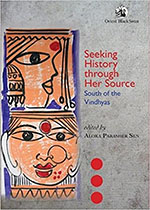
Aloka Parasher Sen
Aloka Parasher Sen’s edited volume under review comprising a collection of eight essays recognizes the need to seek ‘out the “reality” of the past rather than its “truth”’ (p. 2). Inspired by Hayden White’s essay on historical fiction and historical reality, wherein White explains that ‘The real would consist of everything that can be truthfully said about its actuality plus everything that can be truthfully said about what it could possibly be.
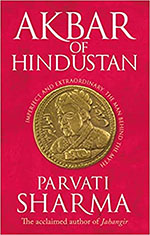
Parvati Sharma
The book is a biographical account with a difference, of an emperor, contested currently in national discourse, in a simple story-telling style to make the narrative thrilling and delightful. Written with passion and curious interest combined with theatrical melodrama and humour, it captures the multi-faceted personality of Akbar, his different moods, temperament, sentiments, emotions, compassion and open-mindedness, yet the focus primarily remains to be on the power-driven, ambitious, warrior, conqueror, imperialist, who is never free of court animosities, politics, resentments, turmoil and turbulence enmeshed in kinship and patronage.
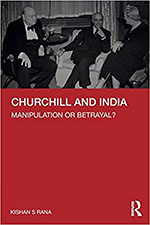
Kishan S Rana
Historian Ramachandra Guha has spoken of what he calls the ‘Boyle’s Laws’ of biography writing; named for their author, Goethe’s biographer Nicholas Boyle, they argue for a biography to be a logical progression to its conclusion, rather than the elaboration of a premise stated in advance; the drawing upon characters other than the principal to illuminate the narrative and extensive reference to sources other than those directly attributable to that subject. Winston Churchill’s views were congruent with Boyle’s on at least the first law
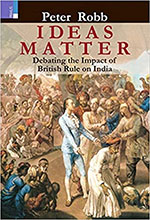
Peter Robb
Peter Robb’s Ideas Matter: Debating the Impact of British Rule on India attempts in nine chapters to present a scenario on the debates regarding the impact of British rule on Indian society, economy, culture and politics. The long-debated introduction titled ‘Changing Governance, Agriculture and Identities’, highlights various colonial themes. The author starts with an analysis of the relationship between India and Britain and argues that ‘both countries would be different today’ without British rule in India.
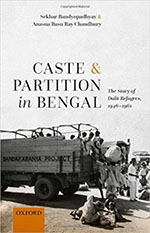
Sekhar Bandyopadhyay
For a long time the Partition of Bengal in 1947 and its manifold complexities and consequences failed to emerge as a subject of serious academic research, and more so in the English writing-speaking world. The reasons behind the relatively (as compared to Punjab) subdued academic attention and consequent paucity of published works on the Bengal Partition were many, ranging from ideological-political differences (among both state and non-state actors/researchers) to the ‘perception’ that the Bengali Partition experience was far less violent and traumatic as compared to Punjab.
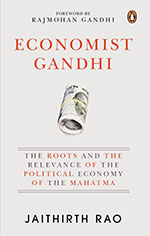
Jaithirth Rao
Gandhi is possibly the greatest Indian to have lived since Buddha. His greatness, however, lies not in his invulnerability—but rather, in his struggle to overcome his many frailties. Gandhi’s story is an alluring, yet rare, tale of the triumph of human will over seemingly insurmountable odds. One is reminded of Albert Einstein’s famous phrase describing Gandhi, ‘Generations to come, it may well be, will scarce believe that such a man as this one ever in flesh and blood walked upon this Earth.
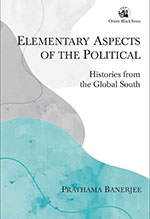
Prathama Banerjee
Prathama Banerjee’s book offers a brilliant academic contribution to the histories of the non-western world with its primary focus on the Indian subcontinent. This book is about ‘histories of the political’ by exploring the question of what is ‘political’ in the context of modern India. Thus, its overall focus is on how the modern ideas of political practice emerged in the late nineteenth to mid-twentieth century Bengal out of different Indian philosophical traditions as well as influence of colonialism.
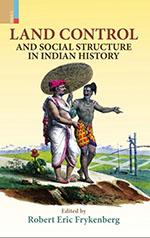
Robert Eric Frykenberg
The two edited volumes under review comprise a collection of twenty-four essays incorporating an understanding of land in South Asia, exploring the purview beyond disciplinary boundaries. They historically map out South Asia’s land distribution and the negotiations involved in it among various actors on those lands. In Land Control and Social Structure in Indian History, among the eleven essays, those by S Nurul Hasan, Tapan Raychaudhuri, Burton Stein, and Nilmani Mukherjee start with a precolonial understanding of the land and extend to their modern-day implications.
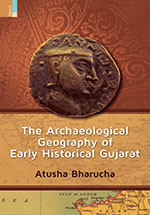
Atusha Bharucha
This book, with about 250 pages and multiple useful illustrations, is a much-needed comprehensive work that fills the existing gap in both academic and non-academic understanding of early historic Gujarat. Apart from the Foreword and Introduction, the Appendix which follows the Conclusion is extremely useful as it introduces the different types of pottery of Gujarat.
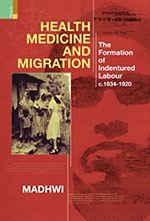
Madhwi
Before jumping into analysing the book’s strengths, it is important to highlight the complexity of this project. Tracing a transnational project like the movement of labouring bodies across oceans, while being a scholar in a middle-income country is a feat. While the subjects of this book may be Indians, looking for their archival traces would require transcending national boundaries—something that not many early career scholars find possible.
Daman Singh
Ideas, as we do not adequately appreciate, are profoundly important. They are not merely abstractions, because they lead to actions, to violence or to healing. As a doctor, I was a Resident at a department of psychiatry where ECTs were routine. This treatment is now considered inhuman and is banned in most countries; it continues in India.
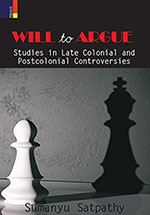
Sumanyu Satpathy
Sumanyu Satpathy’s Will to Argue opens with a rather interesting excerpt from Jonathan Swift’s Battle of the Books about the ‘books of controversy’. Another excerpt from the same text, not quoted by the author, makes for a succinct comment on the momentous task that Satpathy has undertaken in this book.[B]ooks of controversy being, of all others, haunted by the most disorderly spirits, have always been confined in a separate lodge from the rest