
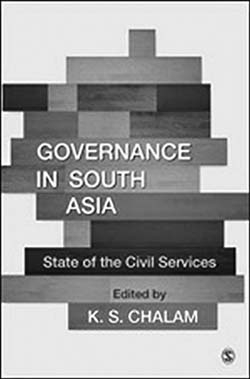
K.S. Chalam
Amongst the regional organizations, SAARC, the South Asian Association for Regional Cooperation, has not attracted much scholarly attention.
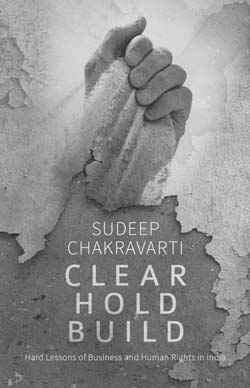
Sudeep Chakravarti
Capitalism is cruel. Yet, for a poor, economically backward country, an evil necessity. The spread of capitalist development promises prosperity with malls, multiplexes and condominiums but its underside can be grotesquely ugly.
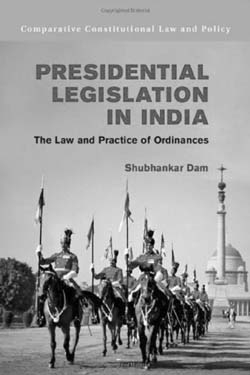
Shubhankar Dam
A day after the winter session of parliament ended in December 2014, the National Democratic Alliance (II) Government promulgated two ordinances aimed at taking forward economic reforms in the insurance and coal sectors arguing that ‘the country can no longer wait’.
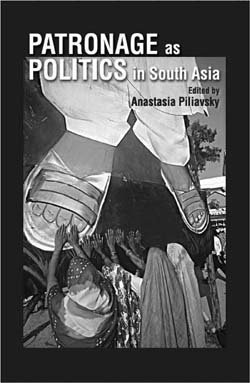
Anastasia Piliavsky
For any observer of politics in South Asia, there is always a question waiting to be answered. What explains the enthusiastic participation of the electorates in the ‘new’ democracies/semi-democracies of South Asia (whenever they get an opportunity!) remains a puzzle for them. Why elections are such grand spectacles bringing a festive spirit among the masses is intriguing for an impressed westerner as she assesses the ground reality.
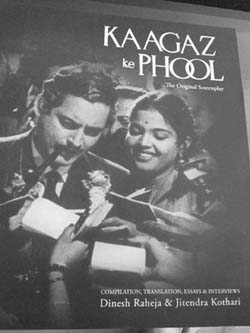
Dinesh Raheja
More than fifty years after its initial release Guru Dutt’s Kaagaz ke Phool (Paper Flowers, 1959) remains one of Bombay cinema’s most enigmatic films.
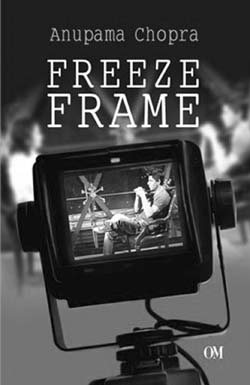
Anupama Chopra
Freeze Frame is mainly a collection of interviews that noted film critic Anupama Chopra had conducted for the show, ‘Picture This’, on NDTV between 2007 and 2011. Apart from this are interviews published in Vogue, and articles by Chopra contributed to Open Magazine in 2010–2011.

Rohitashya Chattopadhyay
Chattopadhyay’s book provides an interesting research intervention in the field of visual and television study as well as in the general understanding of an image world which was a precursor to the current digital context of consumerism. It illuminates after all the crucial moment of post liberalization, a transition period, during which the chaos of new ideas, subjectivities, and a changing urban materiality was being churned out at the very point of origin in the world of advertisement, and presented back to the viewer for interpretation. Pointing at the sudden significance of commercials post liberalization, with the increase of satellite cable television channels and coming in of multinational brands, in contrast to cinema which served as the earlier popular vehicle of modernity during, before and after Independence, the book deftly demonstrates how commercials in the contemporary time stood at the helm of negotiating this transition in 1990s India from a receding socialism to advanced capitalism.
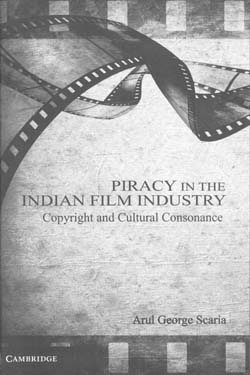
Arul George Scaria
The story of piracy is the story of a discourse that manages to remain hidden from the overarching gaze of the Government. Irrespective of strong or weak enforcement systems prevalent all over the world to stop piracy, this underground discourse has survived and replicated. The traditional scholarship on piracy presents a clear-cut binary.
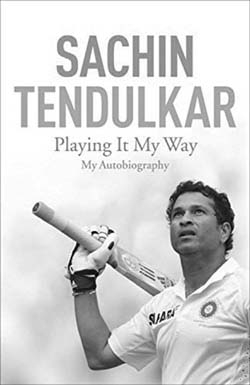
Sachin Tendulkar
Most people tend to view autobiographies ambivalently partly because there is something narcissistic about them and partly because you do wonder, from time to time, if you are really interested in all the details of someone else’s life. Also, the best autobiographies are usually insensitive to the people who figure in them and the worst ones are a dead bore because they hold back so much.
Tula Goenka
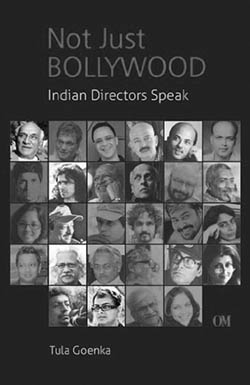
In a quasi-romantic and quasi-realist statement, ‘much to my disappointment, the shelves were full of texts on Hollywood and European filmmakers with nothing substantial on contemporary Indian directors’ (p. 10), Tula Goenka states, clearly, her objective behind writing the book, recovers directorial voices that contribute heavily to the process of filmmaking but still remain unheard.
Rakeysh Omprakash Mehra
2015
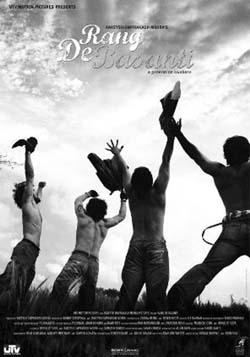
Rang De Basanti (Rakeysh Omprakash Mehra, 2006) is a film that unfolds itself through a narrative-within-a-narrative structure where the India of 1920s is juxtaposed with the India of 2005.

Rachel Dwyer
Rachel Dwyer’s Picture Abhi Baaki Hai is a de-tailed account of the films produced in India from 1991 to 2001 and the nuanced ways in which the imagination of India and its ‘New Middle Class’ enters the circuit of Bollywood.
Sunaina Roshan
2015
For many of us Bombay films were central to our coming of age. As we went in and out of cinema halls in the seventies and early eighties, the hero who failed to make a deep impression was Rakesh Roshan, son of the famous music composer Roshan.

Slavoj Zizek
Agitating The Frame, a collection of Zizek’s six essays, has an ambitious plan with lofty objective which attracts, while the very same turns out to be unmanageable monstrosity.
M.K. Raghavendra
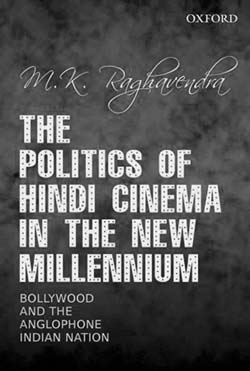
When M.K. Raghavendra declares in his recent book The Politics of Hindi Cinema of the New Millenium: Bollywood and the Anglophone Indian Nation that ‘Bollywood is not mainstream Indian cinema’, he ruffles quite a few feathers.
Seema Sharma
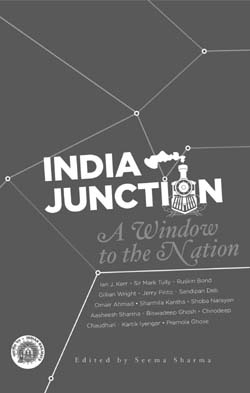
This anthology brought out by the Ministry of Railways is an eclectic collection of articles by several authors—Sir Mark Tully, Ruskin Bond and Sandipan Deb and experts on the Indian Railways such as Ian Kerr.

Utsa Ray
If we are what we eat, then there is a steady stream of archival material emanating from our kitchens that must necessarily be taken seriously, sociologically speaking. Food, at the first instance, is all about nutrition and sensory perceptions. However, for the attentive listener, food is also the story of who we are as a people.
Hugh
2015
Over centuries, maharajas and magicians, palaces and palanquins, elephants and erotica, dynasties and deserts, temples and tigers, poetry and poverty, snake charmers and spices—all have been instantly associated with India and have been the enduring reference points for this country.
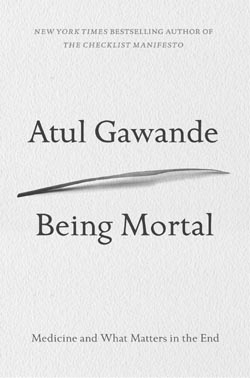
Atul Gawande
This is an extraordinary book and the author, Atul Gawande, is an extraordinary surgeon, one sensitive to pain, but more importantly, to history. In my review of one of his earlier books, Complications (a collection of essays previously published in the New Yorker), for The Book Review
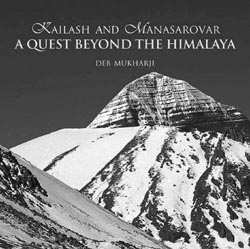
Deb Mukharji
Aviewing of Kailash and Manasarovar: A Quest Beyond the Himalaya quite easily leads one to agree with Deb Mukharji that of all the elements of nature, perhaps the strongest influence on the human psyche has been exercised by mountains’ (p. 34). I use the word ‘viewing’ quite deliberately because it is Mukharji’s amazing photographs that enliven his interesting text. Together, both are ample testimony of the author’s empathy for the high reaches and lonely spaces of the Himalaya. A former civil servant by profession but a mountaineer and photographer by instinct and passion, the author describes in meticulous detail the fascination of the Kailash and Manas region over millennia. Kailash, he writes, ‘is where convictions remain suspended, myths endure and sparks of understanding illuminate reason’ (p. 245).