
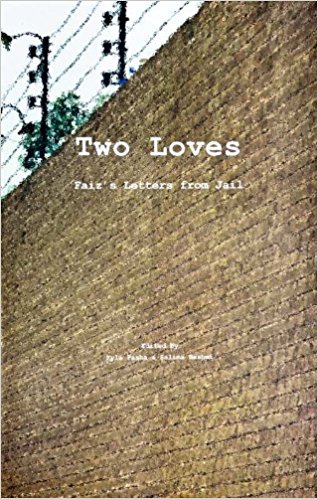
Kyla Pasha
I run my hand over this large volume with a pictorial cover of a brown prison wall, pierced diagonally with barbed wire, a patch of a sky, a few forlorn trees standing behind parallel search lights and a sentry standing erect before a guard room. Inside the volume is the story of two loves; Faiz Ahmed Faizs letters written…
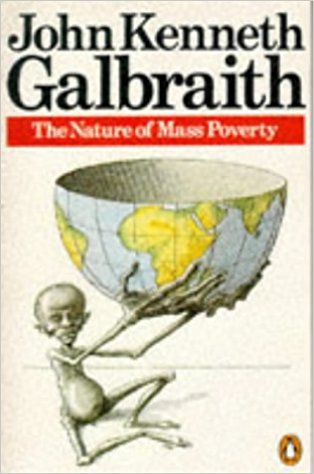
John Kenneth Galbraith
These two books have titles that sound deceptively similar. While their common theme is indeed the problem of poverty in developing countries, no two books can be more radically different in the basic approach in defining the nature of the problem and the possible directions in which policy-makers in these countries can seek a solution.
Ashfaq Hussain
The five almost undisputed leaders of modern Urdu poetry, chronologically by year of their of birth, are N.M. Rashid (1910-1975), Faiz Ahmed Faiz (1911-1984), Meeraji (1912-1949), Majeed Amjad (1914-1974) and Akhtarul Iman (1915-1996). Of these poets, only Faiz belonged and remained loyal to the Progressive Writers Movement until his death…
Khalid Hasan
2011
Khalid Hasan, the one-time compatriot and Press Secretary to Zulfiqar Ali Bhutto and journalist par excellence is well known for his literary writings. For years the life and times of Madame Noor Jehan have been celebrated in his writings. He has translated several titans of Urdu literature including Manto, Abbas, and Faiz…
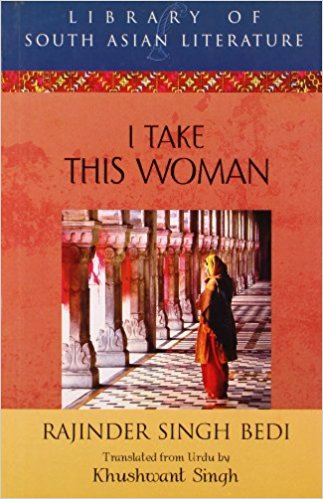
Rajinder Singh Bedi
Rajinder Singh Bedi (19151984) began his working life as a postal clerk but soon carved a place for himself in the canon of modern Urdu short stories with his very first collection, DanaoDam, published in 1940. Details of everyday life, no matter how small, found a place in his stories and became reflections of a larger social reality…
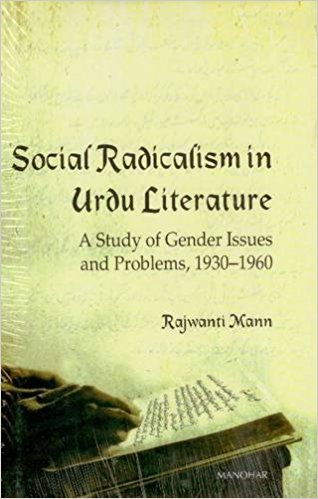
Rajwanti Mann
Literature is not only a mirror but also a major source of inspiration. With the formation of the Progressive Writers Movement in India in 1936 a radical shift emerged in the consciousness of Urdu writers. This book examines the role of progressive writing in the history of India. The Russian revolution was looked at with awe and respect and Marxist ideology recognized…
A. Bose
This is the third book of the trilogy that Bose has been working on, wherein he has painstakingly and with meticulous precision worked out detailed proofs and consistency exercises on Marx’s Fundamental Theorem of Exploitation.
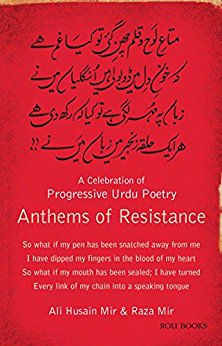
Ali Husain Mir
There is one kind of lament about Indian politics that has become commonplace: politics has become characterized only by corruption, selfindulgence, and venality. In fact, as this review is being written, India seems racked with some of the worst scandals at the highest levels of government since the infamous Bofors scandal of the 1980s…
Talat Ahmed
2017
This like all books on the Progressive Writers Movement is to be heartily welcomed as an attempt to redress a very serious historical neglect. To subtitle it an episode is however to acknowledge and reinforce the overarching and unquestioned authority of the national question over all other approaches and framings of this period…
Bhaskar Sarkar
Representation, of all genres and kinds, in the media and elsewhere takes on a meaning outside the boundaries of human discourse and behaviour. It takes on greater and more worthy connotations as the process subsumes the depiction of communities, both communal and caste, genders, sexualities…

Zahida Zaidi
Zahida Zaidi says that she has not attempted a work on the history of Urdu literature in this endeavour. Notwithstanding, I would argue that she has subconsciously ended up providing a very fine outline of the same in the course of writing this book…

Maj. Gen. Sukhwant Singh
A number of books describing the birth of Bangladesh have appeared in India and abroad, some soon after the emergence of Bangladesh as an independent country, others a little later; but few analyse the operations as objectively as General Sukhwant Singh has done in this very readable book.
Hoshang Merchant
Beginning in the late 1960s, sociological and historical interest in homosexuality in Britain and the United States began by academics questioning the validity of using culturally specific terms like gay or homosexual to describe desire and sexuality across time and space. Social constructionist researchers often suggested…

Nandini Chandra
In the BBC Hard Talk interview aired on January 5 January 2011, Bruce Riedel, former CIA officer, national security official to Presidents Clinton and Bush, and adviser to President Obama on Afghanistan and Pakistan announced that Pakistan is the most dangerous country on earth…

Farina Mir
This book straddles several anomalies that are rather obvious once stated but are rarely formulated as such. How is it that the world of Urdu literature becomes so dominated by people from the Punjab in a span of fifty years, beginning circa 1900s, and in a sense, continues to remain so? Iqbal, Faiz, Meeraji, Rashid, Bedi, Manto, Krishan Chander…

Saurabh Mishra
The Brill Dictionary of Religion describes pilgrimage as timehonoured migrations to outlying sacred places. This phenomenon of religious mobility is attested among peoples of ancient times This devotional journeying is underscored by the belief that the local presence of a deity, a hero, or a saint in this specific place makes transcendence in immanence especially effective and available to experience, and thereby especially efficacious for ones own concerns.
B.P. Sinha
One of the most difficult topics in the field of nuclear diplomacy in South Asia is, surely, Pakistan’s nuclear programme and its objectives. Documentation is hard to come by, information is sparse and rumour rife.
Madhu Trivedi
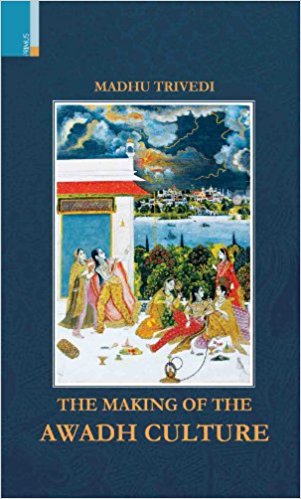
Madhu Trivedis knowledge of cultural and artistic production in Nawabi Awadh is very evident throughout the text. An introductory chapter sets out the historical background to Awadh in the Nawabi era (17221856), followed by detailed information on the place of Shii Islam, literary production, music, painting…

Franklyn Griffith
The Dangers of Nuclear War is in marked contrast to the bulk of the literature on nuclear war generated in the West. The central message of the book is, to quote Lord Zuckermann, ‘that wars may start as central planners predict but history shows that they rarely if ever proceed or need end as predicted.’
Smita Premchander
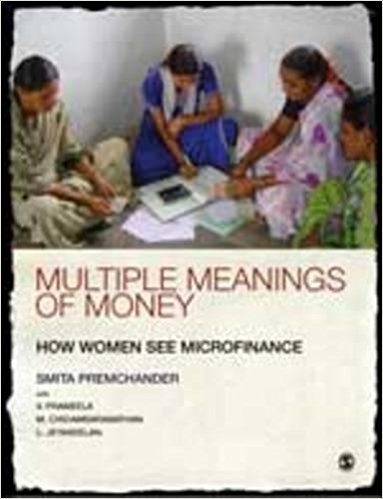
In Multiple Meanings of Money: How Women See Microfinance, the authors explore women’s own money management strategies, group dynamics and learning processes in groups. The book is an impact study using participatory research methodologies in an actor-oriented perspective framework that essentially results…